


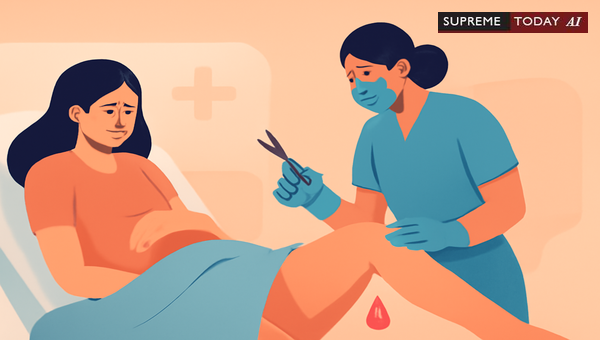
Death from Unconsented Episiotomy: Is It ?
Imagine a mother in labor, trusting her medical team completely, only to suffer a fatal outcome from an episiotomy performed without her consent, compounded by postpartum hemorrhage. Tragic scenarios like this raise critical questions about , , and the in obstetrics. In the case of a woman who died due to a without-consent episiotomy and postpartum hemorrhage, what does the law say? This post delves into relevant case laws, legal principles, and arguments to shed light on potential claims.
While this analysis draws from established legal precedents, it is for informational purposes only and does not constitute legal advice. Consult a qualified attorney for specific cases.
The Core Legal Issue: Consent and Medical Procedures
At the heart of such cases is the principle of , a cornerstone of medical law. Consent must be express, informed, and voluntary, particularly for invasive procedures like an episiotomy—a surgical cut to enlarge the vaginal opening during childbirth. Performing it without consent can violate patient rights and trigger negligence claims. 2008 1 Supreme 191
Key legal findings indicate that unauthorized invasive acts, especially those leading to harm or death, constitute and breach the . Courts emphasize that doctors cannot exceed the scope of consent unless in a true emergency where delay risks life. 2008 1 Supreme 191
In this scenario, the absence of consent for the episiotomy, followed by postpartum hemorrhage (PPH)—the leading cause of maternal mortality worldwide, claiming a life every four minutes—amplifies liability concerns. 2020 Supreme(Online)(NCDRC) 725
and Principles
Medical practitioners owe a to patients, measured against accepted professional standards. requires explaining risks, benefits, alternatives, and obtaining voluntary agreement. For episiotomy, this is crucial as it's not always routine and carries risks like excessive bleeding.
Legal documents affirm: Consent in medical procedures must be express and informed, especially for invasive procedures like episiotomy. 2008 1 Supreme 191 Without it, the procedure is unlawful, potentially amounting to or negligence if harm results.
In detailed analysis, courts hold that any unauthorized procedure that causes harm or death can attract liability under medical law principles. 2008 1 Supreme 191 This applies directly here, where the episiotomy allegedly contributed to fatal PPH.
Relevant Case Laws on Non-Consensual Procedures
While no case exactly mirrors death from an unconsented episiotomy, analogous precedents provide strong guidance:
In a matter, doctors performed an emergency obstetric hysterectomy for PPH without knowledge and without consent of the patient or their relatives. The opposite parties claimed verbal consent from the patient's mother, but the court scrutinized this closely. Ultimately, no negligence was found as actions aligned with emergency standards to save life, highlighting that emergencies may justify . 2020 Supreme(Online)(NCDRC) 725
MRS. ANUJA CHAUDHARY vs SHIVAM HOSPITAL & RESEARCH INSTITUTE & ORS.
Another PPH-related case noted: Postpartum haemorrhage (PPH) is the commonest form of obstetric haemorrhage, with sources of blood loss including episiotomy. The death was attributed to haemorrhagic shock, underscoring the need for swift, standard-compliant intervention.
Broader principles from precedents state: acts beyond the scope of consent are unlawful, and the doctor can be held liable for negligence. This was seen in unauthorized removal of reproductive organs, mirroring violations. 2008 1 Supreme 191
These cases illustrate that while emergencies offer leeway—Medical professionals are not held liable for negligence if they conform to accepted medical standards and act with due diligence, even in emergency situations—proof of consent remains paramount. 2020 Supreme(Online)(NCDRC) 725
Applying the Law to This Case
Consider the facts: A woman dies from PPH after an episiotomy without consent. Key questions include:- Was documented?- Was an emergency justifying the procedure present, where delay would be unreasonable and life-saving measures are necessary? 2008 1 Supreme 191- Did the episiotomy deviate from standard care, exacerbating hemorrhage?
Generally, absent emergency evidence, this constitutes negligence: breach of duty leading to foreseeable harm (death). The right to is inviolable, and violations can lead to civil claims under the , or criminal proceedings for . 2008 1 Supreme 191
PPH tolerance varies—healthy women may handle 500-1,000 mL blood loss—but tachycardia signals early risk, demanding vigilant care.
Exceptions: The Emergency Defense
Law carves exceptions for life-threatening urgencies. In true emergencies where delay could endanger life, procedures may be performed without explicit consent. 2008 1 Supreme 191 In the NCDRC hysterectomy case, courts upheld actions under , finding no deficiency as measures were adequate. 2020 Supreme(Online)(NCDRC) 725
However, vague claims like verbal consent from relatives warrant scrutiny, as seen in challenged statements. Without substantiation, liability persists.
Building a Written Argument for Liability
A strong legal argument would structure as follows:1. Establish Facts: No consent records; procedure led to PPH and death.2. : Breach via unauthorized act. 2008 1 Supreme 1913. Causation: Link episiotomy to hemorrhage (supported by PM findings in similar cases).
4. Precedents: Cite non-consensual invasive acts as negligent unless emergency-proven. 2020 Supreme(Online)(NCDRC) 725 2008 1 Supreme 1915. Damages: Fatal outcome justifies compensation or prosecution.
Recommendations for Prevention and Action
- Investigate Thoroughly: Conduct medico-legal autopsy and review records for consent.
- Strengthen Protocols: Mandate written consent for episiotomies; train on PPH management.
- Legal Recourse: Families may file under Consumer Protection Act or , seeking accountability.
- Hospital Reforms: Implement checklists for consent in high-risk obstetrics.
Key Takeaways
Unconsented episiotomies risking death typically signal , barring proven emergencies. protects autonomy, and breaches invite liability. Cases like the NCDRC PPH hysterectomy affirm standards must prevail, but consent gaps are fatal flaws.
This overview highlights evolving patient rights in India. For personalized guidance, seek expert legal counsel. Stay informed, stay safe.
References:- 2008 1 Supreme 191: Core principles on consent and negligence.- 2020 Supreme(Online)(NCDRC) 725,
MRS. ANUJA CHAUDHARY vs SHIVAM HOSPITAL & RESEARCH INSTITUTE & ORS.
: PPH emergency procedures.-: Hemorrhage insights.
Word count: ~1050. General information only—not legal advice.
#MedicalNegligence, #InformedConsent, #PatientRights















