


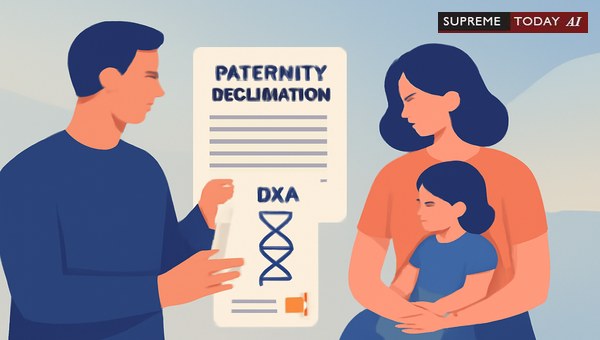
Is a 20-Year-Old's from Live-In Birth Time-Barred?
In today's evolving family structures, live-in relationships are increasingly common in India. But what happens when a child born from such a relationship, now an adult, seeks a legal declaration of paternity from their alleged biological father? This question raises critical issues under Indian family law, particularly the Limitation Act.
Consider this scenario: Live in Relationship Child Born on now 20 Years Old Filing Declaration of Paternity as Biological Father Hit by . Is such a claim viable after nearly two decades? Generally, the answer hinges on , awareness of facts, and potential exceptions. This post breaks down the legal principles, drawing from key precedents and analyses to provide clarity—though remember, this is general information, not personalized legal advice. Consult a qualified lawyer for your specific situation.
Understanding the Limitation Act and Article 58
The , sets deadlines for filing civil suits to prevent stale claims. Article 58 specifically governs suits to obtain any other declaration, including paternity declarations. It prescribes a three-year limitation period from the date the 2010 0 Supreme(HP) 1199.
- Key Principle: The clock starts when the claimant has the right to institute the suit and is aware of the facts entitling them to relief 2023 0 Supreme(Raj) 393.
- For paternity claims, this typically aligns with attaining majority (age 18) or discovering relevant facts like birth details or parentage information, whichever is earlier 2023 0 Supreme(Raj) 393.
In the given case, a child born in is now 20 years old. They attained majority in (assuming birth means turning 18 in ). Filing now, mere months or a year later, might seem timely—but courts scrutinize when awareness began. If facts were known earlier (e.g., from childhood), the three-year window could have lapsed 2010 0 Supreme(HP) 1199.
Application to Children
Children born from live-in relationships are legitimate under recent judicial interpretations, entitled to claim maintenance and inheritance. However, for paternity remains subject to limitation rules, unaltered by the relationship's nature
.
- Birth in from a live-in setup does not extend timelines.
- The claim is likely time-barred given the age and delay, unless exceptions apply 2010 0 Supreme(HP) 1199.
Related precedents highlight delays' fatal impact. In one inheritance dispute, a claimant emerging 32 years after with a birth certificate photocopy failed due to significant delay under the , emphasizing credible evidence and timeliness
. Courts noted: The timing is significant - this single letter allegedly came in , when the Plaintiff was already 13 years old
. Similarly, a suit for declaration was rejected as barred under Article 58, with even amendment applications deemed unmaintainable 2012 0 Supreme(Del) 769.
When Does the Right to Sue Accrue?
The accrual date is pivotal:- Typically at majority or awareness: For a 20-year-old, if parentage doubts arose pre-18, the period may have started earlier 2023 0 Supreme(Raj) 393.- Post-birth knowledge (e.g., via birth certificate) triggers it sooner 2010 0 Supreme(HP) 1199.
In a Malaysian-linked case (relevant for comparative insights), a single father amended a birth register in claiming biological paternity, but long delays undermined claims
. Indian courts echo this: unexplained delays bar relief.
Proving Paternity: and Presumptions
Paternity suits often invoke , presuming if born during marriage with spousal access. For live-in births, this presumption may not apply directly, shifting burden to evidence like .
However:- are not routine, especially for minors or collateral issues. In a partition suit, applications for DNA post-alleged father's death were dismissed without material dislodging presumption 2023 0 Supreme(Telangana) 453. The court relied on Aparna Ajinkya Firodia vs. Ajinkya Arun Firodia (), holding tests warranted only with strong evidence 2023 0 Supreme(Telangana) 453.- Post-death tests via autopsy or remains are impractical 2023 0 Supreme(Telangana) 453.
Delays compound proof issues. A revision filed six years after dismissal was rejected, underscoring limitation's role 2023 0 Supreme(Telangana) 453.
Exceptions and Equitable Relief
While strict, exceptions exist:- Fraud, concealment, or mistake: May extend limitation under .- Equitable principles: Courts may condone delays with justification, but documents here show none specified 2023 0 Supreme(Raj) 393.
In illicit relationship cases, courts prioritize child welfare but uphold timelines. One noted a child from illicit ties living with mother at 14, but focused on criminal aspects without overriding limitation for declarations 2015 0 Supreme(Tri) 462. Adoption cases from assault births exclude biological fathers' consent, prioritizing welfare—but that's adoptions, not declarations 2023 0 Supreme(P&H) 1483.
A DNA-confirmed paternity case saw delayed actions dismissed as afterthought
. No routine relaxations for 20-year claims post- births 2010 0 Supreme(HP) 1199.
Related Contexts: Illicit Relationships and Delays
Live-in or illicit births face similar hurdles:- A husband's admission of paternity in an illicit child did not aid property claims amid discord 2022 0 Supreme(Ker) 347.- Breach of marriage promises led to civil damages, not paternity overrides 2012 0 Supreme(Gau) 470.
Termination suits also invoke Article 58's three years, rejecting delayed filings 2022 0 Supreme(Raj) 2506. These reinforce: prompt action is essential.
Recommendations for Claimants
- Act swiftly: File upon majority or fact discovery to avoid bars.
- Gather evidence: Birth certificates, affidavits, DNA (if viable).
- Seek exceptions: Prove fraud or new facts.
- Consult counsel immediately—courts assess case-specifics.
Key Takeaways
- Article 58 bars most 20-year-old paternity declarations for births without exceptions 2010 0 Supreme(HP) 1199.
- Live-in status doesn't exempt; delays prove fatal
.
- Prioritize welfare, but timelines govern.
In conclusion, while emotional stakes are high, the law favors timely justice. A claim now appears barred unless compelling exceptions exist 2023 0 Supreme(Raj) 393. For tailored guidance, engage a family law expert. Stay informed on evolving precedents shaping India's family jurisprudence.
#PaternityLaw #LimitationAct #FamilyLawIndia















