



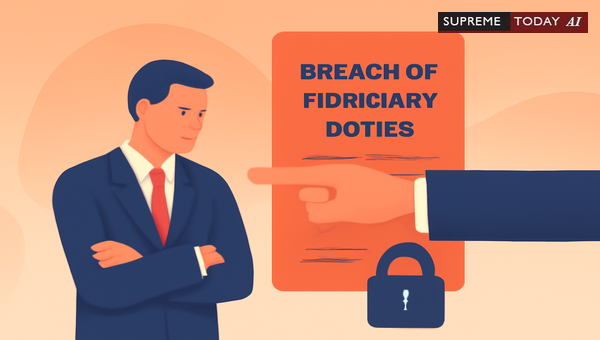
Reliefs for Directors' Breach of , Confidence, & Unlawful Trade Interference
Introduction
In the competitive world of business, directors and key employees hold positions of trust, owing stringent to their companies. But what happens when a director sets up a rival company, misuses confidential information, or interferes with the company's trade? These actions can devastate a business's competitive edge, customer base, and proprietary assets.
A common legal question arises: What reliefs can be granted for a director's breach of , and , and by setting up another company doing similar business? Under Malaysian law, courts provide robust remedies to protect companies from such betrayals. This post explores the key sanctions, drawing from case law and statutory principles, to help business owners understand their options.
Legal Framework: , Confidentiality, and Interference
Directors'
Directors must act with loyalty, good faith, and avoid conflicts of interest, as mandated by the . Breaches occur when directors secretly establish competing ventures or divert opportunities, such as setting up entities like Propac in direct competition.
and
Employees and directors are obligated to protect confidential information during and post-employment. Unauthorized disclosure or use of —valuable proprietary data with novelty—constitutes a breach. As noted, can be stated to be a cause of action for infringing or violating a trade secret. 2017 0 Supreme(Mad) 3997 Courts protect such information through equitable principles.
This requires proving unlawful means (e.g., or ) with intent or resulting injury to the plaintiff's business. For instance, CITS and/or breach of copyright was established where defendants used confidential works.
Setting up a similar business using misappropriated secrets qualifies as interference.
FP STENCIL SDN BHD vs NG SIEW PHEI - High Court Malaya Kuala Lumpur
FP STENCIL SDN BHD vs NG SIEW PHEI - High Court Malaya Kuala Lumpur
N2N CONNECT BERHAD & ORS vs CHUA TIONG HOONG & ORS - Court of Appeal Putrajaya
Key Reliefs and Sanctions Available
Courts typically grant a mix of civil, equitable, and occasionally criminal remedies. Here's a breakdown:
1.
The cornerstone remedy, injunctions halt ongoing harm:- Restrain use or disclosure of confidential information.- Prohibit operation of competing companies.
In multiple cases, courts issued injunctions against directors establishing rivals.
This is especially potent where are at risk, preventing further misuse or setting up of competing businesses.
FP STENCIL SDN BHD vs NG SIEW PHEI - High Court Malaya Kuala Lumpur
FP STENCIL SDN BHD vs NG SIEW PHEI - High Court Malaya Kuala Lumpur
2.
Compensation varies by harm proven:- Nominal : RM25,000 awarded where breach is clear but loss hard to quantify.
- Compensatory : For actual financial losses from lost customers or profits.- Punitive : Rare, but possible in egregious cases.
Claims often bundle for conspiracy, contract breaches, and trade secret misuse.
N2N CONNECT BERHAD & ORS vs CHUA TIONG HOONG & ORS - Court of Appeal Putrajaya
3. and Restitution
Defendants must disgorge profits from breaches, like gains from a rival firm built on stolen secrets. This equitable remedy ensures no unjust enrichment.
4. Other
- : Enforce non-compete or confidentiality clauses, if reasonable in scope and duration.
- : Forfeit shares in share schemes tied to loyalty.
- : Affirm breaches, clarifying rights.
- : Order return of confidential materials. 2017 0 Supreme(Del) 1498
5. Criminal Sanctions
Primarily civil, but theft of may trigger criminal charges under relevant laws, though less common in director disputes.
Integrating and Defenses
bolster claims if reasonable. Breaches lead to injunctions and . However, defendants may raise defenses like time bars or justification (e.g., implied consent). Courts dismiss baseless counterclaims when breaches are proven.
In one scenario, suits sought permanent injunction against infringement or breach of contract... , , , seeking and rendition of accounts of profits. 2017 0 Supreme(Del) 1498 This mirrors remedies for directors catapulting themselves off the well-established goodwill of the original firm. 2015 0 Supreme(Del) 1704
Unlawful interference falling short of contract breach may still be actionable under emerging torts, though not as wrongfully inducing a person not to enter into a contract. 2017 0 Supreme(Cal) 792
Case Insights from Malaysian and Regional Law
Malaysian courts consistently uphold these remedies. For example:- Directors breaching by setting up competitors faced injunctions and nominal .
- Claims succeeded for against 'Inhome' for the unauthorised use of Inhome's Confidential Information and .
Regional parallels, like Hong Kong, emphasize fiduciaries like directors as classic fiduciary offices. 2025 Supreme(HK)(HKCFI) 523 These reinforce Malaysian principles.
Conclusion and Key Takeaways
Malaysian law equips companies with powerful tools—injunctions, , accounts of profits—to combat directors who breach , confidence, , or unlawfully interfere by launching rivals. Courts prioritize protecting business interests, especially proprietary information.
Key Takeaways:- Act swiftly for injunctions to stop harm.- Document confidentiality agreements and non-competes.- Prove unlawful means for interference claims.- Seek bundled remedies for maximum recovery.
Companies should review contracts and monitor key personnel. While these remedies are generally available, outcomes depend on facts.
Disclaimer: This post offers general insights based on case law like
,
,
,
,
FP STENCIL SDN BHD vs NG SIEW PHEI - High Court Malaya Kuala Lumpur
,FP STENCIL SDN BHD vs NG SIEW PHEI - High Court Malaya Kuala Lumpur
,N2N CONNECT BERHAD & ORS vs CHUA TIONG HOONG & ORS - Court of Appeal Putrajaya
, and others. It is not legal advice. Consult a qualified Malaysian lawyer for your situation. #FiduciaryDuties #TradeSecretsMY #CorporateLaw










