


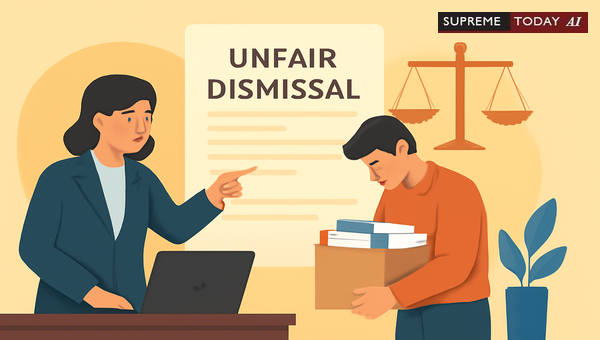
: Decoding Domestic Inquiries in Malaysian Dismissals
In the high-stakes world of employment disputes, employers often face a critical question: Does failing to conduct a before dismissing an employee automatically invalidate the termination? The landmark case of (also referenced in variants like ) provides pivotal guidance under Malaysian law. This blog post delves into the legal analysis, key holdings, exceptions, and related precedents to help employers and employees navigate this terrain.
Whether you're a business owner defending a dismissal or an employee challenging one, understanding these principles can make all the difference. Note: This is general information based on case law and not specific legal advice—consult a qualified lawyer for your situation.
The Core Issue:
The question at the heart of this discussion is the legitimacy of dismissals without a formal internal investigation. In , the courts examined whether omitting a —essentially an internal hearing where the employee can respond to allegations—renders a dismissal unfair under the (IRA).
Key Legal Principles and Holdings
Courts have consistently held that failure to conduct an internal investigation prior to dismissal is not necessarily fatal to the employer’s case. As established in precedents like Dreamland Corp. (M) Sdn Bhd v. Choong Chin Sooi (), the omission of an internal inquiry does not automatically invalidate the dismissal if other evidence justifies it .
The rationale? The focus shifts to over . The court agreed that such an omission does not automatically invalidate the dismissal, aligning with the precedent set in the case of Dreamland Corp. (M) Sdn Bhd v. Choong Chin Sooi ).
This principle is echoed in related case law:- In , the absence of a was not deemed a breach if the employer's decision was evidence-based
MAT SAAT AHMAD & ORS vs LINFOX TRANSPORT SDN BHD & ANOR
.- Similarly, Dreamland Corporation (supra) is cited for emphasizing that (the mere absence of a does not affect the company's case)CHEANG KUM HONG LWN. PRECISE FABRICATION SYSTEMS SDN BHD
.Relevance of Prior Case Law: Dreamland Corporation (M) Sdn Bhd v Choong Chin Sooi remains a cornerstone for due process in disciplinary actions. It clarifies that while a is desirable, it is not mandatory if sufficient evidence supports the termination .
Denial of Due Process Counterarguments: Employees may argue that skipping the inquiry denies a fair hearing. However, courts counter that such an inquiry, while desirable, is not mandatory if sufficient evidence supports the employer’s decision .
Exceptions and Limitations: When Procedure Matters
While flexibility exists, it's not absolute. Courts recognize scenarios where the lack of inquiry could undermine fairness:
- Right to Fair Hearing: If the dismissal hinges on unverified allegations without a chance for the employee to respond, it may compromise . Employees must demonstrate that their rights were fundamentally compromised .
- Material Evidence Focus: Judicial scrutiny prioritizes substantive evidence supporting the employer’s decision rather than procedural formalities alone .
For instance, in a case where the employer failed to prove and denied a hearing, the court ruled the dismissal unjust
CHEANG KUM HONG LWN. PRECISE FABRICATION SYSTEMS SDN BHD
. The stated: (the company failed to prove the dismissal was valid and did not provide the right to be heard)CHEANG KUM HONG LWN. PRECISE FABRICATION SYSTEMS SDN BHD
.Another example: In TT Electrical Electronics Corporation (M) Sdn Bhd v. Yong Peng Kean 1 MELR 629, dismissals during company winding-up were upheld if was established, shifting burden to the claimant
CHONG JEE FATT vs TEE & C (MALAYSIA) SDN BHD
.Insights from Related Malaysian Precedents
Malaysian courts, particularly the , consistently apply Dreamland principles. Consider these supporting cases:
Hotel Excelsior (M) Sdn Bhd and Quah Swee Khoon v. Sime Darby Bhd 2 MLJ 600: The upheld dismissals for illegal strikes, affirming jurisdiction based on evidence, not procedure
MAT SAAT AHMAD & ORS vs LINFOX TRANSPORT SDN BHD & ANOR
. The appeal regarding dismissal legitimacy was rejected; the correctly exercised its jurisdictionMAT SAAT AHMAD & ORS vs LINFOX TRANSPORT SDN BHD & ANOR
.: Echoing Dreamland, the absence of inquiry alone doesn't doom the case if evidence suffices
CHEANG KUM HONG LWN. PRECISE FABRICATION SYSTEMS SDN BHD
.Broader IRA Context: Under , dismissals must be for . In Kerjaya Binaan Sdn Bhd v. Wonderful Compound Sdn Bhd MELRU 2, procedural lapses were overlooked where evidence was strong
CHONG JEE FATT vs TEE & C (MALAYSIA) SDN BHD
.
These cases illustrate a trend: Courts prioritize fairness through evidence over rigid rituals, but employers should document thoroughly to avoid challenges.
Practical Recommendations for Employers and Employees
For Employers:
- Gather Substantial Evidence: Even without a formal inquiry, robust proof (witness statements, documents) can sustain your position, per Dreamland.
- Document Reasoning: Clearly articulate why the decision was reasonable.
- Anticipate Challenges: Prepare for claims of procedural unfairness, though they rarely succeed with strong evidence .
For Employees:
- Challenge if no evidence supports allegations or if you were denied any input.
- Burden may shift if winding-up or redundancy is claimed—prove relationships or injustices
CHONG JEE FATT vs TEE & C (MALAYSIA) SDN BHD
.
Summary and Key Takeaways
The saga underscores judicial flexibility: Procedural lapses like skipping domestic inquiries are not automatically fatal, provided employers substantiate decisions with adequate evidence . This aligns with Malaysia's employment law ethos, focusing on under the IRA.
Key Takeaways:- Domestic inquiries are best practice but not mandatory.- Evidence trumps procedure.- Always consider context—financial distress or strikes may bolster employer defenses
MAT SAAT AHMAD & ORS vs LINFOX TRANSPORT SDN BHD & ANOR
.In conclusion, while Dreamland offers employers breathing room, fairness remains paramount. Stay informed, document diligently, and seek professional advice to mitigate risks in dismissal disputes.
This post draws from publicly available case analyses and is for informational purposes only. Laws evolve, and outcomes depend on specifics.
#EmploymentLawMY, #DomesticInquiry, #UnfairDismissal















