


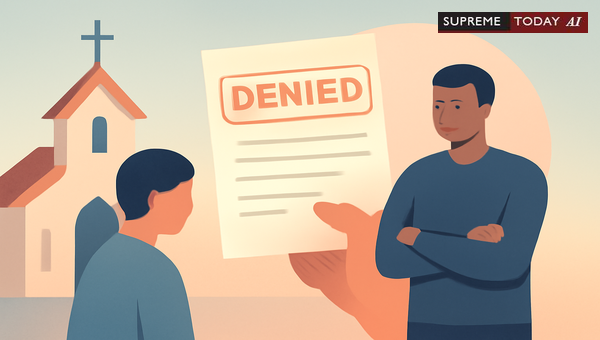
Can You Force Church Membership via ?
Imagine applying for membership in your local church, only to face rejection. Frustrating, right? But can you drag the church to court with a suit for a directing them to grant you membership? This question—Membership in Church Denied Whether Suit for Directing to Give Membership will Lie—touches on the intersection of religious freedoms, contractual rights, and civil procedure in India. While churches hold significant autonomy, legal recourse may be available under specific conditions. This post breaks it down, drawing from key legal precedents and principles. Note: This is general information, not legal advice. Consult a qualified lawyer for your situation.
The Nature of Church Membership: Contractual, Not Fundamental
Church membership isn't a like freedom of religion under . Instead, it's typically viewed as a governed by the church's bye-laws and constitution. 2002 4 Supreme 546
- Churches can restrict membership to specific groups, such as adherents of a particular faith or community, provided it doesn't violate public policy. 2005 3 Supreme 428
- If rejection is unreasonable or frivolous, an applicant may seek enforcement in an appropriate forum. 2005 3 Supreme 428
This contractual lens means disputes are resolved based on the church's internal rules, much like club or society memberships. For instance, in cases involving community organizations like the Chetty Samudayam, courts have entertained suits for mandatory injunctions to admit members upon payment of dues, reversing lower court dismissals when procedural errors occurred. 2017 0 Supreme(Mad) 3840 The plaintiff there successfully argued for recognition after fulfilling requirements, highlighting that courts may intervene if bylaws are followed.
However, distinguish this from the , which is broadly available to all and not tied to administrative membership (e.g., parish assembly). 2011 0 Supreme(Ker) 1104
Suing for : Jurisdiction and Maintainability
A suit seeking a to compel church membership doesn't fall under specialized forums like the under . 2000 8 Supreme 166 Instead, it's a classic civil dispute.
Key Hurdle:
For public religious or charitable trusts—including many churches—plaintiffs must obtain court leave under before filing. This section governs suits against trusts for issues like mismanagement or rights enforcement. Failure to comply renders the suit not maintainable. 2014 0 Supreme(Ker) 122 2011 0 Supreme(Ker) 1104
Exact quote from precedent: However, for a suit regarding a public religious or charitable trust like a church, the plaintiff must obtain leave of the court under Section 92 of the before instituting the suit. 2014 0 Supreme(Ker) 122
This requirement ensures judicial oversight, preventing frivolous litigation against religious bodies.
Civil Court Pathway
If leave is granted (or not required for private churches), can adjudicate. Courts assess:- Compliance with church bylaws.- Reasonableness of denial.- No violation of public policy.
In analogous Waqf disputes, courts have dismissed suits for declaration and injunction on membership but directed boards to apply . For example: Suit is one for declaration and in connection with dispute regarding issuance of membership to the plaintiff in the Njalakam Muslim Jam-ath. 2025 Supreme(Online)(Ker) 44352 The court emphasized no dual memberships without relinquishing prior ones and required No Objection Certificates, directing the to handle grievances fairly. (Paras 20-23)
Insights from Comparable Cases: Societies, Waqfs, and Trusts
Church disputes mirror those in other religious or cooperative bodies:
- Waqf Membership: Applications must be processed with justifiable reasons. Dual membership is barred without procedural compliance. Courts direct boards rather than grant injunctions outright. 2025 Supreme(Online)(Ker) 44352
- Community Samudayams: Mandatory injunctions succeeded when plaintiffs proved eligibility and dues payment. Appellate courts reversed dismissals, decreeing admission. 2017 0 Supreme(Mad) 3840
- Cooperative Societies: Challenges to membership classifications (e.g., for fair price shops) were upheld if based on with a nexus to objectives like timely distribution. 2011 0 Supreme(MP) 1347
Non-religious parallels, like holiday membership schemes or electricity connections, underscore that injunctions require strong proof of title or rights, often needing first. 2015 0 Supreme(Gau) 496 2011 0 Supreme(Mad) 3002
US cases, such as those involving student religious clubs (e.g., FCA equal access under EAA), show courts denying under heightened standards when access is restricted. 2023 Supreme(US)(ca9) 350 2023 Supreme(US)(ca9) 349 Though not binding in India, they illustrate global deference to institutional autonomy.
In society disputes under the , suits by individuals were rejected for lack of representative capacity, stressing procedural rigor. 2007 0 Supreme(Mad) 1589
Practical Steps If Denied Membership
- Review Bylaws: Check eligibility criteria and appeal internally.
- Document Rejection: Seek written reasons to prove unreasonableness.
- Seek Legal Opinion: Determine if Section 92 leave is needed.
- File Suit: In civil court, pairing injunction with declaration.
- Alternative Forums: For Waqf-like issues, approach boards first.
Courts typically avoid interfering in purely religious matters (per ), focusing on contractual breaches.
Key Takeaways
- Church membership is contractual, restrictable by bylaws. 2002 4 Supreme 546
- suits lie in , but require leave for public trusts. 2014 0 Supreme(Ker) 122
- Unreasonable denials may be challenged, but worship rights differ from administrative roles. 2011 0 Supreme(Ker) 1104
- Analogous cases (Waqfs, societies) show courts mandating fair processes over direct grants.
Religious institutions enjoy autonomy, but fairness prevails. If facing denial, act promptly— apply. For tailored advice, reach out to a civil law expert.
This post draws from Indian legal precedents for educational purposes. Laws evolve; verify current status.
#ChurchLaw #MembershipDispute #LegalInjunction















