


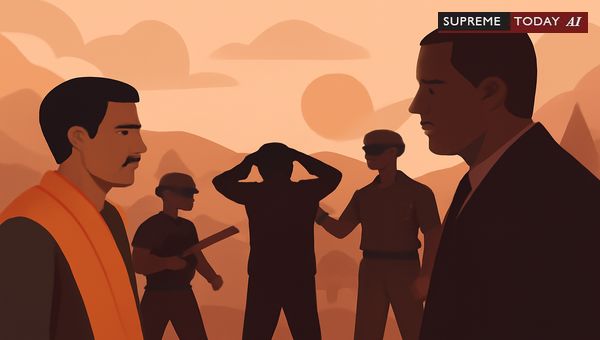
Violence: Village Volunteers' Arrests and Releases
The ethnic clashes in , erupting on , have plunged the state into prolonged unrest, claiming lives, displacing thousands, and straining law enforcement. At the heart of this turmoil are village volunteers—community members who stepped up to safeguard their villages amid security vacuums. But their role has sparked controversy, leading to arrests and subsequent releases ordered by courts. If you're searching for clarity on Violence Village Volunteers Arrested and Release, this post breaks down the legal landscape, drawing from court rulings and official records.
Note: This article provides general information based on public legal documents and is not a substitute for professional legal advice. Consult a qualified lawyer for specific cases.
Background of the Conflict
The violence ignited during a Tribal Solidarity March protesting the Meitei community's proposed inclusion in the Scheduled Tribes list. What began as a demonstration spiraled into retaliatory attacks, arson, and widespread chaos, resulting in numerous casualties and property damage. 2023 5 Supreme 539
In this volatile environment, village volunteers emerged as informal protectors. Organized to defend communities when official forces were stretched thin, their activities included patrolling and maintaining order. However, as tensions escalated, some volunteers were accused of overstepping, leading to arrests by Police. For instance, in one case, five accused village volunteers were arrested under FIR No. 1234(09)023 on , for activities linked to community protection amid the law and order crisis between communities. 2025 Supreme(Online)(Del) 1526
Arrests of Village Volunteers: Context and Legal Basis
Village volunteers' arrests typically stem from their involvement—or alleged involvement—in the unrest. Initially praised for filling security gaps, they faced scrutiny under stringent laws when actions were deemed excessive.
Key Legal Provisions
- : Allows arrests based on , but mandates procedural safeguards like producing the accused before a magistrate within 24 hours.
- : Enables without trial for up to 12 months if there's a threat to public order. Arrests under NSA have been common, but courts closely examine compliance. 1971 0 Supreme(SC) 119 2018 6 Supreme 693
In a specific instance, the Special Public Prosecutor acknowledged the volunteers' role in protection and safety of the villagers but highlighted the dire law and order situation. 2025 Supreme(Online)(Del) 1526 Courts have sometimes denied bail, as seen in a case involving a 39-year-old volunteer from Molnom village, where the court noted concerns over false propaganda to breed hatred and violence.
Historical precedents also touch on volunteers' armament. A 1971 notification exempted Village Volunteer Force members from certain licensing requirements during training or duties, subject to conditions—illustrating their semi-official recognition in the past. 2021 0 Supreme(Kar) 925
Court-Ordered Releases: Safeguarding Rights
Judicial intervention has been pivotal. challenging detentions have led to releases when procedural flaws are evident. Courts emphasize constitutional rights under (right to life and liberty) and 22 (protection against arbitrary arrest).
Notable Judicial Rulings
- In multiple cases, detention orders under NSA were quashed for failing to produce detainees before a magistrate timely. 2021 0 Supreme(Manipur) 20 2021 0 Supreme(Manipur) 23
- Courts have stressed that detentions must provide adequate grounds and undergo prompt review. Delays or lapses result in immediate release. 2018 6 Supreme 693 1973 0 Supreme(SC) 13
For example, directives have compelled authorities to submit compliance reports on detainee treatment and facilities like the North Eastern Children Home, underscoring human rights concerns. 2021 0 Supreme(Manipur) 30 One ruling highlighted jail authorities' failure to release a petitioner promptly post-order, reinforcing accountability.
These decisions reflect a broader judicial trend: while acknowledging the security crisis, courts prioritize . In Muzaffarnagar riot-related cases (analogous communal violence), the held states accountable for initial negligence but deferred probes after remedial actions. 2014 2 Supreme 658
Government Accountability and Broader Implications
The government faces directives to monitor compliance, including preemptive measures like arms recovery and preventive arrests. Volunteer deployments, akin to or , are trained for polls or unrest but must adhere to laws. 2013 0 Supreme(Cal) 225
Related judgments affirm classifications allowing exemptions (e.g., for certain groups) if rationally linked to objectives, provided conditions apply—not indefinite privileges. This nuance applies to volunteers' armament debates. Coorg exemption case reference
Key Findings from Legal Scrutiny
- Active Judicial Role: Courts review detentions swiftly, quashing unlawful ones. 2021 0 Supreme(Manipur) 20 2021 0 Supreme(Manipur) 23
- Procedural Compliance Critical: Failure in timelines or grounds leads to releases. 2018 6 Supreme 693
- Human Rights Focus: Oversight extends to facilities and treatment. 2021 0 Supreme(Manipur) 30
- Volunteer Legitimacy: While protective intent is noted, excesses invite legal action. 2025 Supreme(Online)(Del) 1526
Recommendations for Affected Individuals and Communities
Navigating this fluid situation requires proactive steps:- Seek Legal Aid Immediately: Challenge detentions via writs under ; procedural errors often favor release.- Document Everything: Maintain records of volunteer activities to demonstrate protective intent.- Monitor Government Actions: Track compliance with court orders on releases and facilities.- Community Dialogue: Engage stakeholders to rebuild trust, reducing violence triggers.- Awareness of Rights: Know CrPC/NSA safeguards—e.g., magistrate production, representation.
Conclusion: Balancing Security and Rights
The arrests and releases of village volunteers in epitomize the tension between emergency measures and constitutional protections. While volunteers played vital roles amid chaos triggered on 2023 5 Supreme 539, courts ensure no one is detained arbitrarily. Ongoing scrutiny upholds legal standards, but the unrest demands holistic solutions—better policing, dialogue, and rights education.
Key Takeaways
- Arrests often invoke CrPC/NSA, but courts quash flawed detentions.
- protects against abuses.
- Volunteers' protective roles are acknowledged, yet accountability is key.
Stay informed, protect your rights, and consult professionals. For updates on legal developments, follow reliable sources.
(Word count: approx. 1050. Sources cited are public legal documents for informational purposes.)
#ManipurViolence, #VillageVolunteers, #LegalRightsIndia












