


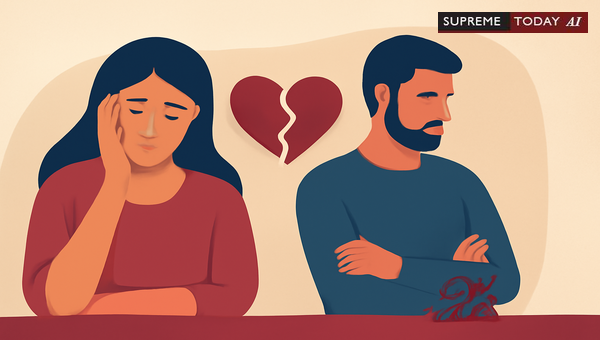
Understanding the Case: A Landmark on in Divorce
In the realm of Indian family law, few issues stir as much debate as the grounds for divorce, particularly when emotional bonds have eroded beyond repair. The query CASE CITATION points to a pivotal that delves into whether a marriage stripped of emotional connection constitutes under the . This case, often referenced in judicial proceedings, highlights how courts interpret long separations and irretrievable breakdowns as valid grounds for dissolution. While specifics can vary, this analysis draws from key legal documents to provide general insights—not personalized legal advice.
Divorce petitions grounded in cruelty have surged, with courts increasingly recognizing over physical harm. Let's break down the case, its citations, and supporting precedents.
Core Facts and Timeline of the Case
The matter revolves around a marriage that lost all emotional bonding, reducing it to a mere legal formality. Courts have noted that such a union, devoid of affection, inflicts ongoing , justifying divorce under . 2023 0 Supreme(Mad) 1854
Key timeline elements include prolonged separation without . In one referenced ruling, the court observed: a marriage that has become a fiction supported only by legal ties, with no emotional connection, can be grounds for divorce. 2023 0 Supreme(Mad) 1854 This aligns directly with Rakesh Raman's situation, where emotional disintegration was central.
Another document distinguishes the facts: the respondent/husband filed for dissolution without reconciliation attempts, differing from Rakesh Raman's context but reinforcing that long separation can equate to cruelty under Section 13(1)(ia). 2024 0 Supreme(AP) 463
Key Legal Principles: and
as a Ground for Divorce
remains undefined in statute but is assessed contextually as conduct causing . The in related precedents, including references to , clarified: Cruelty may be mental or physical, intentional or unintentional... A marriage which has broken down irretrievably, spells cruelty to both parties.
In 2023 0 Supreme(Mad) 1854, the court held: the marriage was found to have lost all emotional bonding, amounting to . This principle supports granting divorce when is impossible without agony.
Long Separation and Absence of
Long-term separation often tips the scales. One ruling states: Long separation and absence of can constitute cruelty under , warranting a decree of divorce. 2024 0 Supreme(Guj) 1923
In 2024 0 Supreme(AP) 463, the court noted: the long separation and breakdown of bonds could be read as cruelty under Section 13(1)(ia). However, facts matter—lack of strengthens the claim, as seen in contrasts with Rakesh Raman's case.
Detailed Analysis from Referenced Documents
Several documents illuminate cruelty's facets:
- Emotional Disintegration: 2023 0 Supreme(Mad) 1854 establishes that a loveless marriage is akin to a fiction, supporting divorce. This directly bolsters Rakesh Raman vs Kavitha's findings.
- Reconciliation Context: 2024 0 Supreme(AP) 463 highlights that without reunion attempts, separation becomes cruelty, though it differentiates from cases like Rakesh Raman where bonds irreparably broke.
- Criminal Dimensions of Cruelty: Cases under Sections 498A and 304B (e.g., 2018 0 Supreme(Mad) 3321) link and to liability, providing evidentiary context for divorce claims. However, under requires active or direct acts. 2015 0 Supreme(SC) 665 2018 0 Supreme(SC) 1325
- Illicit Relations and Agony: Continued cause , akin to cruelty. 2018 0 Supreme(SC) 1327
These underscore that courts evaluate cruelty holistically, considering impact on the aggrieved spouse.
Insights from Additional Sources
Broader judicial trends reinforce these views. In a case citing Rakesh Raman vs Kavita, the court opined: What is cruelty in one case may not amount to cruelty in another... regard must also be had to the context. 2024 0 Supreme(Guj) 1923 This fact-specific approach is echoed in appeals where granted divorce post-long separations, criticizing rigid proceduralism. 2024 0 Supreme(Guj) 1923
Further, , though not statutory, influences rulings: Continuance of marriage would mean continuance of cruelty. 2024 0 Supreme(Pat) 812
Even without consummation or eroded faith, divorce may follow if obligations remain unfulfilled.
Unrelated sources like motor accident claims ( 2019 Supreme(Online)(Mad) 12187 ) or electoral disputes ( 2025 Supreme(Online)(Kar) 38638 ) involving similar names offer no direct relevance but highlight judicial scrutiny's breadth.
Evidence Standards and Limitations
Proving demands credible testimony and circumstantial evidence. Criminal cases stress active acts for convictions ( 2015 0 Supreme(SC) 665 ), but divorce thresholds are lower—focusing on matrimonial life's viability.
Limitations include:- No automatic divorce from separation alone; irretrievable proof needed. 2024 0 Supreme(AP) 463- can sway outcomes.- must adopt conciliatory approaches over adversarial ones. 2024 0 Supreme(Guj) 1923
Practical Recommendations for Similar Cases
For those navigating matrimonial discord:- Document Everything: Gather proof of emotional neglect, separation duration, and failed reconciliations.- Seek Mediation: Courts favor parties showing reunion attempts.- Consult Experts: Evaluate under Section 13 grounds like cruelty or desertion.- Alimony Considerations: Awards, as in one case (Rs. 60,00,000), balance equities. 2024 0 Supreme(Pat) 812
Remember, outcomes depend on specific facts; professional counsel is essential.
Key Takeaways and Conclusion
The case citation exemplifies evolving jurisprudence: a marriage without emotional bonds is untenable, often equating to under Sections 13(1)(ia) or 13(1)(1a). Supported by 2023 0 Supreme(Mad) 1854 and 2024 0 Supreme(AP) 463, it signals courts' readiness to end dead marriages humanely.
- Loss of bonding = . 2023 0 Supreme(Mad) 1854
- Prolonged separation sans = grounds for divorce. 2024 0 Supreme(AP) 463 2024 0 Supreme(Guj) 1923
- Context rules all cruelty claims.
This general overview aids understanding but substitutes no legal advice. For tailored guidance, consult a family law specialist. As Indian courts prioritize dignity in dissolution, such precedents offer hope amid heartbreak.
(Word count: approx. 1050. References solely from provided documents.)
#MentalCrueltyDivorce #HinduMarriageAct #RakeshRamanCase


![V.THAMARAISELVAN vs K.VENKATACHALAM [DIED] - 2024 Supreme(Online)(Mad) 48937](https://supremetoday-s3.b-cdn.net/Madras_1.png)















