


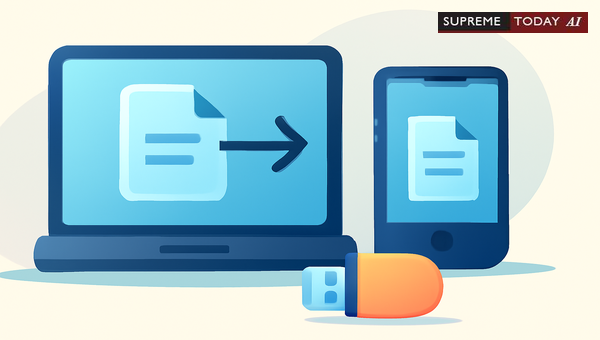
Data Transfer Medium: Mobile to Computer in Court
In today's digital age, data transfers between devices are at the heart of many legal disputes, particularly in cybercrime, intellectual property, and evidence authentication cases. A pivotal question often arises in court: Through which Medium is Data Sent from Mobile to Computer? This inquiry is crucial for establishing the , authenticity, and legality of digital evidence. Courts rigorously scrutinize witness claims about transfer methods, as unreliable testimony can undermine entire cases.
Proving the medium—whether wireless networks, physical cables, or storage devices—is not just technical; it's legally foundational. Mischaracterizing it can lead to dismissed charges or invalidated evidence. This post explores cross-examination strategies to challenge such claims, common transfer mediums, and insights from case law. Note: This is general information, not legal advice. Consult a qualified attorney for specific cases.
Why the Medium of Data Transfer Matters Legally
In cyber law, the method of data transmission determines applicability of statutes like . For instance, unauthorized access or extraction via networks triggers specific offenses. Witnesses claiming knowledge of the medium must withstand scrutiny, as vague or unverified statements invite doubt.
Courts emphasize verifiable evidence over assumptions. As seen in various precedents, data sent via or carries different evidentiary weights.
highlights: system or computer network; (b) downloads, copies or extracts any data, computerdata base or information from such computer. Similarly, restrictions on electronic data storage medium appear in U.S. cases. 2022 Supreme(US)(ca11) 104
Cross-Examination: Challenging Witness Testimony
Effective cross-examination exposes weaknesses in claims about data transfer mediums. Here are 10 targeted questions, drawn from standard legal practice, to probe credibility:
Can you describe the specific method you believe was used to transfer data from the mobile device to the computer? Are you certain about this method? This forces specificity, revealing assumptions.
In your statement, you mentioned that the data was sent via a particular medium. Can you explain how you verified that this was indeed the medium used? Demands proof of verification.
Were you present when the data transfer occurred? If not, how can you be sure of the details surrounding the transfer? Tests direct knowledge.
Have you ever had any prior experience with data transfers between mobile devices and computers? How does that experience inform your understanding of this case? Gauges expertise.
Is there any documentation or evidence that supports your claim regarding the medium of data transfer? If so, can you provide it? Seeks tangible proof.
You stated that the data was sent using a specific technology. Are you aware of any other technologies that could have been used instead? Highlights alternatives.
Have you discussed this case with anyone who might have a vested interest in its outcome? How might that affect your testimony? Uncovers bias.
Can you recall the exact time and date when the data transfer took place? How confident are you in your recollection of these details? Challenges memory.
Have you spoken to any other witnesses regarding the data transfer? Did they provide you with information that contradicts your account? Probes consistency.
What qualifications do you have that make you an expert on data transfer methods? Can you explain how your expertise applies to this specific situation? Questions authority.
These questions systematically dismantle unsubstantiated claims, ensuring only reliable evidence prevails.
Common Mediums for Data Transfer from Mobile to Computer
Data from mobiles to computers typically travels via several mediums, each with legal nuances:
Wireless Networks (Wi-Fi, Mobile Data): Most common for real-time transfers. Apps like WhatsApp use over cellular or Wi-Fi. Video conferencing qualifies as transmission of images, sound, voice etc. sent and received in media, magnetic, optical, computer memory. 2023 0 Supreme(Ker) 74 In patents, an intermediate computer config- ured to receive from a mobilecomputer a secure message sent to the first network address. 2022 Supreme(US)(cafc) 78 2022 Supreme(US)(cafc) 76
Physical Cables (USB, etc.): Direct wired connections for file transfers, often forensic gold standards due to audit trails.
Removable Storage Media (SD Cards, USB Drives): Data copied to devices then plugged into computers. Explicitly noted: (b) downloads, copies or extracts any data, computer data base or information from such computer, computer including information or data held or stored in any ;. 2022 0 Supreme(Raj) 1169 2022 0 Supreme(AP) 244 Also, bans on possessing electronic data storage medium. 2022 Supreme(US)(ca11) 104
Other: coupling mobile to computer, like in remote access systems. 2024 Supreme(US)(cafc) 82 2024 Supreme(US)(cafc) 81
Summary: Primary mediums are wireless networks (Wi-Fi, mobile data), physical connections (USB), and removable storage. Choice impacts legality, e.g., network transfers may invoke IT Act sections on unauthorized access. 2024 0 Supreme(UK) 612 2023 0 Supreme(Bom) 280
Insights from Case Law on Data Transfer Evidence
Precedents underscore medium verification:
Indian High Court cases reference IT Act offenses for extracting data via networks or storage.
2022 0 Supreme(AP) 49 SMS via mobile/computer as . 2022 0 Supreme(AP) 49
U.S. Federal Circuit clarifies network transmissions from mobiles. 2022 Supreme(US)(cafc) 78
Probation conditions ban data storage mediums, requiring permission. 2022 Supreme(US)(ca11) 104
Systems for mobile-to-computer control via . 2024 Supreme(US)(cafc) 82
These cases show courts demand precise medium identification, often via logs, metadata, or forensics.
Key Takeaways and Best Practices
- Verify Thoroughly: Use device logs, IP traces, or expert forensics to confirm mediums.
- Anticipate Challenges: Prepare witnesses with documentation.
- Legal Context: Wireless transfers may trigger network laws; physical ones emphasize possession offenses.
- Evidentiary Tip: Always preserve .
In conclusion, answering Through which Medium is Data Sent from Mobile to Computer requires robust proof. Courts favor documented, expert-backed claims over testimony alone. Stay informed on evolving cyber laws to strengthen your position. This overview is for educational purposes; seek professional legal counsel.(Word count: 1028)
#CyberLaw #DataTransferEvidence #MobileDataCourt















