Searching Case Laws & Precedent on Legal Query.....!
Analysing the retrieved Case Laws
Scanned Judgements…!



Searching Case Laws & Precedent on Legal Query.....!
Analysing the retrieved Case Laws
Scanned Judgements…!
Dependency of Mother and Father during Lifetime - In Hindu Law, a married daughter is generally not considered dependent on her father or as part of the joint family after marriage, but social circumstances and constitutional principles can influence dependency assessments. The mother can be considered dependent if she relied on the deceased's income, especially if she was a homemaker or did not have independent income. 2023 0 Supreme(All) 316
Dependency in Claims and Pensions - Courts often examine whether the claimant was dependent on the deceased during their lifetime. Dependency is typically established if the claimant relied on the deceased's income or pension, and whether they were living with or supported by the deceased. For example, in cases where the mother was alive but did not pursue claims or was not dependent during the deceased's lifetime, dependency was denied. Conversely, unmarried daughters or those living with the deceased and relying on his income are considered dependent. 2024 0 Supreme(Guj) 839, 2024 Supreme(Online)(MAD) 19263, 2024 Supreme(Online)(Mad) 72934, 2021 Supreme(Online)(Gau) 386, 2023 0 Supreme(Chh) 301, 2025 Supreme(Online)(Mad) 66791, 2024 Supreme(Online)(CAT) 14748, 2023 0 Supreme(SC) 1818
Impact of Marriage and Social Circumstances - Once married, daughters are generally presumed to be independent, unless evidence shows ongoing dependence. Similarly, widows or dependents who lost income sources or were living with the deceased at the time of death are recognized as dependents. Dependency assessments also consider whether the claimant had independent income, remarriage, or was living separately. 2025 Supreme(Online)(Mad) 66791, 2023 0 Supreme(Chh) 301
Main Insights:
The law recognizes that dependents include widows, unmarried daughters living with the deceased, or homemakers relying on the deceased's income.
Conclusion: The question of whether a mother or daughter could be considered dependent during the father's or mother's lifetime hinges on social, economic, and factual circumstances, with courts emphasizing actual dependency over mere relationship status. Social principles and constitutional mandates influence dependency assessments, especially for women and married daughters.
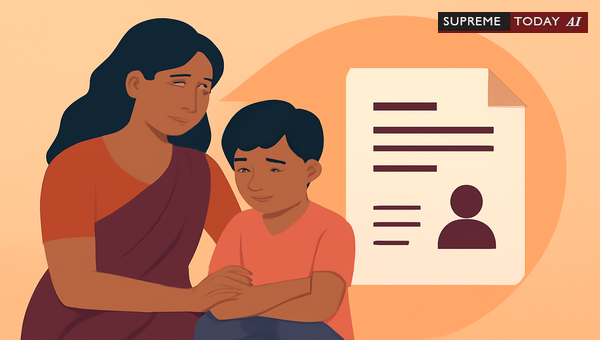
In India, family dynamics can sometimes lead to complex legal disputes, especially when it comes to financial support. A common question arises: Can a mother ask for from her son in a case? This issue intersects the (), with principles of dependency under and related precedents. While the allows an —including a mother—to seek protection orders like from her children (relatives), success hinges on proving dependency and elements.
This blog post breaks down the legal framework, drawing from court judgments on dependency during a parent's lifetime. Note: This is general information based on precedents and not specific legal advice. Consult a qualified lawyer for your situation.
The defines broadly, covering like denying financial support. enables applications for , including . A mother can file against her son if she qualifies as an living in a or facing violence.
However, courts scrutinize dependency. Is the mother financially reliant on the son? General principles from motor accident claims and family pensions apply analogously, emphasizing evidence of income and living arrangements. For instance, the in Sarla Verma v. Delhi Transport Corporation (2009) 6 SCC 121 clarified dependency rules, influencing broader claims. 2013 0 Supreme(Gau) 111 2013 0 Supreme(Gau) 78
Dependency isn't automatic; it requires proof. Key rules include:
General Rule of Dependency: The mother is generally considered dependent on the deceased (or in contexts, the earning child) if she lacks independent income. Sarla Verma holds that the mother alone is considered dependent when the father has his own income and is not dependent on the deceased. 2019 0 Supreme(J&K) 458
Father's Dependency: The father isn't automatically dependent unless claimants prove he lacks income. The lies on the claimants to demonstrate that the father was dependent on the deceased. 2016 0 Supreme(Tri) 375
Marital Status and Dependency: Married daughters depend on husbands unless proven otherwise, while divorced daughters may claim reliance on parents. 2023 0 Supreme(All) 1752 2021 0 Supreme(Gau) 546
These principles extend to DV , where courts assess if the mother relied on the son's support, akin to dependency during the father's lifetime.
Eligibility for : Mothers can claim if their income ≤ Rs. 2500/month and combined parental income ≤ Rs. 5000/month, treating her as dependent. 2008 0 Supreme(J&K) 183
Special Cases: Aged or infirm fathers may qualify, but mothers are prioritized absent contrary evidence. 2012 0 Supreme(Del) 1257
In DV cases, similar thresholds apply indirectly through evidence of .
Courts consistently evaluate actual reliance. For example:
In a Hamirpur case, a daughter was deemed dependent on her mother during the lifetime of her father, eligible for post-father's death.
Sarla Verma didn't exclude fathers but required proof; here, parents jointly claimed, with father as PW1 praying for compensation. 2013 0 Supreme(Gau) 111 The Court held the father subject to evidence. 2013 0 Supreme(Gau) 78
Dependency in claims/pensions demands proof of living with/support by deceased. Unmarried daughters or homemaker mothers relying on income qualify; married daughters typically don't unless circumstances show otherwise. 2024 0 Supreme(Guj) 839 2024 Supreme(Online)(MAD) 19263 2023 0 Supreme(Chh) 301
Social context matters: In , a married daughter is generally not considered dependent on her father... but social circumstances... can influence. Homemakers without income are recognized. 2023 0 Supreme(All) 316
Inheritance cases reinforce: Illegitimate children or those dying during parents' lifetime inherit based on relation, but dependency claims need financial proof. 2009 0 Supreme(Bom) 1265 2009 0 Supreme(Bom) 1266
One snippet notes: Till even after the death of his father... both his mother and her another sister... continued to live jointly. 2013 0 Supreme(Kar) 1401 This highlights joint living as evidence.
To succeed:
Courts deny if mother had independent means or father supported her. Dependency is largely determined by whether the claimant relied on the deceased's income during his lifetime. Marriage presumes independence unless rebutted. 2025 Supreme(Online)(Mad) 66791
Recommendations:- Gather income evidence for both parents/siblings.- Highlight marital/social factors for daughters.- File under promptly.
A mother may claim from her son in a DV case if dependency is proven—lacking independent income, relying on son's support, amid . Precedents like Sarla Verma2019 0 Supreme(J&K) 458 emphasize: mothers are typically dependents unless fathers prove self-sufficiency. 2016 0 Supreme(Tri) 375
Main Insights:- Dependency turns on financial evidence, not just relation.- Courts weigh living arrangements, income limits (e.g., pensions). 2008 0 Supreme(J&K) 183- Social/constitutional principles aid women claimants. 2023 0 Supreme(All) 316
References: 2019 0 Supreme(J&K) 458 2016 0 Supreme(Tri) 375 1998 0 Supreme(Del) 12 2023 0 Supreme(All) 1752 2021 0 Supreme(Gau) 546 2008 0 Supreme(J&K) 183 2012 0 Supreme(Del) 1257
2013 0 Supreme(Kar) 1401 2013 0 Supreme(Gau) 111 2013 0 Supreme(Gau) 78 2009 0 Supreme(Bom) 1265 2009 0 Supreme(Bom) 1266 2023 0 Supreme(All) 316 2024 0 Supreme(Guj) 839 2024 Supreme(Online)(MAD) 19263 2024 Supreme(Online)(Mad) 72934 2021 Supreme(Online)(Gau) 386 2023 0 Supreme(Chh) 301 2025 Supreme(Online)(Mad) 66791 2024 Supreme(Online)(CAT) 14748 2023 0 Supreme(SC) 1818
Ultimately, outcomes depend on facts. The question... hinges on social, economic, and factual circumstances, with courts emphasizing actual dependency over mere relationship status.
Word count: 1028. This analysis underscores evidence's role in Indian law. Seek professional advice.
#MotherMaintenance, #DomesticViolenceIndia, #LegalDependency


The second basis which has been indicated in the affidavit is that in Hindu Law, a married daughter cannot be considered as dependent of her father or a dependent of a joint Hindu family. ... The Supreme Court observed that if the word 'after' was read to mean that a mother would be disqualified from acting as a guardian of a minor during the lifetime of the father, thi....

Thaker submitted that there was no proof that the father was dependent on the deceased, as the father was likely to have his own income, and mother alone will be considered as a dependent. Ms. ... She states that the mother being alive did not pursue the claim or even enhancement and during her lifetime never removed the office objection and did not en....

In the present case, the petitioner was not dependent upon her father or mother during their lifetime. She lost her husband two years after the date of death of her parents. 9. ... On 26.04.2022, the third respondent has passed the impugned order, rejecting the request of the petitioner on the ground that during the lifetime of her father and mother, she was not #HL_STA....
3.The case of the petitioner is that her father was working as a Helper at TANGEDCO. He attained superannuation and retired from service on 30.06.2000. He was drawing pension during his lifetime. The mother of the petitioner pre-deceased her father. ... If the 2nd respondent wanted to conduct an independent inquiry and verify if the petitioner was dependent on her father, an opportunity....

Counsel further submitted that the original claimant No. 5, i.e., the respondent No. 4, mother of the deceased was not dependent on the deceased. ... The Supreme Court in the case of Sarla Verma, 2009 ACJ 1298 (SC), has held that a major son ordinarily would not be considered a dependant. However, when it comes to the unmarried daughter, there is an error. She was aged about 18 years at the time when her father passed away....

She is/was not dependent upon the deceased employee at the time of his death. This fact was duly proved from the service record of the deceased employee. In his lifetime, the deceased employee filled up the Form-F i.e., Gratuity Nomination Form and made nominee, only the Mother Smt. Sahodri. ... As per the service record and Form-F ie, Gratuity Nomination Form of the deceased employee, he had a dependent only Smt. Sahodri ....

Hamirpur and at the time of death of her mother she was living as a dependent of her mother the widow of Late lifetime of her father to one Ejaj Husain who died on during the lifetime of her father but she was widowed and Family Pension after the death of her father on 22.04.2017.
In the present case, the petitioner cannot be regarded as a dependent of the pensioner at the relevant time, since she was married and living with her husband during the lifetime of her father. ... On a careful perusal of the records and the submissions made, it is evident that the petitioner was married during the lifetime of her father, the original pensioner. After his demise, the family pension was r....

’ income during lifetime of her mother. ... It is submitted that during the life time of the father of the applicant she was dependent on him. After the death of her father, she got married on 09.12.2012. ... It is further submitted that although her divorce took place after the death of her mother, but during the lifetime of her mother i.e. pensioner,....

Further, subject to evidence to the contrary, the father is likely to have his own income and will not be considered as a dependant and the mother alone will be considered as a dependant. ... In the absence of evidence to the contrary, brothers and sisters will not be considered as dependants, because they will either be independent and earning, or married, or be dependent on the #HL_STA....

Till 1965 even after the death of his father in the year 1945, both his mother and her another sister Thanamma continued to live jointly, along with their respective children. He admits that in the portion of 1 acre 20 guntas, he has formed sites and also given sites to the children of plaintiffs, which in turn they have sold. Accordingly, he was leading life with both the wives. During the lifetime of his mother itself, his father married Thanamma.
The Apex Court in the case of Sarla Verma v. Delhi Transport Corporation and another, reported in (2009) 6 SCC 121 did not altogether exclude the entitlement of the father in claiming compensation. In the case at hand, both the father and mother jointly filed the claim petition and petitioner No. 1, the father examined himself as PW 1 before the tribunal and in his deposition he prayed for granting him and his wife the compensation of Rs. 15,00,000/-. While the father was aged about 55 years a....
The Apex Court in the case of Sarla Verma v. Delhi Transport Corporation and another, reported in (2009) 6 SCC 121 did not altogether exclude the entitlement of the father in claiming compensation. In the case at hand, both the father and mother jointly filed the claim petition and petitioner No. 1, the father examined himself as PW 1 before the tribunal and in his deposition he prayed for granting him and his wife the compensation of Rs.11,04,000/-. The Court held- father, subject t....

In the present case, Kisan was the legitimate son of deceased Draupadabai and Sitaram and he could certainly inherit the property of his parents and he would also be entitled to share in the coparcenary property as a coparcener. In view of the definition of word 'related' in section 3 (1)(j) read with Section 15(1), they can succeed and inherit the property of their mother Vimal and in view of Section 16(3) of the Hindu Marriage Act, they can also succeed to their mother as well as father. #HL....
In view of the definition of word 'related' in section 3 (1)(j) read with Section 15(1), they can succeed and inherit the property of their mother Vimal and in view of Section 16(3) of the Hindu Marriage Act, they can also succeed to their mother as well as father. However, he had died during the lifetime of his father as well as mother. The plaintiffs Nos.1 to 3, who sought partition and share in the property, are the illegitimate children of deceased Kisan and the plaintiff....


An indispensable Tool for Legal Professionals, Endorsed by Various High Court and Judicial Officers
Please visit our Training & Support
Center or Contact Us for assistance

Scan Me!
India’s Legal research and Law Firm App, Download now!


For Daily Legal Updates, Join us on :



 Back to top


