


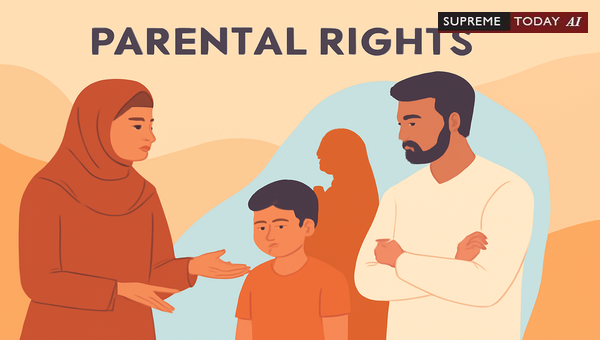
Parental Rights in India After Divorce: Focus on Muslim Law
Divorce can be an emotionally challenging time for parents, especially when children are involved. In India, parental rights after divorce vary significantly based on personal laws applicable to different communities. A common question arises: What are the Parental Rights in India after Divorce? This blog post delves into child custody rights under Muslim personal law, particularly following a divorce and the mother's remarriage. We'll explore key principles like (custody), the impact of remarriage, and the paramount welfare of the child. Note: This is general information based on legal precedents and not specific legal advice. Consult a qualified lawyer for personalized guidance.
Understanding : Divorce Initiated by the Wife
Under Muslim law in India, provides a wife with the unilateral right to dissolve her marriage without the husband's consent. This right is rooted in the Quran and is recognized as valid even if the wife offers to return her dower or other benefits. As stated, A Muslim wife has the absolute right to seek , which allows her to dissolve the marriage without the husband's consent. This right is conferred by the Quran and is not contingent upon the husband's agreement 2021 0 Supreme(Ker) 452 2022 0 Supreme(Ker) 1060.
The process typically involves the wife relinquishing certain rights, such as maintenance during , but this is not a precondition for validity. While the wife may offer to return her dower or other material gains as part of the process, this is not a precondition for the validity of . The husband can claim back what is due to him, but the itself remains valid regardless of this 2021 0 Supreme(Ker) 452 2023 0 Supreme(Ker) 672.
Related forms like (mutual consent divorce) share similarities, where the requirements of Mubaraa on the part of the wife are similar to that when the divorce is by way of i.e. the wife has to undergo 2025 0 Supreme(Guj) 1352. Courts in India uphold these under the 2024 0 Supreme(All) 2109.
Post-, the wife is free to remarry, but this decision carries implications for parental rights, especially custody.
Custody Rights () Under Muslim Law
In Muslim law, custody—known as —is governed by specific age-based rules favoring the mother for young children:
Mother's Preferential Right: The mother typically holds custody of a male child until age seven and a female child until puberty. Under Muslim law, a mother has the right to custody of her male child until the age of seven and her female child until puberty. This right persists even after divorce unless she remarries 2008 0 Supreme(Gau) 70.
Father's Role: The father is the natural guardian () and provides maintenance, but custody vests with the mother during the period unless forfeited.
This structure prioritizes the child's emotional nurturing, often seen as the mother's domain. Importantly, The mother can on no account give up her right of ‘’ for even if she were to obtain a in lieu of abandonment of her right to her child custody will be valid and she will retain a right of 2014 0 Supreme(All) 1832.
For a 2-year-old child, as in many disputes, the mother's right is strong initially, especially for girls until puberty 2023 0 Supreme(Ker) 672 2025 0 Supreme(Guj) 1304.
Impact of Mother's Remarriage on Custody
Remarriage introduces a critical factor. If the mother remarries, particularly to a stranger, her right to custody may be forfeited. The father then assumes the right to custody 2008 0 Supreme(Gau) 70. However, if she remarries a relative or the new marriage dissolves, rights may revive 2008 0 Supreme(Gau) 70.
Courts scrutinize this closely. Remarriage alone does not automatically disqualify the mother, but it can if the new environment harms the child. Cases show that remarriage of the father or mother can influence custody decisions, especially if it is argued that the remarried parent might not provide the same environment or may suffer step-motherly treatment (integrated from sources like 2023 0 Supreme(Mad) 573).
In one instance, a father sought custody after the mother's and remarriage, highlighting threats and changed circumstances 2023 0 Supreme(Mad) 573. Yet, precedents emphasize evidence over presumption 2004 2 Supreme 313 1985 0 Supreme(SC) 67.
The Paramount Principle: Best Interests of the Child
Above all, Indian courts prioritize the child's welfare, transcending strict personal law rules. Courts prioritize the welfare of the child in custody disputes. Factors such as the mother’s ability to provide care and the child’s established living situation are critical 1997 9 Supreme 220.
Judicial trends favor the mother for young children unless compelling evidence shows detriment from her remarriage or lifestyle 2004 2 Supreme 313 1985 0 Supreme(SC) 67. For instance, stability, emotional bonds, and care quality outweigh remarriage per se. Custody orders remain modifiable on changed circumstances, ensuring ongoing child-centric evaluation.
Additional cases reinforce this: In disputes post-, courts assess if the mother can still provide a stable home despite remarriage 2023 Supreme(Online)(Mad) 74387 2021 Supreme(Online)(KER) 27321.
Legal Strategies and Practical Recommendations
Navigating these rights requires careful steps:
For Mothers: Gather evidence of your caregiving ability and stable post-remarriage environment. Courts may uphold if welfare is proven.
For Fathers: Demonstrate how remarriage disrupts the child's welfare to seek custody transfer.
General Advice: File petitions under relevant laws like the , alongside personal law. Mediation via family courts or Islamic bodies (e.g., notices from muftis 2025 0 Supreme(Telangana) 67) can help.
Seek interim custody to maintain status quo during litigation. Remember, maintenance obligations persist separately 2023 Supreme(Online)(KER) 18785.
Conclusion and Key Takeaways
Parental rights after divorce in India under Muslim law balance traditional rules with modern welfare principles. While mothers hold strong custody claims post-, remarriage to a stranger may shift this to the father, always subject to the child's best interests.
Key Takeaways:- empowers wives but doesn't forfeit outright 2021 0 Supreme(Ker) 452 2022 0 Supreme(Ker) 396.- Remarriage impacts custody, potentially favoring the father 2008 0 Supreme(Gau) 70.- Child's welfare trumps all—courts decide holistically 1997 9 Supreme 220.- Custody is flexible; revisit on changes.
For tailored advice, consult a family law expert familiar with Muslim personal law. Understanding these nuances empowers informed decisions during turbulent times.
References: 2021 0 Supreme(Ker) 452 2022 0 Supreme(Ker) 1060 2008 0 Supreme(Gau) 70 1997 9 Supreme 220 2004 2 Supreme 313 1985 0 Supreme(SC) 67 2023 0 Supreme(Ker) 672 2025 0 Supreme(Guj) 1352 2025 0 Supreme(Telangana) 67 2024 0 Supreme(All) 2109 2023 0 Supreme(Mad) 573 2014 0 Supreme(All) 1832 2022 0 Supreme(Ker) 396
#ParentalRightsIndia, #MuslimLawCustody, #KhulaDivorce












