


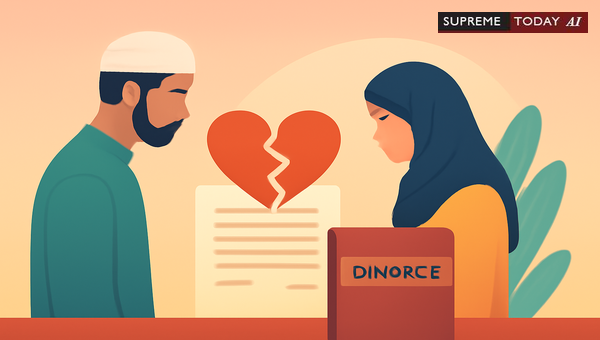
Can a Muslim Man File Divorce Petition in India?
In India's diverse legal landscape, family matters like divorce are governed by personal laws tailored to religious communities. A common question arises: Can a Mohammadan male file a petition under the Dissolution of Marriage Act? This query often stems from confusion around the (DMMA), which is frequently associated with women's rights. However, Muslim men have avenues under personal laws and other statutes. This post breaks down the legal framework, key provisions, case laws, and practical steps, drawing from judicial precedents.
Overview of Muslim Divorce Laws in India
Muslim marriages in India fall under personal laws derived from , supplemented by statutes like the DMMA, 1939. The DMMA primarily empowers women married under Muslim law to seek on specific grounds, such as the husband's failure to provide maintenance or imprisonment. Yet, it does not bar men from pursuing divorce.
Muslim husbands typically pronounce (divorce) extra-judicially, but for a court decree, they can approach . As one judgment notes: This is a case where a muslim male has sought dissolution of marriage. As per a woman married under Muslim Law shall be entitled to obtain a decree for the dissolution of her marriage... Here, it appears from perusal of the provisions... that a male does not have any way to obtain the decree for dissolution of marriage. For that purpose, one has to take recourse to the Act of 1984. 2025 0 Supreme(MP) 1
The Act, 1984, fills this gap by granting jurisdiction over regardless of religion. empowers courts to handle suits and proceedings of the nature referred to in the Explanation, including Muslim divorces. Thus, a Mohammadan male can file for dissolution through these forums.
Mohammad Shah VS Chandani Begum
Key Legal Provisions for Mohammadan Males
- Primarily for Women: Grounds include neglect, cruelty, or impotence by the husband. It states no explicit bar on men, but men rely on personal law equivalents. 1979 0 Supreme(AP) 161
- Husband's Options: Under Muslim personal law, grounds like wife's failure to perform marital obligations or allow . A petition cited: The F.C.O.P.No.30 of 2024 was filed by the respondent-husband under , for the Voluntarily Desertion and not performing marital obligation with the petitioner under Islamic . 2024 Supreme(Online)(TEL) 21817
Act, 1984
- Broad Jurisdiction: allows Muslim males to file suits for dissolution. Courts have ruled: Muslim male can file suit or proceeding for dissolution of marriage on the grounds as available to him – Parties have additional forum of also to get decree for divorce/dissolution of marriage.
Mohammad Shah VS Chandani Begum
- No Discrimination: Denying men access would violate constitutional morality. Trial courts err in dismissing on maintainability; matters must be remanded for . 2025 0 Supreme(MP) 1
Other Relevant Acts
- : If married under this secular law, husbands can invoke the , for grounds like adultery, cruelty, or desertion.
- : Applicable in interfaith or special marriages, offering petition rights to husbands.
Under Muslim law, remarriage requires proof of prior dissolution: Unless the first marriage of Fakiramma with Moulasab Menasagi is duly dissolved as per Mohammadan law, her marriage with Huchchesab should be considered as ‘Batil’ marriage.
Judicial Precedents and Case Law
Courts have clarified men's rights repeatedly:- Capacity and Agency: A Mohammadan wife can file for divorce without a if she has attained , indicating that the legal framework recognizes the agency of individuals in marital matters. 1979 0 Supreme(AP) 161 This principle extends to men via .- Maintainability Upheld: In a Madhya Pradesh case, a Muslim man's divorce petition was remanded after dismissal on grounds it wasn't under DMMA: Trial Court erred in rejecting application for dissolution of marriage on the ground of maintainability – Impugned judgment passed by Family Court set aside.
Mohammad Shah VS Chandani Begum
- Husband's Petitions Allowed: Filings under Section 307(3) for desertion show husbands actively using DMMA provisions. 2024 Supreme(Online)(Tel) 38225- Proof of Dissolution Critical: For validity, prior marriages must be dissolved per ; lack thereof renders unions batil (irregular). Cohabitation doesn't confer status. 2025 0 Supreme(Ker) 3206These cases affirm: Generally, a Mohammadan male can seek , though procedures differ from women's.
Grounds Available to Muslim Husbands
Common grounds include:- Desertion and Non-Performance: Wife's or failure in marital duties. 2024 Supreme(Online)(TEL) 21817- Cruelty: Mental or physical, beyond ordinary wear and tear.- with Court Confirmation: Extra-judicial needs court validation in disputes.- and Maintenance: Post-, wives get maintenance till period. 2002 0 Supreme(Ori) 774
Note: isn't standalone grounds under Muslim law, unlike cases.
Pundlik Martandrao Yevatkar VS Sau. Ujwala @ Shubhangi Pundlik Yevatkar
Practical Steps and Recommendations
- Consult a Specialist: Engage a family law expert to assess your marriage type (nikah, special marriage) and grounds.
- Gather Evidence: Document desertion, cruelty, or non-maintenance with witnesses, as Muslim marriages require two male or one male + two female witnesses. 2025 0 Supreme(Ker) 3206
- File in Family Court: Invoke Act; high courts offer additional forums.
- Interim Relief: Seek stays if needed for convenience. 2025 Supreme(Online)(AP) 13903
Conclusion and Key Takeaways
While the , focuses on women, Mohammadan males typically can file petitions for dissolution under the Act, 1984, personal laws, or applicable statutes like the Special Marriage Act. Judicial precedents like those in
Mohammad Shah VS Chandani Begum
and 2025 0 Supreme(MP) 1 reinforce access to justice without gender bias.Key Takeaways:- Use for broad jurisdiction.- Prove grounds with -compliant evidence.- Prior dissolution is mandatory for remarriages.
This is general information based on legal precedents and not specific advice. Laws evolve; consult a qualified lawyer for your case.
References:- 1979 0 Supreme(AP) 161 1978 0 Supreme(AP) 145
Mohammad Shah VS Chandani Begum
2025 0 Supreme(MP) 12024 Supreme(Online)(TEL) 21817 2025 0 Supreme(Ker) 3206 #MuslimDivorceIndia, #FamilyLawIndia, #DivorceRights















