


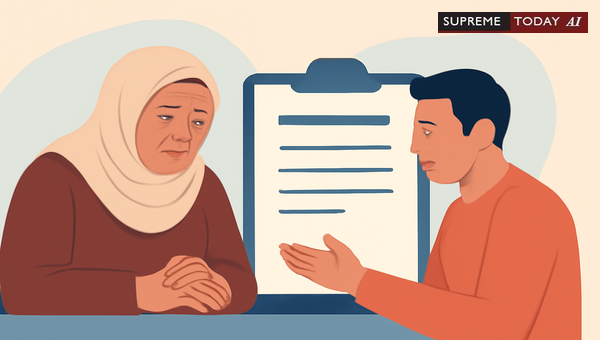
Muslim Senior Citizens' Rights Against Younger Children in India
Introduction
In India, the traditional family structure places significant emphasis on respecting and caring for elders, particularly within the Muslim community where and religious principles underscore the duty to parents. However, instances of neglect, harassment, or mistreatment by children have prompted robust legal safeguards. A common concern arises when senior citizens, including Muslims, face challenges from younger family members regarding and residence. While questions about family representation—such as who can represent a minor child in the Muslim community if both parents die—highlight ongoing family law issues, the focus here is on the reciprocal protections for seniors under secular laws applicable to all, including Muslims. The (the Act), offers critical remedies like financial support and to ensure dignified living. This post delves into these rights, supported by . 2021 0 Supreme(Mad) 1328 2023 0 Supreme(Del) 1570
Legal Framework Under the Act
to
The Act unequivocally grants senior citizens, regardless of religion, the right to seek from children and relatives unable to support themselves. imposes an obligation on children to provide financial assistance, enabling parents to lead a normal life. This applies equally to Muslim seniors, as the law is secular and overrides in matters of . Senior citizens can file applications under before a . Courts have reinforced that children, including sons and daughters, bear this duty irrespective of marital status. 2021 0 Supreme(AP) 52 2017 0 Supreme(Ker) 939
For instance, in a case emphasizing urgency, the court noted: every day's delay before a Tribunal like this hurts senior citizens exponentially more than the younger generation. This underscores the Act's intent to swiftly protect elders' life and property. 2023 0 Supreme(Pat) 649
Rights to Eviction and Residence
A pivotal provision allows tribunals to order eviction of children or relatives from the senior citizen's residence if their presence causes discomfort or harassment. empowers tribunals to ensure the senior's welfare, prioritizing their right to peaceful possession. This is not absolute; courts require consideration of , such as . However, where no such rights exist, eviction is readily granted. 2022 0 Supreme(Cal) 850 2021 0 Supreme(Del) 2241
In one ruling, the tribunal directed a son and daughter-in-law to vacate after finding harassment post the senior's husband's death. The court upheld this, stating children cannot assert property rights during parents' lifetime. 2024 0 Supreme(Bom) 1017
Key Judicial Findings and Precedents
Indian courts have consistently upheld senior citizens' primacy under the Act:
Obligation Extends to All Children: Sons and daughters must maintain aged parents. Neglect triggers tribunal intervention for protection and dignified living.
2021 0 Supreme(AP) 52
Protection Against Mistreatment: Tribunals can order eviction for ill-treatment, as seen in cases where seniors were confined or assaulted in their own homes. One court directed immediate eviction within 30 days, criticizing a wait and watch approach: One can foresee the impact that when a senior citizen who is subjected to torture... strict measures have to be followed. 2018 0 Supreme(Chh) 254
Eviction as Part of : Residence forms part of . Eviction is permissible as an incident of the enforcement of the right to and protection, but only after evaluating disputes. In a Bombay High Court case, eviction of a daughter was upheld despite claims, prioritizing the father's welfare. 2021 0 Supreme(Bom) 1669
These rulings affirm that delays harm seniors disproportionately, urging expeditious tribunal action. 2023 0 Supreme(Pat) 649
Balancing Competing Rights
Challenges arise when children's or daughters-in-law's rights under the (DV Act) clash with seniors' claims. Courts clarify that the Senior Citizens Act prevails in cases of elder discomfort. For example:
Daughters-in-law's shared household rights under are statutory and temporary, not overriding seniors' ownership. The competing rights of the daughter-in-law cannot be compromised at the cost of rights of the senior citizens to enjoy their own property independently. 2025 Supreme(Online)(Bom) 6218
Trial courts must implead all parties, including husbands, and consider DV claims before eviction. allows civil courts to grant residence reliefs, balancing both statutes. In a appeal, judgments were set aside for ignoring daughters-in-law's statutory protections, remanding for fresh consideration under .
DV proceedings do not bar Senior Citizens Act remedies. Tribunals retain authority if eviction ensures elder protection, provided or are refuted. 2023 0 Supreme(Pat) 649
Thus, while seniors' welfare is paramount, is mandated. 2022 0 Supreme(Cal) 850
Limitations and Practical Considerations
Property Rights: Children with enforceable civil rights (e.g., ) cannot be evicted summarily under the Act; regular civil suits may be needed. A Patna High Court quashed an eviction order for overlooking admitted , remanding for review. 2023 0 Supreme(Pat) 649
Appeal Rights: allows appeals by any aggrieved party, broadening recourse. 2014 0 Supreme(P&H) 1103
Tribunal Efficiency: Delays undermine the Act; courts urge prompt action to prevent further harm. 2021 0 Supreme(Bom) 1669
Conclusion and Key Takeaways
Muslim senior citizens in India enjoy strong protections under the , enabling claims and eviction from harassing children. Judicial support emphasizes swift enforcement, balancing family rights while prioritizing elder dignity. Key takeaways:
- File under Sections 4-5 for ; seek eviction if needed.
- Tribunals prioritize seniors but assess .
- The Act applies uniformly, complementing Muslim family values.
This information is general and for educational purposes only. Legal outcomes depend on specific facts; it is not a substitute for professional advice. Consult an elder law specialist for personalized guidance, especially in complex family disputes. For further action, engage counsel to navigate tribunals effectively. 2021 0 Supreme(Mad) 1328 2018 0 Supreme(UK) 231
#SeniorCitizensRights #ElderLawIndia #MaintenanceAct2007















