


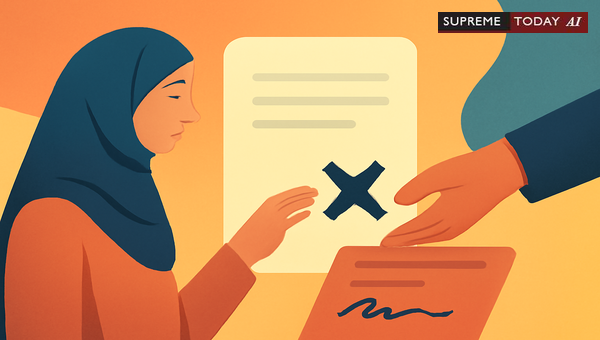
Can a Woman Waive Her by Agreement?
In the realm of family law, serve as a crucial safety net for women post-divorce, ensuring financial security. But what happens when a woman agrees to forgo these rights? The question often arises: Can a woman waive her right of maintenance by an agreement and what is its legal effect? This is particularly relevant under Indian law, especially for divorced Muslim women governed by specific statutes.
This blog post delves into the legal nuances, drawing from key legislations like the , and . We'll explore principles, court interpretations, and the enforceability of such agreements. Note: This is general information and not specific legal advice. Consult a qualified lawyer for your situation.
Understanding Under Indian Law
Maintenance is a statutory right aimed at preventing destitution, particularly for wives and divorced women. Under traditional Muslim personal law, a divorced woman's maintenance is typically limited to the (about three months post-divorce). However, the expanded this, allowing claims beyond iddat for reasonable and fair future provision. 2001 7 Supreme 297
further provides a secular remedy, entitling a divorced wife to maintenance if she cannot maintain herself, regardless of personal law, unless adequately provided for. Courts emphasize that agreements waiving these rights must be scrutinized for fairness and adequacy.
Key Principles on Waiver
Possible: A divorced Muslim woman can voluntarily surrender or relinquish her right to maintenance after divorce, as per . This requires her explicit, uncoerced consent post-divorce. 2001 7 Supreme 297
No Unilateral Avoidance by Husband: The husband cannot escape liability through a private agreement. The 1986 Act mandates for future maintenance, enforceable by courts. Private pacts cannot override this if they leave the woman insecure. 2001 7 Supreme 297
Adequacy is Paramount: Courts assess if settlements meet lifelong needs. For instance, in a case, must be enough to take care of the needs of the divorced woman for the rest of her life or till her remarriage. Hence, Rs.1,00,000/- fixed in Ext.D1 agreement cannot be said to be adequate.2025 Supreme(Online)(Ker) 58551
A divorced Muslim woman can assert her right to maintenance under Section 125 of Cr.P.C. despite prior agreements, if those agreements fail to provide adequate future support.2025 Supreme(Online)(Ker) 58551
Court precedents allow maintenance claims even after benefits under personal law if insufficient for livelihood. Agreements on future maintenance found inadequate lead to remand for re-evaluation. 2025 Supreme(Online)(Ker) 58551
Enforceability of Maintenance Agreements
Agreements waiving maintenance are not absolute. Courts intervene if they appear exploitative or inadequate:
Judicial Scrutiny: Under the 1986 Act, the husband's obligation for future maintenance is judicially enforceable. Private agreements cannot circumvent this purpose of ensuring financial security. 2001 7 Supreme 297
Impact of Separation Deeds: Historical views note that a subsequent deed of separation between them puts an end, in effect, to the wife's rights and the husband's liability under the order.
However, modern interpretations prioritize welfare, especially for Muslim women.
Post-Divorce Claims Under CrPC 125: Even after divorce, a woman remains a '' under if unmarried and needy. The term wife in includes a divorced wife.2017 0 Supreme(Guj) 973 This holds despite divorce grounds like desertion or cruelty.
In , courts consider financial capacity, wife's earnings, and sustainable amounts, directing asset disclosures. 2022 0 Supreme(Cal) 1205
Limitations and Exceptions
Living Apart: bars maintenance if parties live separately by , but this doesn't apply straightforwardly to divorced women. Such a right and an obligation cannot be assumed in the case of divorced woman nor can a corresponding obligation in the erstwhile husband to keep the woman in his house be assumed.2017 0 Supreme(Guj) 973
: Under the , residence rights exist irrespective of legal title, but eviction decrees may limit licenses.
Rachna Khanna Singh VS Santosh S. P. Singh
Inadequate Lump Sums: Fixed sums like Rs.1 lakh fail if not covering lifelong needs, allowing fresh claims. 2025 Supreme(Online)(Ker) 58551
Case Studies and Judicial Trends
Courts consistently protect vulnerable women:
Dual Entitlements: Judicial interpretation supports claims under CrPC 125 alongside personal law if personal law provisions are insufficient. 2025 Supreme(Online)(Ker) 58551
Expansive Interpretation: must receive a liberal and expansive interpretation to include a destitute woman in distress whose marriage has been annulled.2017 0 Supreme(Guj) 961 Even husbands obtaining divorce on desertion grounds remain liable.
No Thrust on In-Laws: Rights are against the husband, not parents. A woman can assert her rights, if any, against the property of her husband, but she cannot thrust herself against the parents of her husband.
Rachna Khanna Singh VS Santosh S. P. Singh
These rulings underscore that waivers must be voluntary, informed, and adequate—private agreements alone rarely suffice.
Practical Implications for Agreements
When drafting maintenance waivers:- Ensure explicit relinquishment post-iddat, not pre-divorce coercion.- Provide lifelong fair provision, indexed to inflation if possible.- Courts may remand for re-evaluation if inadequate. 2025 Supreme(Online)(Ker) 58551
Women should seek independent legal counsel before signing, as courts prioritize equity over contract freedom in family matters.
Conclusion and Key Takeaways
In summary, while a woman may voluntarily relinquish under specific provisions like , she cannot unilaterally waive them via a private agreement that inadequately secures her future. The Muslim Women Act and CrPC 125 ensure husbands provide reasonable support, with courts striking down unfair pacts. 2001 7 Supreme 297
Key Takeaways:- Agreements must be adequate for life/remarriage; lump sums often fall short. 2025 Supreme(Online)(Ker) 58551- Divorced women retain CrPC 125 claims if needy. 2017 0 Supreme(Guj) 973- Seek judicial enforcement; waivers need voluntariness.- Always disclose assets for fair assessment. 2022 0 Supreme(Cal) 1205
Family law evolves to protect the vulnerable—consult professionals to navigate these complexities effectively.
*
#MaintenanceRights, #FamilyLawIndia, #DivorceLaw















