




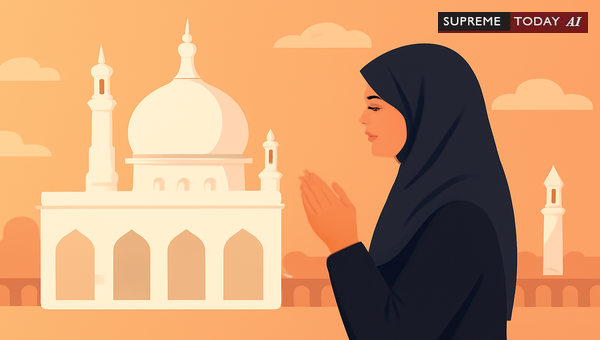
Can Muslim Women Worship in a Dargah? A Legal Perspective
In India, where religious diversity thrives alongside constitutional protections, questions about access to places of worship often spark debate. One such query gaining attention is: can a Muslim woman worship in a dargah? Dargahs, shrines dedicated to Sufi saints, hold immense spiritual significance for Muslims and even devotees from other faiths. Yet, concerns over gender-based restrictions, rooted in customs or interpretations of Islamic law, raise important legal issues.
This blog post delves into the legal landscape, drawing from key judgments and principles. While there is no , the permissibility often hinges on local customs, religious interpretations, and constitutional rights. Note: This is general information based on available legal documents and not specific legal advice. Consult a qualified lawyer for personalized guidance.
What is a Dargah and Why the Controversy?
A dargah is a Sufi shrine built over the grave of a revered saint, serving as a site for prayer, music (qawwali), and spiritual gatherings. Famous examples include the Haji Ali Dargah in Mumbai and Ajmer Sharif. Controversies arise from restrictions on women's entry into the inner sanctum, often justified by traditions emphasizing segregation or purity.
These practices are not uniform. Some dargahs allow full access, while others impose limits. The core question—can Muslim women worship there?—intersects religious freedom (), equality (), and management of religious institutions ().
Main Legal Finding: No Explicit Ban
Legal documents reveal no explicit or definitive ruling categorically prohibiting Muslim women from worshipping in a dargah. Courts emphasize that restrictions must be essential to religion, not mere customs. Generally, Muslim women have the right to participate unless proven otherwise by religious tenets or law. 2016 0 Supreme(Bom) 1033
Key points include:- Recognition of women's religious participation rights, balanced against traditions.- Permissibility depends on Islamic interpretations and local practices, not statutes.- Worship at dargahs is allowed absent clear bars. 2018 0 Supreme(SC) 952
Detailed Judicial Analysis
Absence of Prohibition in Islamic Texts
In the Haji Ali Dargah case, the court examined Quranic verses and found there is nothing in any of the aforesaid verses which shows, that Islam does not permit entry of women in the of the Dargah/Mosque and that their entry was sinful in Islam.2016 0 Supreme(Bom) 1033
Prior to , women entered the sanctum freely, underscoring that bans are not absolute. The trust's claims of religious necessity and safety were scrutinized but not upheld as mandatory.
Courts apply the : only integral rituals are protected. While offer of prayer or worship is a religious practice, its offering at every location where such prayers can be offered would not be an essential or integral part of such religious practice unless the place has a particular significance for that religion.2018 0 Supreme(SC) 952
Dargah worship for women isn't deemed inherently barred.
Women's Role in Islamic Religious Offices
Jurisprudence supports women's involvement: The Muslim law of India by Dr. Tahir Mahmood... A woman is not disqualified from holding the office of the head mujawar of a platform, on which Moharram ceremonies are performed, or khatibaship. The Muslim law does not necessarily exclude a female from the office of a khadim or any other religious office, unless the duties of the office cannot be performed by her, or by her deputy.2000 0 Supreme(Mad) 7
This extends to worship, absent specific spiritual duties women can't deputize.
Role of Customs and Local Practices
Customs influence access. In some dargahs, segregation exists, but courts note these aren't universally mandated by Islam. For instance, Sunni Muslim customs at certain waqf dargahs follow traditions, yet resolutions contrary to them may be invalid. 2025 0 Supreme(Kar) 1765
In Ervadi Dargah disputes over Muharram, fundamental rights to religious processions prevailed over opposing sects, protecting customary celebrations. 2024 Supreme(Online)(MAD) 1841
Security concerns, like post-pandemic limits at military-linked sites, are exceptional and not gender-specific. 2024 Supreme(Online)(MAD) 26929
Constitutional and Human Rights Angle
Articles 25 and 26 protect religious practice but subject to public order, morality, and equality. Gender exclusions must be reasonable. Analogous to Hindu temple cases, where women's entry bans were struck down if not essential (e.g., Sabarimala), Religion cannot become a cover to exclude and to deny the right of every woman to find fulfillment in worship.2019 0 Supreme(MP) 424 2018 0 Supreme(SC) 959
Courts won't interfere lightly in faith matters but strike arbitrary discrimination. Essential practices are determined by religion's tenets, not rationality alone. 2019 0 Supreme(MP) 424
Exceptions and Limitations
- Local sects or customs may restrict (e.g., during specific rituals).
- Waqf committees oversee management; challenges via applications possible. 2023 Supreme(Online)(AP) 15993
- No universal ban; varies by dargah.
Irrelevant to worship are rules like Muslim women not marrying non-Muslims. 2019 0 Supreme(Pat) 2172
Practical Recommendations
- Check dargah-specific rules; many allow women's worship in outer areas.
- If restricted arbitrarily, seek —courts favor access absent proof of essentiality.
- Promote dialogue with scholars for progressive interpretations.
Conclusion: Generally Permissible
In summary, Muslim women are generally permitted to worship in a dargah unless specific, proven religious restrictions apply. Legal precedents like Haji Ali affirm no Islamic mandate for exclusion. 2016 0 Supreme(Bom) 1033 2000 0 Supreme(Mad) 7
This balances faith, tradition, and equality. As India evolves, courts continue safeguarding inclusive worship. Stay informed, respect customs, and uphold rights.
Key Takeaways:- No blanket legal ban.- Customs matter, but prevails.- Challenge discriminatory practices legally.
References: 2016 0 Supreme(Bom) 1033, 2018 0 Supreme(SC) 952, 2000 0 Supreme(Mad) 7, 2023 Supreme(Online)(AP) 15993, 2024 Supreme(Online)(MAD) 1841, 2025 0 Supreme(Kar) 1765, 2024 Supreme(Online)(MAD) 26929, 2019 0 Supreme(MP) 424, 2018 0 Supreme(SC) 959
#MuslimWomenRights #DargahWorship #ReligiousFreedom












