


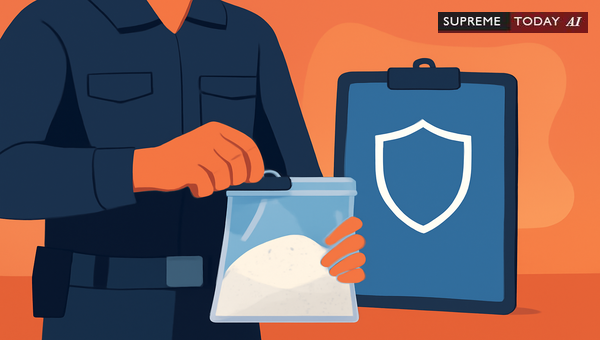
Section 55: Do Police Officers Have to Issue Seals on Seized Articles?
In high-stakes drug enforcement cases under India's , the proper handling of seized evidence can make or break a prosecution. A common question arises: Police Officer have to Issue Seal from Hcm? This query likely refers to whether police officers, particularly the (OIC) of a police station—possibly abbreviated as HCM in some contexts—must affix their own seal to seized narcotic articles. The answer lies in , which imposes strict procedural mandates to ensure and prevent tampering.
This blog post breaks down the legal requirements, sealing processes, consequences of non-compliance, and insights from key judgments. While this provides general guidance, consult a legal professional for advice specific to your situation.
Overview of
Section 55 mandates that the of a police station must take charge of and keep in all articles seized under the within their jurisdiction. This includes allowing accompanying officers to affix seals and ensuring samples are sealed with the OIC's own seal. 2023 0 Supreme(UK) 202 2022 0 Supreme(Chh) 153 2023 0 Supreme(J&K) 358
The provision states: the OIC shall take charge of and keep in ... all articles seized under this Act within the jurisdiction of the police station. This custodial duty is pivotal for maintaining the , a cornerstone of NDPS prosecutions. Failure here can raise doubts about evidence authenticity, often leading to acquittals.
Courts have repeatedly emphasized this: The of Act engrafted under Section 55 requires of the police station to seal all samples with his own seal. 2022 0 Supreme(Chh) 160 The legislative intent is clear—to entrust senior officers with fair investigation, minimizing tampering risks until samples reach the chemical examiner.
Detailed Sealing Process Requirements
Affixing the OIC's Seal
The OIC is required to affix their own seal to seized articles. This is non-negotiable for preserving . 2023 0 Supreme(Chh) 248 2022 0 Supreme(Pat) 637
In one case, the court noted: The mandate to Section 55 requires the officer in-charge of the police station to seal the sample with his own seal. However, no explanation has come forth from the prosecution... as to why the officer in-charge did not affix his seal. 2022 0 Supreme(Chh) 160 Without this, the prosecution's case weakens significantly.
Role of Independent Witnesses
While not strictly mandatory, involving independent witnesses during sealing bolsters credibility. The law does not require handing the seal to a non-official witness immediately, but their presence verifies the process. 1982 0 Supreme(P&H) 78
Additional Procedural Safeguards
- Seized articles must be sealed promptly upon delivery to the police station.
- Samples drawn must also bear the OIC's seal.
- Documentation, including witness names and seal conditions, is essential.
Related provisions like Sections 52 and 57 are directory but influence evidence appreciation. For instance, provisions of are directory, yet ignoring Section 55 creates doubt. 2001 1 Supreme 625
Compliance Issues and Consequences of Non-Compliance
Strict adherence to Section 55 is crucial. Non-compliance can render the prosecution's case suspect, leading to acquittals. 2023 0 Supreme(Chh) 248 1991 0 Supreme(Raj) 51
Key Case Law Insights
- In a conviction challenge under , the court dismissed the appeal because has been followed in breach... appeal is dismissed. 2022 0 Supreme(Chh) 160
- Another ruling highlighted: no explanation... why the officer in-charge did not affix his seal as required under Section 55... This aspect assumes importance. 2022 0 Supreme(Chh) 97 The court acquitted due to doubts on sample custody.
- On violations: The statutory mandate as contained in with regard to of the sample was violated, leading to doubts about the prosecution's case. 2010 0 Supreme(Chh) 214
- Seal discrepancies, like changing from station seal to personal seal without explanation, undermine cases: It is not explained how the seal came to be changed after the seizure. 2010 0 Supreme(Mad) 1102
- In a poppy husk possession case: The IO admitted not affixing the station seal, and no evidence showed intact seals to the analyzer, leading to acquittal. 2001 1 Supreme 625
These judgments illustrate that even minor lapses—such as using the wrong seal or lacking OIC involvement—can doom prosecutions. Courts view Section 55 as mandatory for trust in the investigative process.
Broader Context from NDPS Jurisprudence
Beyond sealing, NDPS procedures intersect with searches () and reporting (). applies only to personal searches, not bags or vehicles, but custody rules remain stringent. 2001 1 Supreme 625
Prosecutions often fail on procedural grounds: Violation of these provisions would not ipso facto violate the trial... However, I.O. cannot totally ignore these provisions. Faulty seals, unusual witness conduct, or undocumented custody chains create . 2001 1 Supreme 625
In employment-related sources tangentially mentioning transfers without documentation (e.g., to KPS-HCM), courts stress proper records—a parallel to NDPS's emphasis on meticulous evidence handling. Though not directly NDPS, it underscores documentation's role in legal accountability.
Key Findings and Practical Recommendations
Why Sealing Matters
Sealing protects against tampering, maintains , and upholds prosecution credibility under NDPS.
Recommendations for Police Officers
- Follow Section 55 scrupulously: OIC must personally seal articles and samples.
- Involve witnesses: Enhance verification, even if not mandatory.
- Document thoroughly: Record seals, witnesses, and custody transfers.
- Train on procedures: Avoid breaches like un-explained seal changes.
For accused or investigators, scrutinize sealing compliance in trials—lapses may lead to favorable outcomes.
Conclusion and Key Takeaways
Under Section 55, the of the police station typically must issue and affix their own seal to seized narcotic articles, ensuring and . Non-compliance, as seen in multiple cases, often results in acquittals due to tampering doubts. 2022 0 Supreme(Chh) 153 2023 0 Supreme(Chh) 248
Key Takeaways:- OIC's seal is mandatory; no valid excuse for omission.- Witnesses and documentation strengthen cases.- Courts demand strict procedural adherence in NDPS matters.
This is general information based on statutes and judgments; outcomes vary by facts. For personalized guidance, seek expert legal counsel.
Last updated: Current as of available case law. Always verify with latest rulings.
#NDPSAct, #Section55, #DrugSeizure















