


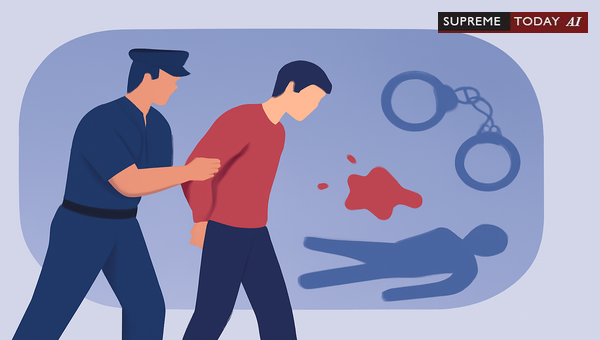
to Arrest in Murder Cases: Legal Clarity
In recent years, public discourse and judicial pronouncements have highlighted concerns over , sparking debates on whether these discussions impose a bar on arresting individuals accused in serious crimes like murder. With high-profile cases making headlines, many wonder: Whether any Bar to Arrest Accused who Involved in Murder Case Invoking View of Recent Discussions Etc in Courts as Well in Public?
This question touches on fundamental rights under Articles 21 and 22 of the Indian Constitution and provisions of the (CrPC). While courts emphasize procedural safeguards, they do not create an outright prohibition on arrests in grave offenses. This blog post delves into the legal framework, key judgments, and practical implications, providing clarity for the general public, law enforcement, and legal professionals. Note: This is general information and not specific legal advice; consult a qualified lawyer for individual cases.
Main Legal Finding
There is to arresting an accused involved in a murder case based solely on recent judicial discussions or public perceptions. Arrest remains a valid procedural tool if statutory conditions under the CrPC are satisfied. Judicial emphasis on safeguards—such as informing grounds of arrest and providing legal aid—aims to prevent misuse but does not prohibit arrests in serious like murder. 2025 2 Supreme 518 2010 8 Supreme 353
Key points include:- Arrest power is exercisable when legal criteria, like in , are met, irrespective of public or judicial discourse.- Courts stress but affirm that render arrests challengeable, not inherently invalid. 2025 2 Supreme 518- In murder cases, investigation often necessitates , balancing rights with . 1997 3 Supreme 553
Legal Principles Governing Arrest
The CrPC outlines arrest procedures primarily under Sections 41-60. For like murder (IPC Section 302), police may arrest without a if there's credible information or suspicion. Constitutional protections under Article 21 (right to life and liberty) and Article 22 (protection against arrest) mandate:- Informing the arrested person of grounds in writing.- Right to consult a lawyer.- Production before a magistrate within 24 hours.
Recent judgments reinforce these but clarify no blanket ban exists. For instance, courts have noted that the exercise of power to arrest must be based on legal criteria, and any exercise outside those criteria would be illegal. 2025 2 Supreme 518 2010 8 Supreme 353
Impact of Recent Judicial Discussions
Public and judicial debates often stem from misuse in less serious cases, like matrimonial disputes under Section 498A IPC. In such scenarios, courts caution against routine arrests. A key example is the landmark Arnesh Kumar v. State of Bihar (), urging scrutiny to avoid harassment: Uncalled for arrest may ruin the chances of settlement. 2024 0 Supreme(Cal) 244
However, these do not extend to heinous crimes like murder. In a case involving Sections 498A, 326, and 34 IPC, the court quashed proceedings due to general allegations but highlighted misuse tendencies, not a bar on arrests in grave offenses. It emphasized scrutinizing allegations with care and circumspection to prevent abuse of the process of law. 2024 0 Supreme(Cal) 244
Similarly, in compounding contexts under CrPC Sections 320 and 482, High Courts allow quashing for settled non-compoundable offenses if no oppression occurred, but distinguish serious crimes: depravity or offences like murder, rape, dacoity, etc. cannot be fittingly compounded easily. 2021 0 Supreme(UK) 730 2021 0 Supreme(UK) 202
Arrest in Serious Offenses: Murder Cases
For murder, courts recognize arrest as essential for investigation. No recent discourse creates a legal obstacle if procedures are followed. 2025 2 Supreme 518 The State often seeks cancellation in heinous crimes, underscoring proactive enforcement. 2017 0 Supreme(All) 1929
Related contexts, like arms license revocations, show scrutiny persists post-acquittal in serious cases: Arms licence suspended/cancelled on ground of pendency of a criminal case/cases against licensee, subsequent acquittal itself be not a sole ground for restoration... particularly where offences are against State, offence against public tranquillity, offences affecting human body, offences affecting life. 2021 0 Supreme(All) 840
Even in professional enrollment, like advocates with criminal backgrounds, courts express shock at persons involved in murder case, theft case and rape cases seeking entry, prioritizing . 2015 0 Supreme(Mad) 3459 2014 0 Supreme(Mad) 2171
Exceptions, Limitations, and Safeguards
While no bar exists, violations invite challenges:- without are invalid. 2025 2 Supreme 518 2010 8 Supreme 353- In supplemental reports or withdrawals, courts defer to trial but reject misuse. 2015 0 Supreme(Ker) 1570- Procedural safeguards are mandatory; non-compliance may lead to release or quashing.
Courts balance this: Judicial pronouncements have also highlighted that the exercise of arrest powers must be in accordance with law and constitutional protections. 2025 2 Supreme 518
Recommendations for Stakeholders
- Law Enforcement: Strictly inform grounds of arrest and provide legal aid to avoid illegality.
- Accused/Defense: Challenge via or if procedures lapsed.
- Courts/Prosecutors: Monitor for misuse, especially distinguishing petty from heinous cases.
- Public: Understand discourse protects rights but upholds justice in serious crimes.
Conclusion and Key Takeaways
Recent discussions reinforce lawful arrests, not prohibition. In murder cases, statutory compliance trumps perceptions. Key takeaways:- ; arrests valid under CrPC if conditions met.- Safeguards prevent arbitrariness but regulate, not eliminate, power.- Misuse concerns apply more to petty cases; serious offenses prioritize investigation.
Stay informed on evolving jurisprudence. For personalized guidance, seek professional legal counsel. References affirm: recent discussions do not impose a blanket ban on arrest but stress lawful exercise of power with . 2010 8 Supreme 353
#ArrestLawsIndia #MurderCase #CriminalJustice












