


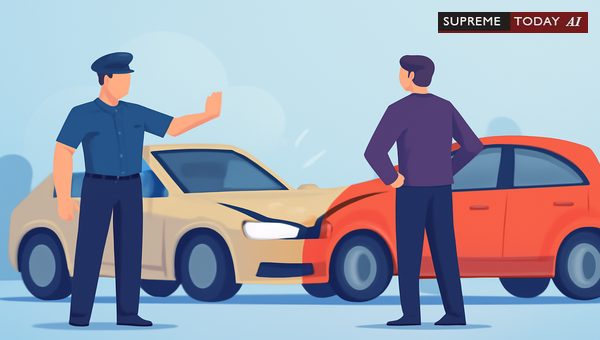
Is an Officer Sitting with a Driver Liable for Reckless Driving in an Accident?
Imagine this scenario: A driver is behind the wheel of a car with a police officer or government official sitting beside them. Suddenly, an accident occurs due to . Can the officer be held legally responsible? This is a common question in motor vehicle accident cases under Indian law, especially when claims arise for compensation or criminal charges.
The query often arises as: Driver was Driving the Car Officer Sitting with him Made an Accident can the Officer is Also Liable to Rackless Drive? In this post, we'll break down the legal principles, key precedents, and exceptions based on established Indian jurisprudence. Note: This is general information and not specific legal advice. Consult a qualified lawyer for your case.
Main Legal Finding: Generally No Liability Without Active Participation
Under Indian law, a person sitting with the driver—such as an officer or passenger—is generally not liable for reckless driving unless they actively participate in or induce the rash or negligent act. typically applies to the vehicle owner or the driver's employer, not to mere passengers or accompanying officers, absent direct contribution to the misconduct. 2012 0 Supreme(Gau) 880
This principle stems from the , rooted in agency law. As explained in key judgments: A master is not responsible for a wrongful act by his servant unless it is done in the course of his employment. It is deemed to be so done if it is either (i) a wrongful act authorized by the master or (ii) a wrongful and unauthorised mode of doing some act authorized by the master.2012 0 Supreme(Gau) 880
Key Points on Liability
- targets owners/employers: Responsibility falls on the owner or employer for the driver's acts within the scope of employment, not on sitting passengers. 2012 0 Supreme(Gau) 880
- Mere presence insufficient: An officer sitting with the driver is not automatically liable without evidence of active participation, encouragement, or conspiracy. 2012 0 Supreme(Gau) 880
- Proof required for passenger liability: The law demands concrete evidence that the officer induced or contributed to the reckless act, beyond just being present. 2012 0 Supreme(Gau) 880
In criminal cases under (rash driving) or 337 (causing hurt by negligence) of the , prosecution must prove the driver's rashness, not the passenger's mere presence. 2018 0 Supreme(Gau) 1360
Detailed Analysis: and Driver Responsibility
holds the principal (owner/employer) accountable for the agent's (driver's) actions during employment. However, this does not extend to third parties like passengers unless they step into an active role. Courts emphasize that liability hinges on the act being within the scope of employment or authority. 2012 0 Supreme(Gau) 880
For instance, in accident investigations, negligence is attributed solely to the driver unless otherwise proven. In one case, the accident was caused by the negligence of the driver of the Ford Ranger... who was driving recklessly.
This reinforces that recklessness is inferred from the driver's actions, not passengers'.
Role of the Officer or Passenger
Mere sitting alongside the driver does not establish liability. Legal precedents clarify: It is difficult to perceive how the corporation can be made criminally liable in such a case... the standard of proof required will be .2012 0 Supreme(Gau) 880 By analogy, the same applies to individuals—the prosecution cannot assume liability from presence alone.
Supporting this, courts in motor accident claims consistently pin negligence on the driver. For example: respondent No.2 overturned the auto by driving rashly and negligently as a result of which, Kadir Ahmad suffered injuries. Other people sitting in the auto also suffered serious injuries. Here, liability stayed with the driver, not others aboard. 2025 Supreme(Online)(MP) 10045
Precedents and Legal Principles
Indian courts have repeatedly ruled that passenger liability requires active involvement:
- Evidence of encouragement needed: No liability without proof of instructions, conspiracy, or direct influence on the driver. 2012 0 Supreme(Gau) 880
- Criminal vs. Civil Distinction: Criminal charges demand (guilty mind) and active role; civil claims may extend broader but still need inducement proof. 2012 0 Supreme(Gau) 880 2018 0 Supreme(Gau) 1360
- Driver-Centric Negligence: In numerous cases, like those involving invalid licenses or rash driving, fault lies with the driver alone. The Investigating Officer reached at the conclusion after the investigation that the driver of the car... was driving the same in a rash and negligent manner.
Other judgments echo this: Tribunals attribute negligence to drivers, holding owners/insurers vicariously liable, but rarely passengers. For compensation, focus remains on driver's valid license and rash acts, not co-passengers. 2022 0 Supreme(Telangana) 36
Exceptions: When an Officer May Be Liable
While rare, liability may attach in specific scenarios:
- Active instruction or encouragement: If evidence shows the officer directed rash driving. 2012 0 Supreme(Gau) 880
- Complicity or influence: Proven conspiracy or behavioral influence on the driver.
- Course of duty misconduct: If the officer's official role involved controlling the vehicle improperly.
Without such evidence, liability rests with the driver and vicariously with the owner/employer. Courts uphold this to avoid unjust extensions of blame.
Related cases on insurance highlight driver focus: Invalid licenses breach owner liability but don't implicate passengers. A person who does not hold licence to drive transport vehicle cannot drive transport vehicle and if he drives transport vehicle, Insurance Company cannot be fastened with any liability.
Practical Recommendations for Accident Cases
- For claimants: Gather evidence linking the driver's rash act to injuries; mere passenger presence won't suffice against officers.
- For defendants (owners/insurers): Highlight lack of active officer involvement and rely on precedents like mere presence does not amount to liability. 2012 0 Supreme(Gau) 880
- Investigation tips: Eyewitness statements, videos, or officer testimonies proving non-involvement are crucial.
- Compensation focus: Courts award based on driver's negligence, disability, and loss—e.g., enhanced awards for 80% disability with future prospects. 2022 0 Supreme(Telangana) 36
In workmen's compensation or insurance disputes, liability follows similar lines, prioritizing driver's role. 2013 0 Supreme(Mad) 79 2011 0 Supreme(Mad) 2912
Conclusion and Key Takeaways
In summary, an officer sitting with the driver cannot be automatically held liable for reckless driving under Indian law unless clear evidence shows active participation, encouragement, or conspiracy. Liability primarily sticks to the driver, owner, or employer via vicarious principles. Mere presence in the vehicle is insufficient. 2012 0 Supreme(Gau) 880
Key Takeaways:- Prove active role for passenger liability.- protects against blanket passenger blame.- Always document evidence in accidents.
Stay safe on the roads, and if involved in such a case, seek professional legal counsel promptly. This analysis draws from established precedents to guide understanding, but laws evolve—verify with current statutes.
References:1. 2012 0 Supreme(Gau) 880: scope.2. 2018 0 Supreme(Gau) 1360: IPC criminal proof.3.
: Passenger non-liability.4. Additional cases: 2025 Supreme(Online)(MP) 10045,
,
, 2022 0 Supreme(Telangana) 36,
#RecklessDriving #VicariousLiability #MotorAccidentLaw















