


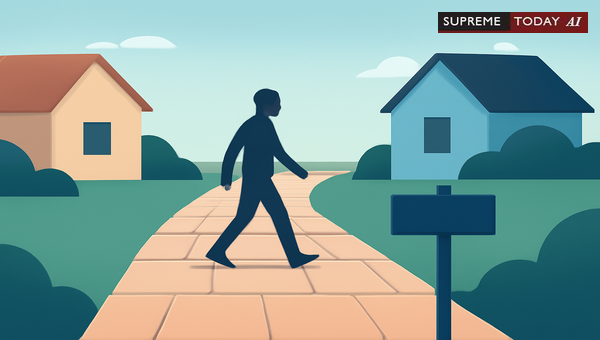
Does Paving Tiles Affect Rights?
Imagine you've been using a shared pathway to access your property for decades—openly, continuously, and without permission. Then, someone paves it with tiles. Does this simple improvement wipe out your hard-earned ? This is a common concern for property owners navigating neighbor disputes or land access issues.
In this post, we dive into the legal question: Whether paving tiles over a way without obstruction and continuing use as before affects a . Drawing from key legal documents and case insights, we'll explore how courts typically view such modifications. Remember, this is general information based on referenced sources—not specific legal advice. Consult a qualified attorney for your situation.
What is a ?
A arises when someone uses another's land openly, continuously, hostilely (without permission), and for a statutory period—usually . This use prescribes a legal right to continue accessing the path.
Key requirements include:- for 2016 0 Supreme(SC) 680.- —visible to the property owner 2002 0 Supreme(Gau) 184.- —not permissive 2024 Supreme(Online)(ORI) 774.
As one source notes: where a right of way or any other easement has been by any person claiming title thereto, as an easement, and , , and for twenty years 2025 Supreme(Online)(Ker) 50214.
Does Paving Tiles Disrupt a ?
Main Legal Finding: Paving tiles over a way used continuously and openly as a pathway, without obstructing or altering its nature, generally does not affect the —provided the user maintains the same manner of use and essential characteristics remain unchanged 2016 0 Supreme(SC) 680.
Courts focus on whether the core elements persist:- Continuity and openness remain critical 2002 0 Supreme(Gau) 184.- like paving don't extinguish rights if use stays hostile and consistent 2022 0 Supreme(AP) 225.
For instance: that do not change the mode of use or the hostility do not affect the easement 2002 0 Supreme(Gau) 184. Similarly, , such as paving, do not amount to obstruction or a change in the nature of use, and thus do not negate the prescriptive right 2022 0 Supreme(AP) 225.
Impact of Surface Modifications
Paving with tiles is often seen as a neutral upgrade. If the pathway remains accessible and use continues as before, the easement holds. Legal documents emphasize: the act of paving the pathway with tiles, in itself, does not necessarily disrupt these elements if the user continues to use the way in the same manner and without permission 2016 0 Supreme(SC) 680.
From additional sources: Use of a pathway, even if it involves paving or improvements like interlocked tiles, does not necessarily negate prescriptive rights, provided the use was peaceable and (drawing from 2025 0 Supreme(Kar) 696, 2022 Supreme(Online)(KER) 47522). Courts recognize that improvements like paving or beautification do not extinguish easement rights if the use remains continuous and peaceable.
Insights from Case Law and Statutes
Several references reinforce this position:- : as right relating to access and use of light or air... having been peaceably enjoyed... for 2025 0 Supreme(Kar) 696. Paving doesn't interrupt if unobstructed.- In disputes over pathways: they have been exercising the said prescriptive right of easement peacefully and without any obstruction ever since the date of purchase 2025 0 Supreme(Kar) 410.- : the mere existence of an alternate way will not militate against the claim for right [](https://supremetoday.ai/doc/judgement/01500055059).
One case highlights: the plaintiff claimed right over the way... continuous and hostile use to the knowledge of the other person 2023 0 Supreme(Ker) 187, 2011 0 Supreme(Ker) 1009. Even after property changes, prior prescriptive use persists unless interrupted 2020 0 Supreme(Ker) 172.
U.S. analogies note prescriptive easements can coexist with improvements without affecting core rail or access rights
, 2024 Supreme(US)(ca6) 246; similar logic applies to pathways.
Exceptions and Limitations
Not all paving is harmless. Consider these scenarios:- : If tiles make the path impassable or change its character (e.g., from dirt to restricted paved area), it may interrupt continuity 2022 0 Supreme(AP) 225.- : Paving with owner's permission suggests non-hostile use, negating prescription 2024 Supreme(Online)(ORI) 774. Permission or can negate hostility 2016 0 Supreme(SC) 680.- Significant changes: If the paving is done in a manner that obstructs or significantly alters the manner of use... the could be affected.
Additionally: Obstructions or interference with the use after paving can jeopardize the easement claim, but mere paving... is generally not considered obstructions if the pathway remains accessible (from 2025 0 Supreme(Kar) 696, 2022 Supreme(Online)(KER) 47522).
Practical Recommendations for Property Owners
To protect your interests:- Document everything: Photos, witness statements, and usage logs prove continuous use.- Continue as before: Maintain the same access pattern post-paving.- Avoid permission: Don't acknowledge or seek approval, preserving hostility.- Monitor changes: Challenge true obstructions promptly.
To preserve a , continue using the pathway in the same manner and without permission that indicates permissiveness 2016 0 Supreme(SC) 680.
Key Takeaways
- Paving tiles generally does not affect a if use remains continuous, open, hostile, and unobstructed 2002 0 Supreme(Gau) 184, 2022 0 Supreme(AP) 225.
- Focus on the 20-year uninterrupted period and consistent manner of use 2025 0 Supreme(Kar) 696.
- Alternate routes or rarely defeat claims [](https://supremetoday.ai/doc/judgement/01500055059).
- Always verify with local laws, as easement rules vary by jurisdiction.
In summary, if you've paved or had a path paved without blocking access and continue using it as always, your is typically safe. For tailored guidance, reach out to a property law expert.
Disclaimer: This analysis is based solely on cited documents (e.g., 2016 0 Supreme(SC) 680, 2002 0 Supreme(Gau) 184, 2022 0 Supreme(AP) 225, 2024 Supreme(Online)(ORI) 774, 2025 0 Supreme(Kar) 696, etc.) and general principles. It does not constitute legal advice.
#PrescriptiveEasement, #EasementRights, #PropertyLaw


![Chirakkal Sankaran Nair, [Died; Lrs Impleaded] S/O. Sreedevi Amma VS Ponguzhi Parambath Sreedharan Nair [Died] - 2024 Supreme(Ker) 956](https://supremetoday-s3.b-cdn.net/Kerala_small_3.png)















