




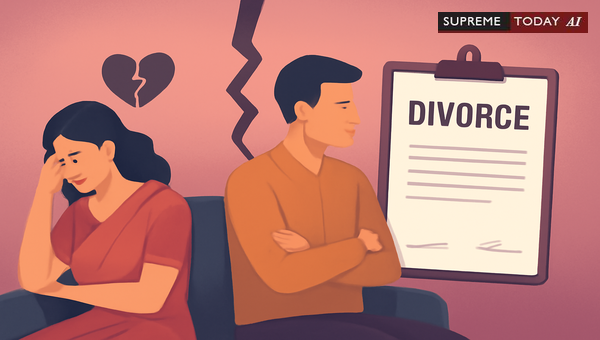
Understanding the Scope of Between Spouses in Divorce Suits
Marriage is often viewed as a union encompassing emotional, social, and physical intimacy. But what happens when —or their absence—become a point of contention in divorce proceedings? Many couples facing marital breakdown wonder: What is the scope of physical relation between spouses in a divorce suit? This question frequently arises in cases involving allegations of or mental harassment, where courts scrutinize the role of intimacy within the broader context of .
In this post, we explore key judicial insights, primarily from Indian courts, on how factor into divorce petitions. While physical intimacy is integral to marriage, its denial or nature isn't viewed in isolation. Courts emphasize context, consent, and overall impact on the spouses' well-being. Note: This is general information based on case law and not specific legal advice. Consult a qualified lawyer for personalized guidance.
Relevance of in Divorce Proceedings
are generally recognized as relevant when establishing grounds like or under laws such as the . However, the mere presence or absence alone is not determinative. Courts assess the nature, context, and impact on the mental and emotional state of the spouses 2024 0 Supreme(Cal) 416 2007 2 Supreme 498.
For instance, prolonged refusal to engage in sexual intercourse can amount to if it causes significant mental agony or apprehension of harm 2007 2 Supreme 498. As one ruling notes, physical violence is not essential for ; , including causing mental suffering through conduct related to or in respect of matrimonial duties, can suffice 2006 2 Supreme 627 2002 1 Supreme 90.
This aligns with broader matrimonial obligations. In a case under the , a wife's willful refusal to consummate the marriage despite medical clearance was held to constitute , especially after she admitted refusing due to the husband's behavior toward other women. The court granted divorce after noting the parties had lived separately for over 15 years 2015 0 Supreme(Kar) 1207.
Context and Circumstances Matter Greatly
Not every denial of equates to . Courts are cautious, considering justified reasons such as health issues, mutual consent, or other circumstances 2007 2 Supreme 498. Persistent refusal without reasonable cause, particularly when paired with harassment, may strengthen a claim 2024 0 Supreme(Cal) 416.
Key factors include:- Duration and frequency: Isolated incidents are often dismissed, but long-term patterns matter 2014 0 Supreme(SC) 700.- Consent and coercion: Consensual abstinence differs from coerced denial.- Overall conduct: Physical aspects are weighed alongside verbal abuse, threats, or emotional neglect 2007 2 Supreme 498 2006 2 Supreme 627.
In another example, a husband cited medical advice against to avoid conception, leading to no intimacy post-marriage. This was contextualized within property disputes and suspicions, but the court examined the full marital dynamics 2015 0 Supreme(Kar) 1207. Similarly, under the Hindu Marriage Act, when becomes impossible due to , divorce may be the only remedy for the parties' welfare 2009 0 Supreme(Chh) 54.
Impact on Claims
is a common ground for divorce, and play a pivotal role here. Failure to engage can form part of a pattern causing mental agony, fear, or apprehension of harm 2006 2 Supreme 627. When coupled with insults or threats, it bolsters the case 2024 0 Supreme(Cal) 416.
Courts stress that conduct must be grave and weighty, such that a reasonable person would find the marriage intolerable 2002 1 Supreme 90. Mere non-fulfillment isn't enough; it must erode the marital bond irreparably 2007 2 Supreme 498.
A notable case involved a respondent filing for divorce on grounds of physical and , where the court modified to full dissolution, holding that when reunion or becomes impossible between the parties, dissolution of marriage by a is the only effective remedy 2009 0 Supreme(Chh) 54.
Exceptions and Limitations: When Absence Isn't
Several scenarios limit the weight of claims:- Non-consummation due to health or agreement: Not if justified 2007 2 Supreme 498.- Isolated acts: Courts view the entire conduct, not silos 2006 2 Supreme 627.- No accompanying harassment: Denial alone may not suffice 2014 0 Supreme(SC) 700.
Pre-marital or assurance-based relations, often seen in rape/cheating appeals, highlight consent issues but differ from spousal contexts. For example, courts have acquitted where victims were aware of no marriage intent, ruling consensual adult relations non-criminal 2020 0 Supreme(Tri) 82 2020 0 Supreme(Tri) 35. These underscore that post-marital denial requires distinct matrimonial thresholds.
In family feuds post-divorce, like one involving maltreatment leading to acrimony, courts acquitted on murder charges, focusing on insufficient evidence beyond relational bitterness 2017 0 Supreme(J&K) 1072. This shows physical/relational strife must meet evidentiary bars in divorce too.
Practical Recommendations for Divorce Litigants
To navigate these issues:- Document context: Frequency, reasons for absence, and emotional impact.- Gather evidence: Combine physical claims with proof of overall conduct affecting well-being.- Seek holistic evaluation: Courts distinguish grave from ordinary wear and tear.
Petitioners should demonstrate how the conduct renders untenable, supporting claims with witness testimonies or medical records where relevant.
Conclusion: A Balanced Judicial Approach
In summary, the scope of between spouses in divorce suits centers on their role in or mental harassment claims, viewed through context and impact rather than isolation. Courts prioritize matrimonial harmony, granting relief only for grave conduct disrupting it 2007 2 Supreme 498 2024 0 Supreme(Cal) 416.
Key Takeaways:- Physical denial can contribute to if prolonged and unjustified.- Always consider full circumstances—no single factor decides.- Professional legal counsel is essential for case-specific strategies.
This evolving area reflects courts' sensitivity to modern marital dynamics. Stay informed, and remember: each case turns on unique facts.
#DivorceLaw, #MentalCruelty, #FamilyLawIndia















