Searching Case Laws & Precedent on Legal Query.....!
Analysing the retrieved Case Laws
Scanned Judgements…!



Searching Case Laws & Precedent on Legal Query.....!
Analysing the retrieved Case Laws
Scanned Judgements…!
WASANTHA VS. PREMAWATHIE AND OTHERS
"] ["2024 Supreme(Online)(Mad) 59860"].KANTABEN CHHOTALAL SHAH vs NANALAL KALIDAS SHETH - Gujarat
"].Evidence such as registered sale deeds, possession records, and proof of chain of title are critical; mere oral admissions or unsubstantiated claims are inadequate ["2017 0 Supreme(AP) 493"] ["2024 Supreme(Online)(Mad) 59860"] ["2003 0 Supreme(Gau) 128"].
Analysis and Conclusion:
WASANTHA VS. PREMAWATHIE AND OTHERS
"] ["2022 Supreme(Online)(Mad) 85605"].References:- ["2023 0 Supreme(Tri) 42"]- ["2017 0 Supreme(AP) 493"]- ["2022 Supreme(Online)(MAD) 43949"]- ["2022 Supreme(Online)(MAD) 33767"]- ["
LAN ING HOCK @ LAU ING HOCK vs TOH CHING KING - High Court
"]- ["2025 Supreme(Online)(Tel) 53034"]- ["1981 0 Supreme(Cal) 4"]- ["2022 0 Supreme(Mad) 3948"]- ["2022 Supreme(Online)(Mad) 85605"]- ["1967 Supreme(Online)(Bom) 28"]- ["WASANTHA VS. PREMAWATHIE AND OTHERS
"]- ["KANTABEN CHHOTALAL SHAH vs NANALAL KALIDAS SHETH - Gujarat
"]- ["2003 0 Supreme(Gau) 128"]- ["2023 Supreme(SRI)(SC) 20789"]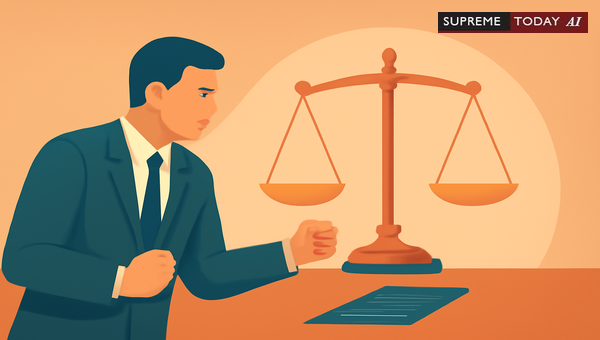
In , especially , a common misconception is that pointing out flaws in the opponent's case is enough to secure victory. But is a plaintiff in a civil suit able to win on the strength of his own case and title but not by exploiting the lacunae of the corresponding defence case? This question strikes at the heart of a fundamental legal principle upheld across . Typically, success hinges on the plaintiff's ability to independently establish their claim through solid evidence, regardless of the defendant's shortcomings.
This blog explores this principle in depth, drawing from landmark judgments and practical insights. Whether you're a litigant in a title suit, facing possession issues, or simply curious about civil procedure, understanding this rule can shape your legal strategy.
Courts have consistently ruled that a plaintiff in a civil suit must succeed on the strength of his own case, not by exploiting weaknesses, omissions, or procedural lapses in the defendant's evidence. This axiom ensures fairness and places the primary squarely on the claimant. As stated: A plaintiff in a civil suit to succeed must establish and prove his own title through sufficient and acceptable evidence; he cannot rely on exploiting the weaknesses, omissions, or procedural lapses of the defendant’s case or evidence. 2014 1 Supreme 1 2025 0 Supreme(AP) 111
In suits for , the onus lies solely with the plaintiff. Mere highlighting of the defendant's failures does not suffice; independent proof of one's right and title is mandatory. Failure to meet this standard often results in , even if the defense collapses. 2014 1 Supreme 1 2025 0 Supreme(AP) 111
The law demands that plaintiffs produce credible evidence like registered deeds, possession records, or other documents to prove a clear, valid title. Courts emphasize: The in a suit for lies solely on the plaintiff to establish his own title. 2014 1 Supreme 1 2025 0 Supreme(AP) 111
For instance, in property cases, plaintiffs cannot merely allege defendant flaws. They must satisfy the court with satisfactory evidence. If unsuccessful, the suit fails, irrespective of the opposition's proof. 2014 1 Supreme 1 2025 0 Supreme(AP) 111
Judges vigilantly assess the plaintiff's evidence first. As observed: the plaintiff has to stand or fall on the strength of its own case and not on the weakness of the defense version. 2025 0 Supreme(AP) 111
This approach prevents opportunistic claims. In one ruling: The plaintiff cannot succeed merely by highlighting the weaknesses or failures of the defendant’s case; he must prove his own right and title independently. 2014 1 Supreme 1 2025 0 Supreme(AP) 111
, from to , reinforce this across contexts:
Property Ownership Claims: In a dispute over a private road claimed by a charitable trust, the court held: The suit being one for declaration and , the plaintiff will have to stand or fall on the strength of his case. He cannot seek to demolish the defence case and thereby hope to win his case. 2009 Supreme(Online)(KER) 44963 The trial court dismissed for lack of proof of title and possession, with remand only for further evidence—still on the plaintiff.
Axiomatic Principle in Revisions: It is an axiomatic principle of law that a plaintiff has to win or loose his case on the strength of his case and not on the weakness of the defence.
This dismissed a , underscoring no reliance on defense gaps.
Family Law Applications: Even in divorce petitions alleging adultery, courts apply it: plaintiff can succeed on the strength of his own case and not on the correctness of the defence. 2019 0 Supreme(All) 2249 The appellant failed to prove claims, leading to case dismissal despite defense issues.
Ejectment and : The principle is commonly known as plaintiff has to win or lose his case on his own strength and not on any weakness of defence. Cited from precedents like Brahma Nand Puri v. Nelci Puri (AIR 1965 SC 1506), suits fail without plaintiff's title proof. 2016 0 Supreme(AP) 541
Hifazath Hussain VS Sadiq Hussain @ Mushraf
2016 0 Supreme(AP) 199Injunction Based on Possession: A plaintiff has to win his case on his own strength and not on the weakness of the other side. In vacant land disputes, title proof is essential as possession follows title.
These cases span property, family, and procedural matters, showing the principle's universality.
Rarely, if the defendant's case is utterly unsubstantiated and plaintiff's evidence leaves no doubt, courts may rule favorably—but always rooted in plaintiff's proof, not defense voids. 2014 1 Supreme 1
No broad exceptions exist; plaintiffs must anticipate rigorous scrutiny.
To navigate this:- Gather Robust Evidence: Prioritize documents proving title (deeds, mutations, tax receipts) and possession (utility bills, witness affidavits).- Avoid Defense-Focused Arguments: Don't substitute your proof with opponent critiques.- Prepare for Appeals: First appellate courts re-appreciate evidence but won't overturn solely on alternate views.
Hifazath Hussain VS Sadiq Hussain @ Mushraf
- Seek Amendments Wisely: Only for real controversies, not to patch weak cases. 2016 0 Supreme(AP) 541Courts remain vigilant against judgments hinging on defense lapses.
The enduring rule—that plaintiffs must win on their own strength—promotes justice by demanding merit-based claims. In civil suits, especially title disputes, proactive evidence building is key. While these insights draw from established precedents, legal outcomes vary by facts; consult a qualified lawyer for tailored advice.
Key Takeaways:- Burden rests on plaintiff to prove title independently. 2014 1 Supreme 1 2025 0 Supreme(AP) 111- Defense weaknesses don't compensate for plaintiff's failures.- Applies broadly: property, injunctions, family matters.- Focus on strong, admissible evidence for success.
This post provides general information based on judicial trends and is not legal advice.
#BurdenOfProof, #CivilLaw, #PlaintiffRights


There is no amount of doubt that the plaintiff has claimed his title over the suit land on the strength of the khatian bearing No.1322 (both Exhibit 1 and 3). ... The land so purchased on the strength of Exbt. C also do not appear to be the part and parcel of the suit land. Moreover, the land under Exbt. ... The proceeding under Section 145 CrPC will not decide the title of a person over a land or water. Any finding arrived at by a ....

The impugned order dated 16.10.2017 of the lower Court speaks that case of plaintiff for title must succeed on own strength and not on any defence weakness and thus the sanctioned plan of 2nd defendant is not necessary for it will not decide title of the Plaintiff over suit property. ... Further, what are the documents relating to the plaintiffs right borne by record from evidence on record with r....

It is the submission of the learned counsel for the appellant that in a suit for declaration of the title, the plaintiff has to win or lose based on the strength of his own case and he cannot rely on the weakness of the defence. ... With regard to the legal submissions made by the learned counsel for the appellant that in a suit for title, the plaintiff must win on his own strength#HL_EN....

It is an axiomatic principle of law that a plaintiff has to win or loose his case on the strength of his case and not on the weakness of the defence. The plaintiff has come forward with the case that he has purchased the entire extent in S.No.278, which has been now subdivided as S.No.278/1. ... The 1st defendant, who had no right, title or interest to the suit property, had claimed a right on the....

Section 101 of the Evidence Act 1950 places the burden of proof and the initial onus of proof on the plaintiff to prove his case. The plaintiff failed to establish a prima facie case of ownership to shift the onus of proof to the defence. ... It is well settled that in civil proceedings the court may draw adverse inferences from a party's decision not to give or call evidence as to matters within the knowledge of himself. [59] However, this does not ....

This admission was not properly considered by the learned Additional Subordinate Judge. It is immaterial whether the defendant proved his case because the suit is for title and hence the plaintiff must win only by proving his own title. ... But due to such defect it cannot be held that Sonai's sons were raiyats or occupancy raiyats and thus the plaintiff acquired title by his purchase. It has already been observed that the #HL_START....

Vasavi Cooperative Housing Society Limited and Others, (2014) 2 SCC 269 on the aspect that plaintiff has to succeed only on the strength of his case and not on the weakness of the case set up by the defendants in a suit for declaration of title and possession. ... have proved their case or not. ... It is trite law that, in a suit for declaration of title, burden always lies on the plain....

The suit being one for declaration and consequential injunction, the plaintiff will have to stand or fall on the strength of his case. He cannot seek to demolish the defence case and thereby hope to win his case. ... The trial court dismissed the suit holding that the plaintiff has not proved the title and exclusive possession over the road in question. On appeal by the #HL_START....
It is settled law that in a suit for title, the plaintiff has to win on his own strength and he cannot rely on the weakness of the case of the defendant. ... The learned counsel for the appellant relied on the judgment in Chairman, Board of Trustee Vs S.Rajyalaxmi (Dead) & Ors. reported in [2019 (1) Civil Court Cases 598 (S.C.)] for the proposition that the plaintiff has to win or lose on his own strength. ... and ....

It is an axiomatic principle of law that a plaintiff has to win or loose his case on the strength of his case and not on the weakness of the defence. ... Accordingly, this Civil Revision Petition stands dismissed. Considering the fact that the suit is of the year 2015, the learned Judge shall dispose of the same on or before 31.08.2022. ... The plaintiff has come forward with the case tha....

In the instant case, from the material available on record the ground of adultery, which has been taken by the appellant against Sri Sunil Kumar Shahi @ Pappu and respondent No. 2-Ram Shakal Singh has not been proved by him on the basis of evidence which has been led by him either oral or documentary. Needless to say that it is a principle that "plaintiff can succeed on the strength of his own case and not on the correctness of the defence."
The principle is commonly known as plaintiff has to win or lose his case on his own strength and not on any weakness of defence. Nelci Puri (died), AIR 1965 SC 1506, where it was held that in a suit for ejectment, plaintiff has to succeed or fail on the title that he establishes and if he cannot succeed on strength of his title, his suit must fail, notwithstanding that the defendant in possession has no title to the property. The propositions placed reliance in this regard are Moran Mar Basselios Chatholicos Vs. Most Rev. Mar Poulose Athanasius, AIR 1954 SC 526 (1) 3JB, and....
The principle is commonly known as plaintiff has to win or lose his case on his own strength and not on any weakness of defence. The propositions placed reliance in this regard covered by the trial Court judgment are Moran Mar Basselios Chatholicos vs. No doubt as per the existing law, in a suit for declaration or ejectment, suit for possession based on title, the plaintiff has to establish his title. Most Rev. Mar Poulose Athanasius 3JB, AIR 1954 SC 526(1) and the other expression of 3JB in Brahma Nand Puri vs. No doubt as per the existing law, in a suit for declaration or....
The principle is commonly known as plaintiff has to win or lose his case on his own strength and not on any weakness of defence. The propositions placed reliance in this regard covered by the trial Court judgment are Moran Mar Basselios Chatholicos Vs. Most Rev. Mar Poulose Athanasius (AIR 1954 SC 526(1) 3JB, and the other expression of 3JB in Brahma Nand Puri Vs. Nelci Puri(died) (AIR 1965 SC 1506) where it was held that in a suit for ejectment, plaintiff has to succeed or fail on the title that he establishes and if he cannot succeed on strength of his title, his suit mus....
A plaintiff has to win his case on his own strength and not on the weakness of the other side. That will not prove that disputed property is in the possession of the plaintiffs. The attempt of the plaintiffs has been to prove that item No.2 which admittedly is in the possession of the defendants lies within well defined boundaries.


An indispensable Tool for Legal Professionals, Endorsed by Various High Court and Judicial Officers
Please visit our Training & Support
Center or Contact Us for assistance

Scan Me!
India’s Legal research and Law Firm App, Download now!


For Daily Legal Updates, Join us on :



 Back to top


