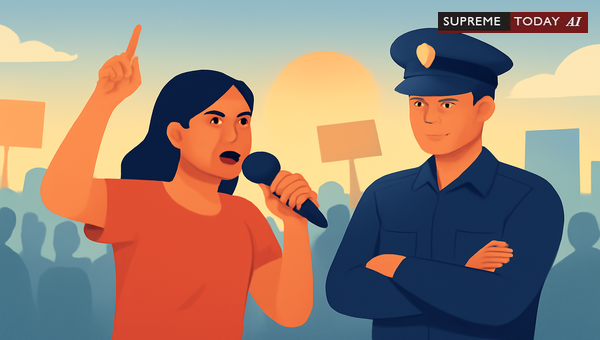
Can Police Reject Mic Permission for Morning Protests?
In India, the right to protest is a cornerstone of democracy, enshrined in the Constitution. But what happens when police reject permission for using a microphone (mic) during a morning protest? Many organizers face this issue, wondering: For Mic Permission for Protest in Morning The Police will Reject Thepermission? This question touches on fundamental rights under Article 19(1)(b) – the right to assemble peaceably and without arms – and how police powers intersect with these freedoms.
This blog explores the legal framework, key court judgments, and practical insights. While police cannot arbitrarily deny such permissions, restrictions must be reasonable and justified. We'll break it down step by step, drawing from landmark cases and principles. Note: This is general information, not legal advice. Consult a lawyer for specific cases.
Fundamental Right to Protest and Assembly
Article 19(1)(a) and (b) of the Indian Constitution protect freedom of speech and the right to assemble peaceably. These rights allow citizens to hold protests, rallies, and public meetings, including using amplification devices like mics, subject to reasonable restrictions under Article 19(3) for public order, morality, or state security. Courts have repeatedly emphasized that blanket denials are unconstitutional. 2018 0 Supreme(Mad) 1696 2018 0 Supreme(Mad) 2756
In Himat Lal K. Shah v. Commissioner of Police, Ahmedabad, the Supreme Court clarified that permissions for processions or protests cannot be denied mechanically. Restrictions must be proportionate and based on material facts, not mere apprehensions. 2018 0 Supreme(Mad) 1696
Key Principles from Judgments
- No Arbitrary Refusals: Police must provide cogent reasons for denial, especially on timing like mornings. Blanket bans violate natural justice. 2012 0 Supreme(Mad) 3598 2018 0 Supreme(Mad) 1696
- Morning Timing Not a Categorical Bar: Protests in the morning are permissible if they don't disrupt court hours or public safety unreasonably. For instance, courts have directed rallies outside peak hours but not outright bans. 2012 0 Supreme(Mad) 3598
Police Powers Under Section 144 CrPC
Police often invoke Section 144 of the Criminal Procedure Code (CrPC) to restrict assemblies amid law-and-order concerns. However, such orders must be:- In Writing and Specific: Not vague or hasty, especially if issued without notice. 2022 0 Supreme(Cal) 675 2022 0 Supreme(Cal) 677- Based on Real Threats: Not speculation. Courts quash orders lacking justification. 2023 0 Supreme(Mad) 1146
In one case, the court noted: Orders under Section 144 should be in writing, specific, and justified. 2022 0 Supreme(Cal) 675 This applies to mic permissions too – denying solely because it's morning, without evidence of disruption, is likely unlawful.
A related ruling reinforced that non-consideration of permission requests amounts to dereliction of duty, balancing free speech with public order. 2018 0 Supreme(Mad) 1634 The court directed authorities to decide representations promptly, recommending Section 144 only for imminent breaches.
Mic Permissions and Amplification Devices
Using a mic falls under peaceful assembly rights. Permissions are typically sought from local police under state rules or police manuals. Denials must be speaking orders – reasoned decisions. A non-speaking order was set aside in a disciplinary context, where authorities failed to address explanations: An order passed by an authority must be speaking order and must assign reasons for rejecting the explanation offered by the party. 2023 Supreme(Online)(Pat) 690
For protests, this means police can't just say no to morning mic use without explaining law-and-order risks. Courts have struck down similar arbitrary refusals for public meetings. In a case seeking mic and poster permissions, authorities were directed to respond adequately. 2022 Supreme(Online)(Mad) 90307
Case Examples on Timing Restrictions
- Public Meetings: Police denied a meeting citing recent violence, but courts upheld only if a live link to public order threats exists. No permission was granted without strong justification. 2013 0 Supreme(Mad) 1916
- Protest Timing: Directions limited rallies to non-court hours, implying morning protests are fine if reasonable. 2012 0 Supreme(Mad) 3598
Exceptions: When Denials May Be Valid
Permissions can be restricted if:- There's a genuine law-and-order threat, like potential violence. 2018 0 Supreme(Mad) 2367- Protests block public spaces or occur during sensitive times (e.g., containment zones). 2021 1 Supreme 97- Organizers fail to apply in advance or specify details.
However, even then, reasons must be provided in writing. Supreme Court orders stress: Restrictions on demonstrations must be justified, and blanket bans are unconstitutional unless supported by cogent reasons. 2018 0 Supreme(Mad) 2756
In protest scenarios with violence risks, multiple FIRs were criticized if not justified, highlighting state overreach. 2018 0 Supreme(Mad) 2367
Practical Recommendations for Organizers
To maximize success:1. Apply Early: Submit detailed applications (time, route, expected crowd, mic use) well in advance.2. Engage in Peace Committees: Attend pre-protest meetings to address concerns. 2018 0 Supreme(Mad) 23673. Document Everything: If denied, demand written reasons. Challenge via writ petition under Article 226.4. Alternatives: If morning denied, propose alternatives like afternoons, but argue for reasonableness.
Courts often direct authorities to reconsider: Authorities should evaluate such applications based on law, order, and safety considerations, providing reasons for any restrictions. 2023 0 Supreme(Mad) 1146
Integrating Broader Judicial Insights
Other rulings underscore speaking orders' importance. In rent control permissions, invalid grants due to non-disclosure were set aside for lacking fulfillment of conditions. 1980 0 Supreme(Del) 183 Similarly, protest denials must transparently link to risks.
Personal liberty cases affirm autonomy in assemblies, provided no coercion. 2020 Supreme(Online)(KER) 39802 For public events like fairs, permissions were granted post-court orders, showing judicial intervention works. 2024 Supreme(Online)(KER) 38370
Refund claims under Customs Act highlight proper officers must pass speaking orders on protests lodged. 2017 0 Supreme(Mad) 765
Conclusion and Key Takeaways
Police generally cannot categorically reject mic permission for morning protests solely on timing grounds. Such denials must be reasonable, justified by specific law-and-order concerns, and communicated via speaking orders. Arbitrary refusals violate Article 19 and are challengeable in court. 2022 0 Supreme(Cal) 675 2018 0 Supreme(Mad) 1696
Key Takeaways:- Rights Protected: Peaceful morning protests with mics are constitutional.- Police Duty: Provide reasoned denials; Section 144 not a blanket tool.- Judicial Relief: Courts quash unreasoned orders – approach High Courts if needed.- Act Responsibly: Ensure applications are complete to avoid valid rejections.
Stay informed, protest peacefully, and know your rights. For tailored advice, contact a legal expert. Share your experiences in the comments!
References:1. 2012 0 Supreme(Mad) 3598 – Timing restrictions must be justifiable.2. 2018 0 Supreme(Mad) 1696 – Reasonable restrictions on assembly.3. 2018 0 Supreme(Mad) 2756 – No blanket bans without reasons.4. 2022 0 Supreme(Cal) 675 – Section 144 requirements.5. 2022 0 Supreme(Cal) 677 – Reaffirming reasonableness.6. 2023 0 Supreme(Mad) 1146 – Restrictions based on actual needs.
#ProtestRights, #Article19, #MicPermission