


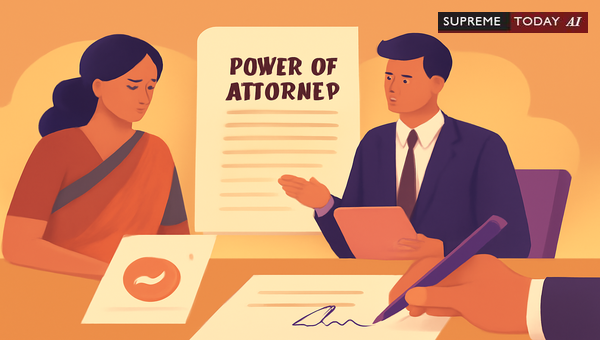
Can a Holder Represent You in Divorce Proceedings?
Divorce proceedings can be emotionally and logistically challenging, especially when one or both parties live abroad or face difficulties attending court in person. A common question arises: Can an attorney to a friend represent someone in divorce proceedings? This query often stems from scenarios where spouses seek under , but cannot appear personally. While (PoA) holders, including close family or friends, offer a potential solution, courts impose specific limitations to ensure genuineness and protect parties' interests.
This article explores the legal principles governing PoA representation in divorce cases, drawing from judicial precedents. Note that this is general information based on case law and not specific legal advice—consult a qualified lawyer for your situation.
Key Legal Principles on Representation in Divorce
Indian courts balance convenience with the need for authentic consent in matrimonial matters. Here's a breakdown of core rules:
1. and PoA Allowance
In mutual consent divorces, personal presence isn't always mandatory. A PoA holder can represent parties if they are a close family member. The court must still verify the genuineness of pleadings and proceedings2010 0 Supreme(P&H) 1222. This flexibility aids NRIs or those abroad, as seen in cases where parties file via special PoA while residing overseas, like in Dubai
.
2. Limitations of
A PoA holder acts in the capacity of the principal and cannot continue after the principal's death without legal representatives' authorization 1993 0 Supreme(AP) 139. Importantly, the PoA does not grant independent party status. Courts discourage agents or '' (PoA holders) in matrimonial disputes, preferring direct interaction between spouses 2004 0 Supreme(Pat) 162.
3. Face-to-Face Requirement and Court Discretion
Typically, husband and wife must appear in person for inquiries into consent, , or reconciliation. However, courts have discretion to allow PoA filing for joint petitions or permit video conferencing2021 0 Supreme(Ker) 154. For instance, where a party is abroad, courts may insist on personal appearance but allow alternatives for specific stages.
Integrating Modern Technology: Video Conferencing in Divorce
Courts increasingly adopt technology to overcome logistical barriers. In one case, a petitioner working in Australia gave PoA to a known person post-mandatory cooling period. The court permitted Skype for examination and reconciliation, noting: A can represent a party in all aspects, including giving evidence, but cannot plead the cause before the court. Skype technology can be used for to save time and...2019 0 Supreme(AP) 357.
Similarly, a revision petition challenged a trial court's order for personal appearance. The court held: The petitioner could be represented by a for . The court also held that skype technology could be used for to save time and cost. It remanded the matter, directing Skype facilitation 2019 0 Supreme(AP) 357. This aligns with precedents allowing video for NRIs, considering factors like wife's convenience and travel issues
.
Another ruling emphasized: A Party in a divorce petition can appear through a specially when he has relationship with one of the parties to the lis and party which has given a is abroad. Relief wasn't denied for non-recording of the party's statement if PoA suffices 2014 0 Supreme(P&H) 236.
Exceptions for Close Relatives and Verification
Exceptions apply when a close relative holds PoA and can depose on the principal's . One judgment clarified: where a close relative appears for the parties acting as his or her attorney and is in a position to state and depose as regards the of the principal...2014 0 Supreme(P&H) 236. This is crucial since courts prioritize evidence from parties themselves on conduct or mindset in divorce grants.
However, in contested matters or where fraud is suspected, stricter scrutiny applies. For example, hostile relations leading to cases or domestic violence complaints complicate PoA use, as seen in quashing proceedings where no injury evidence existed 2014 0 Supreme(All) 1370.
Related Issues: Residence Rights During Divorce
Divorce often intersects with residence disputes. Under the , a wife has rights in a —defined as one belonging to or rented by the husband or joint family property. A daughter-in-law has no right to occupy of parents-in-law against their wishes, especially if the husband has no independent right there 2014 0 Supreme(Del) 1762
Sudha Mishra VS Surya Chandra Mishra
.One case noted: Daughter-in-law has no right to continue to occupy the self acquired property of her parents-in-law against their wishes moreso when her husband has no independent right therein nor is living there... Even adult children occupy as licensees,
Sudha Mishra VS Surya Chandra Mishra
. Divorce pendency doesn't grant such rights if the property isn't shared.Practical Recommendations for Using PoA in Divorce
To navigate these rules effectively:- Choose a Close Family Member as PoA Holder: This strengthens acceptance, especially for abroad parties 2010 0 Supreme(P&H) 1222.- Prepare Robust Documentation: Demonstrate consent is free from force, fraud, or undue influence. Courts scrutinize pleadings' genuineness.- Anticipate Personal Appearance: Even with PoA, be ready for court-mandated in-person or video appearances 2021 0 Supreme(Ker) 154.- Leverage Technology: Request video conferencing for reconciliation or evidence, citing precedents like Skype approvals 2019 0 Supreme(AP) 357.- Monitor Ongoing Disputes: Address related criminal or DV cases promptly, as they impact divorce timelines 2014 0 Supreme(All) 1370.
Conclusion and Key Takeaways
While PoA holders can facilitate mutual consent divorces—particularly family members or via video—courts prioritize personal verification to safeguard matrimonial integrity. Flexibility exists for genuine cases, but personal appearance remains the norm unless exempted.
Key Takeaways:- PoA viable for mutual consent if close relative; verify genuineness 2010 0 Supreme(P&H) 1222.- No independent status; halts on principal's death 1993 0 Supreme(AP) 139.- Video/Skype often allowed for convenience 2019 0 Supreme(AP) 357.- Discretion lies with court; prepare for in-person mandates 2004 0 Supreme(Pat) 162 2021 0 Supreme(Ker) 154.
Always seek professional advice tailored to your facts. Judicial trends evolve, favoring technology while upholding consent's sanctity.
#DivorceLaw #FamilyLawIndia #PowerOfAttorney















