


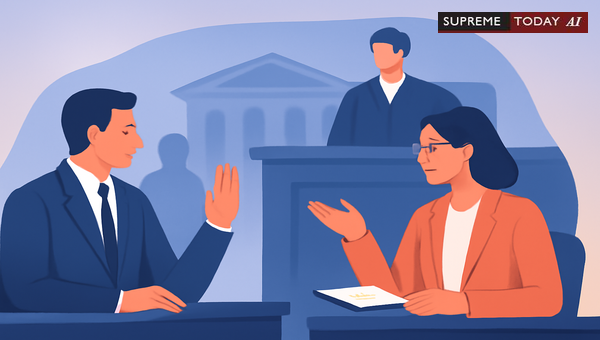
Can Private Counsel Lead a Criminal Case? Explained
In the complex world of criminal law, questions about who can represent the state in court often arise. Many wonder: Can private counsel lead a criminal case? This is a critical issue, especially in India where prosecution is seen as a sovereign function. This post breaks down the legal framework, drawing from key judicial documents and statutes to provide clarity. While this offers general insights, consult a qualified lawyer for advice specific to your situation.
Understanding the Core Legal Principle
The main legal finding is clear: A private counsel cannot lead a criminal trial in the capacity of a prosecutor or as the primary representative conducting prosecution on behalf of the State.1984 0 Supreme(SC) 44 The role of leading a criminal trial is generally reserved for authorized or officers designated under law. Private individuals or private counsel do not have the legal authority to conduct or lead criminal proceedings, as of the State. 1984 0 Supreme(SC) 44
Key points include:- The conduct of criminal prosecution is a statutory function typically performed by or authorized government officers, not private counsel. 1984 0 Supreme(SC) 44- Private persons participating directly as lead prosecutors is not supported by the legal framework. 1984 0 Supreme(SC) 44- Courts and statutory provisions define who initiates and conducts trials, excluding private counsel from leadership roles. 1984 0 Supreme(SC) 44
This principle ensures uniformity, public interest protection, and prevents misuse of state power.
Role of Prosecutors in Criminal Trials
Criminal trials hinge on the prosecutor's role. Legal documents emphasize powers conferred by statute on judicial officers or authorized officials, not private individuals. For instance, discussions on Special Judges' powers highlight procedures for , exercised solely by designated authorities. 1984 0 Supreme(SC) 44
In criminal jurisprudence, initiation and conduct of prosecution are state functions, represented by or authorized police officers. No provisions imply private counsel leading trials. 2001 3 Supreme 214 or victims have procedural rights, such as being heard, but these do not extend to leading the trial. 2001 3 Supreme 214
Limits of Private Participation
Private parties' involvement is strictly limited. Criminal trials are initiated and conducted by the State; private parties cannot assume prosecutorial roles. 2011 6 Supreme 548 Concepts like further underscore that private counsel lacks statutory authority to lead proceedings. 2011 6 Supreme 548
Even in specific contexts like the , while private persons can be accused and tried by Special Judges, this does not grant them prosecutorial leadership. As noted: The first contention that the accused being a private person cannot be dealt with an offence under the , cannot be accepted... Special Judge can also try the case of a private person. 2021 0 Supreme(Bom) 504 However, trial leadership remains with public authorities.
Exceptions and Limited Roles for Private Persons
Are there exceptions? The documents do not specify any allowing private counsel to lead trials. 1984 0 Supreme(SC) 44 2001 3 Supreme 214 2011 6 Supreme 548 Generally, private counsel can participate as advocates for private parties, witnesses, or complainants, but not as trial leaders.
Some limited participation exists. Courts may permit private persons to submit written arguments, even in , under provisions in the General Provisions as to Inquiries and Trials. 2014 0 Supreme(Guj) 906 This is a limited role, showing aggrieved private persons are not entirely excluded but cannot lead. It has to be stated further, that the court is given power to permit even such private person to submit his written arguments in the court including the Sessions Court. 2014 0 Supreme(Guj) 906
In cases involving private accused under statutes like the Prevention of Corruption Act, proceedings continue via Special Judges, but prosecution is state-driven. Fact that only a private person is accused does not alter the need for public-led prosecution. 2021 0 Supreme(Bom) 504
Other cases illustrate counsel's supportive roles. For example, in , counsel for complainants oppose petitions alongside , but do not lead.
MOHABBAT S/O ALISHER vs STATE OF RAJASTHAN
TEJ SINGH @ VIKKI S/O NIRANJAN vs STATE OF RAJASTHAN
Insights from Related Judicial Precedents
Broader case law reinforces these boundaries. does not presume guilt, and private involvement does not equate to leadership. 2000 0 Supreme(Raj) 212 In service matters, suppression of criminal prosecution facts affects employment, but acquittal does not erase state-led processes. 2000 0 Supreme(Raj) 212
Judicial integrity cases highlight strict standards for public officers, indirectly supporting why private counsel cannot usurp state roles. 2019 0 Supreme(SC) 1348 Errors in judicial decisions do not imply private overreach into prosecution.
Under the , and , private roles are ancillary. Special Judges handle cases involving private parties in corruption or conspiracy, but leadership stays public. 2021 0 Supreme(Bom) 504
Practical Recommendations for Legal Practitioners
- Recognize boundaries: Private counsel can represent private parties but cannot prosecute or lead trials.
- Engage : For criminal trials, involve authorized officials.
- Leverage limited rights: Use provisions for arguments or victim participation where allowed.
- Seek clarity in hybrids: In corruption or atrocity cases, confirm state involvement. 2021 0 Supreme(Bom) 504 2008 0 Supreme(Bom) 1059
Conclusion and Key Takeaways
In summary, private counsel typically cannot lead criminal cases due to prosecution's sovereign nature. hold this authority, with private roles limited to support. This framework, supported by documents like 1984 0 Supreme(SC) 44, 2001 3 Supreme 214, and 2011 6 Supreme 548, protects public interest.
Key Takeaways:- Prosecution is a state function; private counsel lacks leadership authority. 1984 0 Supreme(SC) 44- Limited participation (e.g., arguments) is possible but not leading. 2014 0 Supreme(Guj) 906- Special contexts like corruption trials still require public oversight. 2021 0 Supreme(Bom) 504- Always verify with statutes like CrPC and consult professionals.
This is general information based on reviewed documents and not legal advice. Laws evolve, so check current precedents. For personalized guidance, contact a licensed attorney.
References
- 1984 0 Supreme(SC) 44: Powers of Special Judges and prosecution roles.
- 2001 3 Supreme 214: Rights of private persons in proceedings.
- 2011 6 Supreme 548: Limits on private parties in criminal trials.
- 2021 0 Supreme(Bom) 504: Private accused in corruption cases.
- 2014 0 Supreme(Guj) 906: Private arguments in court.












