Searching Case Laws & Precedent on Legal Query.....!
Analysing the retrieved Case Laws
Scanned Judgements…!



Searching Case Laws & Precedent on Legal Query.....!
Analysing the retrieved Case Laws
Scanned Judgements…!
No Student Right to Data Deletion - Deleting a student's entire phone data as a punishment for ringing during class is generally not justified or lawful. Such an act exceeds disciplinary measures and may violate privacy rights. The act of deleting all data from a mobile device without consent can be considered an offense, potentially amounting to unauthorized access or data destruction ["2024 Supreme(Online)(CAT) 992"].
Legal Precedents and Privacy Concerns - Courts have emphasized that students do not have an absolute right to carry phones into exams, but their data stored on such devices is protected. Seizing and deleting data without proper legal procedures, such as a warrant, can be challenged as unlawful. For instance, in cases where data was seized with a warrant, the search was upheld, but unauthorized deletion or destruction of data is problematic ["2024 Supreme(Online)(CAT) 992"], ["2023 Supreme(US)(ca6) 33"].
Appropriate Disciplinary Actions - Disciplinary measures should be proportionate and within institutional policies. Deleting data from a phone as a punitive measure may be viewed as disproportionate, especially if the data is relevant to the student's conduct or the examination. Courts have noted that penalties should not be excessively punitive or violate constitutional rights ["2024 Supreme(Online)(CAT) 992"].
Conclusion - Deleting a student's entire phone data as punishment for ringing during class is likely an offense, as it involves unauthorized access and destruction of personal data. Such actions can breach privacy laws and constitute misconduct, and alternative disciplinary measures should be employed. It is advisable for educators to follow legal procedures and respect students' rights when handling mobile devices ["2024 Supreme(Online)(CAT) 992"].
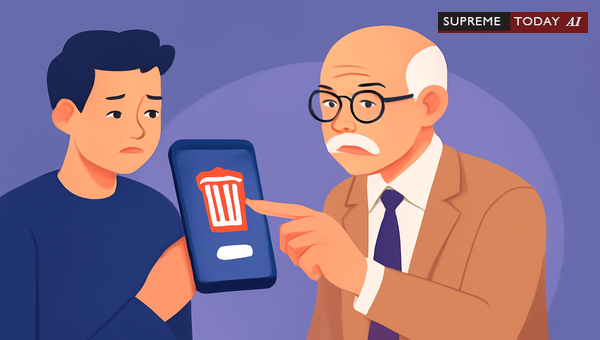
Imagine sitting in a classroom, your phone accidentally rings, and the professor not only confiscates it but also wipes all your data clean. Shocking? Yes. Legal? Probably not. This scenario raises serious questions about property rights, privacy, and the limits of authority in educational settings. In this post, we dive deep into whether such an action by a professor constitutes an offense under Indian law, drawing from legal principles and relevant cases.
A professor enforces a strict no-phone policy in class. When one student's phone rings, she takes the device and deletes the entire data without consent. Is this an offense? Generally speaking, this act involves with and may violate laws on , , or 2017 0 Supreme(SC) 772.
Student phones contain personal data—photos, contacts, apps, and more—making them extensions of one's privacy. Deleting data without permission isn't just rude; it could be unlawful.
The student's phone is their . Taking it might be debatable under institutional rules, but deleting data crosses a line. Legal documents stress that such interference must be lawful and authorized 2017 0 Supreme(SC) 772.
The documents emphasize the importance of lawful procedures and safeguards in handling electronic data and , indicating that any interference must be justified and lawful. 2017 0 Supreme(SC) 772
Without consent or a court order, this action infringes on property rights. Courts have recognized phones as containing protected personal data, akin to privacy violations in digital spaces.
India's evolving jurisprudence on privacy, bolstered by rulings, protects personal data from unauthorized access or tampering 2017 0 Supreme(SC) 772. While no case directly mirrors a professor deleting data, principles apply:
Immediately A1 received the cell phone from the deceased and removed the sim card and did not hand over the cellphone to the student... 2021 0 Supreme(Mad) 3436
Deleting everything goes beyond discipline into destruction.
Under the :
Legal analyses indicate such acts without authority amount to offenses 2017 0 Supreme(SC) 772.
The act of deleting data could be viewed as an act of , which involves interfering with property in a manner that causes loss or damage. 2017 0 Supreme(SC) 772
Related cases highlight boundaries:- Professors or wardens exceeding limits, like invasive searches, faced backlash
S. Thirumani VS State of Tamil Nadu
. Students protested a warden's overreach in checking phones by undressing girls, leading to dismissals but underscoring misconduct limits.- In exam halls, mere possession of phones with data is penalized, but institutions don't delete; they confiscate 2025 0 Supreme(Kar) 923 2008 0 Supreme(Bom) 1229.Penalties imposed without proof of foul intent in educational assessments are unjust; prior judicial decisions support providing benefit of doubt to students... 2025 0 Supreme(Kar) 923
Access to electronic data requires safeguards, like judicial orders 2023 0 Supreme(P&H) 2163 2017 0 Supreme(SC) 772.
The documents mention that access to electronic data, especially in investigations or legal proceedings, must follow established procedures, including judicial orders. 2023 0 Supreme(P&H) 2163
A professor's unilateral deletion bypasses this. Even for discipline, policies demand procedures—not data destruction. Cases like hostel phone seizures emphasize returning devices post-warning 2019 0 Supreme(Mad) 419.
...if anybody uses mobile phone, the mobile phone will be taken over by the warden and the next day by warning the student the mobile phone will be... 2019 0 Supreme(Mad) 419
Rarely:- Explicit consent from the student.- Legal order, e.g., court warrant for evidence.- Institutional policy with , but even then, deletion is unlikely justified 2017 0 Supreme(SC) 772.
Security concerns don't override rights without approval. Blanket bans exist, but enforcement must respect humanity 2019 0 Supreme(Ker) 611.
No student shall be compelled either to use mobile phone or not to use mobile phone. 2019 0 Supreme(Ker) 611
Indian courts repeatedly affirm fairness:- Exam malpractices: Possession alone isn't always '' without proof 2025 0 Supreme(Kar) 923 2021 0 Supreme(Guj) 1147. Benefit of doubt applies.- Warden actions: Taking phones okay, but threats or excess lead to quashing proceedings 2021 0 Supreme(Mad) 2662 2021 0 Supreme(Mad) 3436. No evidence of instigation via phone handling.- Privacy in education: Restrictions must be reasonable; overreach violates rights 2019 0 Supreme(Ker) 611.
These underscore: authority isn't absolute.
Institutions should:- Draft clear phone policies.- Train staff on legal limits 2017 0 Supreme(SC) 772.
This is general information based on legal principles and cases, not specific advice. Consult a lawyer for your situation.
References include 2017 0 Supreme(SC) 772, 2023 0 Supreme(P&H) 2163, 2025 0 Supreme(Kar) 923,
S. Thirumani VS State of Tamil Nadu
, 2021 0 Supreme(Mad) 3436, 2019 0 Supreme(Ker) 611, among others cited. #StudentRights #PrivacyLaw #LegalIndia


Vivek Kumar Tyagi Trained Graduate Teacher (Mathematics) by himself was using his personal phone in Class 9thC, and kept 2 students of the said class indulged with the same for almost the entire period. The use of mobile phone by Mr. ... But he also contends that the mobile phone was not used by the applicant during the class period but was used during the zero periods and that too to collect some official data on SBSB. ... namely Krishna Meena who i....

True, GPS allows one to pin-point the location of a cell phone, and data can show when a communication from the device was sent. ... In May 2023, Florida passed a law requiring public school districts to impose rules barring student cell phone use during class time. 2023 Fla. Sess. Law Serv. Ch. 2023-36 at 5 (C.S.H.B. 379) (West). One Florida district went even further— banning cell phone use entirely during the school day. ... See Oral Arg. at 22:15....

In fact, the mobile phone went unnoticed even when the petitioner was frisked before he entered the class room. The petitioner explained to the committee that he had no material pertaining to the examination in the mobile phone. ... It is noticeable that in almost identical circumstances, where the student carried mobile phone into the examination hall and there was no allegation of the student being caught looking at the mobile phone or using the mobile pho....

In the meeting, it was found that the mobile phone, which was used by Ms. Vaisnavi, was given to her by one student, viz., N. Sivaguru, III year B.A., B.L., Degree course. ... ... (ii) Girl students in the ladies hostel were checked-up and searched to find out whether any student is having mobile phone in the hostel. Mrs. ... Krishna Leela, Assistant Professor/Deputy Warden, on her mobile phone, in the intervening night of 13.09.2014 and 14.09.2014 and abused her wit....
In the meeting, it was found that the mobile phone, which was used by Ms.Vaisnavi, was given to her by one student, viz., N.Sivaguru, III year B.A., B.L., Degree course. ... ... (ii) Girl students in the ladies hostel were checked-up and searched to find out whether any student is having mobile phone in the hostel. Mrs. ... Krishna Leela, Assistant Professor/Deputy Warden of the ladies hostel of the College, exceeded her limit, by searching girl students, by removing their dress in fr....
One day after filing his complaint (8 days after his phone was seized), Lindell moved for a temporary restraining order seeking the return of his phone and data. ... Lindell takes issue with the manner and method of execution of the search warrant—his cell phone was seized from him while in the Hardee’s restaurant drive- through lane at 10:30 a.m. while he was on his way home from an out-of-state duck hunting trip. ... At oral argument—nine months after Lindell asked for the ....

In our view, a student taking mobile phone in the examination hall having data stored in such mobile phone which is relevant to the particular examination of a subject can never be said to be guilty of a minor lapse. Such conduct, therefore, is rightly taken to be a serious lapse by the Committee. ... It is required to be noted that by taking any electronic device or mobile in the examination hall, a student can misuse the same in case any data is stored in such device. ... It is also ....
The entire allegations unearthed against the Petitioner from the statements of the witnesses clearly show that the deceased in fact had affairs with one Gopinath. ... Immediately A1 received the cell phone from the deceased and removed the sim card and did not hand over the cellphone to the student, informed that she will handover the same to the Chief Warden viz., A2. Thereafter, A1 handed over the cell phone to A2. ... The deceased is a student from a college where the present Petiti....
The entire allegations unearthed against the Petitioner from the statements of the witnesses clearly show that the deceased in fact had affairs with one Gopinath. ... Immediately A1 received the cell phone from the deceased and removed the sim card and did not hand over the cellphone to the student, informed that she will handover the same to the Chief Warden viz., A2. Thereafter, A1 handed over the cell phone to A2. ... The deceased is a student from a college where the present Petiti....

In our view, a student taking mobile phone in the examination hall having data stored in such mobile to use any material or data stored in such cell phone. ... available on such mobile phone. ... It is also not in dispute that such data was stored in the mobile phone which has relevance with the examination in data is stored in such device.

However, the petitioner was found in possession of the mobile phone and thus, as per the instructions mentioned in the Hall Ticket as well as the printed of irregularities stated in the punishment table framed under Regulation 51 of the Gujarat Secondary and Higher Secondary Certificate Examination Regulations, the possession of mobile phone during the examination itself would be irregularity which entail the punishment viz. rt is evident from such instructions that keeping a mobile during the examination would amount to irregularity. In fact, the petitioner in his Statement dated ....

Petitioner also obtained her mobile phone number by making a 'missed call' on his phone number from her mobile phone number. During this LTC tour petitioner became familiar with her family and he used to call her sister". After return from LTC tour petitioner used to make phone calls on her phone and during one of such phone call conversation petitioner told her that his wife and daughter wants to meet her. Petitioner fixed that meeting at 'Akash Hotel located in Patparganj area.

It is for each of the students to decide with self confidence and self determination that she would not misuse it and that she would use it only for improving her quality of education. The fact that no other student objected to the restriction or that all others obeyed the instructions will not make a restriction legal if it is otherwise illegal. No student shall be compelled either to use mobile phone or not to use mobile phone.

Even according to the prosecution, the petitioner nothing to do with the crime and the second accused only called the deceased in the mike to come to the warden room and as such the petitioner is no way connected with the enquiry conducted by the second accused. As far as the petitioner is concerned, she snatched the mobile phone from the deceased while study hours and it was handed over to the second accused. There normally during study hours if anybody uses mobile phone, the mobile phone will be taken over by the warden and the next day by warning the student the mobile phone wil....

A cell phone connection was taken by him in her name, however she says it is with her and police seized the phone from her and she stated that accused No.1 never used the cell phone. It at best shows with reference to Exs.P.35 to P.37 there are call conversations between accused and PW.6 and nothing beyond. Thereby, nothing could be shown from that evidence of her apart from nothing favourable to the prosecution from her statement recorded during investigation by cross-examination to show any complicity of accused to the crime. Coming to PW.6, no other than wife of accused ....


An indispensable Tool for Legal Professionals, Endorsed by Various High Court and Judicial Officers
Please visit our Training & Support
Center or Contact Us for assistance

Scan Me!
India’s Legal research and Law Firm App, Download now!


For Daily Legal Updates, Join us on :



 Back to top


