


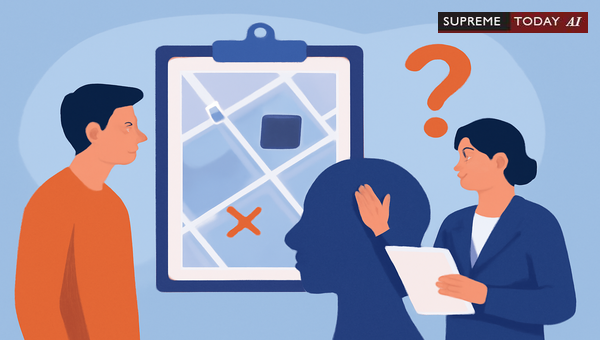
Eyewitnesses' Duty to Show the Places from Which They Witnessed the Occurrence
In criminal trials, eyewitness testimony often forms the backbone of the prosecution's case. But what happens when witnesses fail to clearly demonstrate where they were standing or positioned when the incident unfolded? This question strikes at the heart of evidentiary reliability: Eye Witnesses was Duty Bound to Show the Places where from they had Witnessed the Occurrence.
Understanding this principle is crucial for lawyers, investigators, and even the public navigating legal matters. Courts in India, under the and , emphasize the need for concrete proof of a witness's vantage point. Failure to establish this can lead to doubts about credibility, adverse inferences, and even acquittals. This post breaks down the legal framework, key principles, and real-world applications—drawing from judicial precedents—while noting that this is general information and not specific legal advice. Always consult a qualified attorney for your situation.
Legal Principles: Prosecution's Burden and Eyewitness Obligations
The prosecution bears the primary responsibility to prove its case . This includes not just calling eyewitnesses but ensuring their accounts are verifiable through physical and documentary evidence.
1. Prosecution's Obligation to Map Witness Positions
Under , witness statements must be recorded, and site plans prepared to mark the exact locations from which eyewitnesses observed the incident. Courts expect the prosecution to demonstrate these positions clearly. As noted in judicial observations, The prosecution is required to prove its case by demonstrating the locations from which eyewitnesses observed the incident. This includes preparing a that indicates these locations... 2011 0 Supreme(HP) 2392
Without this, the testimony risks being dismissed as unreliable. For instance, in one case, reliance on a (Exhibit-P-5) revealed that Eye-witnesses could not have witnessed the occurrence from the spot where they were sitting, leading to arguments of 2019 0 Supreme(Raj) 1457.
2. for Failing to Examine Key Witnesses
If known eyewitnesses are not examined, courts may draw an against the prosecution. This underscores the duty to include all relevant witnesses. If the prosecution fails to examine eyewitnesses who were known to have witnessed the occurrence, the court may draw an against the prosecution... 2011 0 Supreme(HP) 2392
This principle prevents cherry-picking and ensures fairness. In scenarios where or are excluded, it weakens the case significantly, as seen in cases where only select relatives testified without 2020 0 Supreme(Mad) 816.
3. Prosecutor's Discretion in Witness Selection
Prosecutors have some leeway in choosing witnesses, but it must be fair and not suppress unfavorable evidence. Deliberate exclusion can flaw the entire case. While the prosecutor has discretion in selecting which eyewitnesses to present, this selection must be fair and not aimed at suppressing evidence... 2011 0 Supreme(HP) 2392 2013 0 Supreme(AP) 832
Courts scrutinize this closely, especially with like relatives, whose testimonies require cautious analysis due to potential bias. Minor discrepancies may be overlooked given time lapses, but major inconsistencies—like implausible positions—cannot. The testimonies of should be analyzed with caution for credibility, and minor discrepancies in the testimonies were natural given the time lapse since the incident. 2023 0 Supreme(Gau) 1368
4. Credibility Assessment: Presence and Reliability
Eyewitness credibility hinges on plausible circumstances of observation. Courts evaluate if the witness could realistically have seen the event from their claimed spot. The credibility and presence of eyewitnesses at the scene of the occurrence are critical. Courts assess whether the circumstances make it plausible for the witnesses to have observed the incident... 2022 0 Supreme(Mad) 3757
Medical evidence often corroborates this. In a murder conviction under , 302, the court upheld reliability where The occurrence has been witnessed by eye-witnesses. The statement of eye-witnesses is well supported by medical evidence. Witnesses of prosecution are reliable and trustworthy. 2020 0 Supreme(All) 54
Conversely, unnamed witnesses in FIRs raise doubts: In ... it was found that eye-witnesses were not named in the F.I.R. It was held that it was quite doubtful that said persons could have witnessed the occurrence... 2017 0 Supreme(Del) 464
Application in Real Cases: Lessons from the Bench
Judges often verify claims through local inspections or site plans. In one instance, The trial judge's local inspection, where he verified the positions of the witnesses relative to the scene, underscores the necessity of establishing the credibility of eyewitness accounts... 1973 0 Supreme(Mad) 342 1973 0 Supreme(Ker) 135
Consider a conviction under /34 and : Eyewitnesses' positions were challenged via , but the court upheld reliability due to consistency and medical , rejecting sudden fight pleas. The ratio emphasized that The court held that the eyewitnesses were reliable and their testimony could be relied upon... corroborated by medical evidence. 2019 0 Supreme(Raj) 1457
In sexual offense cases, relative witnesses' positions were key, but hostility from others highlighted selection risks: PW3, the wife of the accused and PW4, a relative... did not support the case... Yet, corroborated testimony prevailed 2020 0 Supreme(Mad) 816.
Prison death cases further illustrate: Without substantive evidence linking accused to injuries via witness positions, acquittals follow. The court found that the prosecution failed to prove ... witnesses who initially incriminated the accused turned hostile... 2016 0 Supreme(Mad) 2345
These examples show how failing to 'show the places' unravels cases, while proper documentation strengthens them.
Best Practices for Prosecution and Defense
To avoid pitfalls:- Prepare Detailed Site Plans: Mark witness positions accurately during investigation.- Record Statements Promptly: Under to capture fresh details.- Examine All Material Witnesses: Prevent adverse inferences.- Corroborate with Medical/Physical Evidence: Bolster .- Conduct Local Inspections: As done by trial judges for verification.
Defense counsel can exploit gaps by cross-examining on implausible positions or discrepancies.
Conclusion and Key Takeaways
Eyewitnesses typically have a duty to demonstrate their viewing positions, essential for the prosecution to build a robust case. Eyewitnesses have a duty to demonstrate the locations from which they observed the occurrence, as this is essential for the prosecution to establish its case effectively... 2011 0 Supreme(HP) 2392
Failure invites skepticism, adverse inferences, and potential failure. Thorough documentation enhances credibility and trial outcomes. While these principles guide Indian courts, outcomes vary by facts—seek professional advice tailored to your case.
Key Takeaways:- Prosecution must prove witness positions via site plans and statements 2011 0 Supreme(HP) 2392.- Non-examination of key witnesses risks adverse inferences 2011 0 Supreme(HP) 2392.- Credibility demands plausible presence and 2022 0 Supreme(Mad) 3757.- need cautious scrutiny 2023 0 Supreme(Gau) 1368.
Stay informed, and remember: Strong evidence positions win cases. 2013 0 Supreme(AP) 832 1973 0 Supreme(Mad) 342 1973 0 Supreme(Ker) 135 2022 0 Supreme(Mad) 3757
(Word count: approx. 1050. This article references general judicial trends and is for informational purposes only.)
#EyewitnessDuty #CriminalLaw #LegalEvidence












