


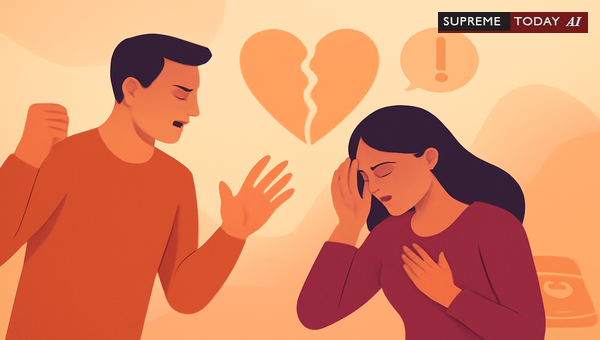
Key Factors Courts Consider in DV Cases
Domestic violence (DV) cases can be complex, involving emotional, physical, and legal challenges for victims seeking justice. If you're wondering what things are to be considered for deciding a DV case, understanding the court's approach is crucial. Under India's (), courts evaluate specific elements to determine if a case holds. This blog breaks down the key factors, drawing from judicial precedents and statutory requirements. Note: This is general information, not legal advice. Consult a qualified lawyer for your situation.
1. Establishing a
The foundation of any DV case is proving a as defined in . Courts emphasize this rigorously. A includes:- Relationships in the nature of marriage.- Live-in relationships or cohabitation. 2020 0 Supreme(P&H) 44 2013 8 Supreme 122 2013 0 Supreme(UK) 533
The complainant must provide evidence like marriage certificates, joint residence proofs, or witness testimonies. Even separated or divorced couples may qualify if the relationship was domestic during the alleged violence. The complainant must prove the existence of a , which can include marriage, live-in arrangements, or similar bonds, even if separated or divorced, provided the relationship falls within the scope of the Act. 2020 0 Supreme(P&H) 44 2023 0 Supreme(Jhk) 958
Failure to establish this often leads to dismissal. Courts look for credible bonds showing shared household dynamics.
2. Proving Domestic Violence
Once the relationship is confirmed, the focus shifts to . The broadly defines it under , covering:- Physical abuse: Injuries or harm.- Sexual abuse: Forced acts, even if initially consensual if harmful. 2010 0 Supreme(Kar) 870
- Verbal and emotional abuse: Insults, harassment, or manipulation causing distress. 2010 0 Supreme(Kar) 870- Economic abuse: Withholding finances or essentials. 2013 8 Supreme 122
Evidence is key—medical reports, messages, witnesses, or police complaints substantiate claims. The complainant must substantiate allegations with credible evidence demonstrating acts of violence or omission that cause harm or injury.
2023 0 Supreme(Ker) 424
Incidents before filing or the Act's commencement may count if part of ongoing abuse. In one case involving abusive emails, the court noted the petitioner's actions resulted in significant mental distress to the complainant, constituting the basis for the charges. 2025 Supreme(Online)(Mad) 21809 This highlights how verbal abuse via digital means can qualify as emotional violence.
3. Nature and Circumstances of the Violence
Courts assess the severity and context:- Physical and sexual abuse as primary indicators. 2010 0 Supreme(Kar) 870
- Verbal/emotional harm if proven impactful. 2010 0 Supreme(Kar) 870- Economic control, like denying support. 2013 8 Supreme 122
Even consensual acts that result in harm or are used as a means of violence are considered relevant.
Recent or ongoing incidents carry more weight. Pre-Act events may apply if linked to continuous patterns. 2020 0 Supreme(P&H) 173
4. Evidence Standards and Judicial Findings
Concrete evidence trumps allegations. Courts require concrete evidence to establish allegations. The failure to prove domestic violence or establish a can lead to dismissal of the case. 2023 0 Supreme(Jhk) 958 2023 0 Supreme(Ker) 424
Magistrate findings on violence and relationships are binding unless overturned.
In related legal contexts, courts stress examining plaints, statements, and judgments for substantive issues, akin to principles where prior findings bar re-litigation if directly in issue. One has to examine the plaint, the written statement, the issues and the judgment to find out if the matter was directly and substantially in issue. 2022 0 Supreme(Chh) 360 2019 0 Supreme(Chh) 706 2016 0 Supreme(Ker) 554 2016 0 Supreme(Kar) 233 2015 0 Supreme(Ker) 779
This underscores DV courts' reliance on trial resolution for disputed facts, dismissing prematurely. 2025 Supreme(Online)(Mad) 21809
5. Applicability Post-Separation or Divorce
The 's protection persists beyond separation. The Act remains applicable even if the parties are living separately or have divorced, provided the relationship falls within the Act's scope and the violence occurred during the relationship. 2020 0 Supreme(P&H) 173 2023 0 Supreme(Jhk) 958
Respondents remain liable for past acts, ensuring ongoing safeguards. 2020 0 Supreme(P&H) 173
6. Reliefs, Orders, and Presumptions
Successful cases yield:- Protection orders.- Residence orders.- Monetary relief and compensation. 2021 0 Supreme(Tri) 92 2023 0 Supreme(Jhk) 958
Legal presumptions favor complainants: The Act and judicial precedents support the presumption of domestic violence if the complainant proves the allegations, shifting the to the respondent. 2021 0 Supreme(Tri) 92
Courts consider respondents' finances for maintenance.
Insights from Broader Case Law
While DV-specific, parallels exist in abuse recognition. For instance, emotional distress from communications mirrors DV emotional abuse. 2025 Supreme(Online)(Mad) 21809 Property or title disputes remind that incidental findings don't bind future DV claims unless directly litigated. 2022 0 Supreme(Chh) 360 The lacks jurisdiction to quash proceedings based on disputed facts, which must be resolved at trial. 2025 Supreme(Online)(Mad) 21809
Remands for fresh adjudication occur when issues like deeds or leases need trial-level proof, emphasizing evidence in DV too.
BKM
Key Takeaways
To strengthen a DV case:- Prove with solid evidence. 2020 0 Supreme(P&H) 44- Document all abuse types—physical, emotional, economic. 2010 0 Supreme(Kar) 870- Gather credible proof; mere claims fail. 2023 0 Supreme(Jhk) 958- Leverage Act's broad scope, even post-separation. 2020 0 Supreme(P&H) 173- Expect presumptions aiding proven allegations. 2021 0 Supreme(Tri) 92
Summary: Courts prioritize relationships, substantiated violence, and context. Focus on evidence for favorable outcomes.
Recommendations: Collect medical records, communications, and witnesses early. Judicial precedents affirm comprehensive proof's role. Always seek professional legal help—DV laws empower, but navigation requires expertise.
This post draws from key judgments; outcomes vary by facts.
#DomesticViolenceLaw, #DVCaseIndia, #DVAct












