




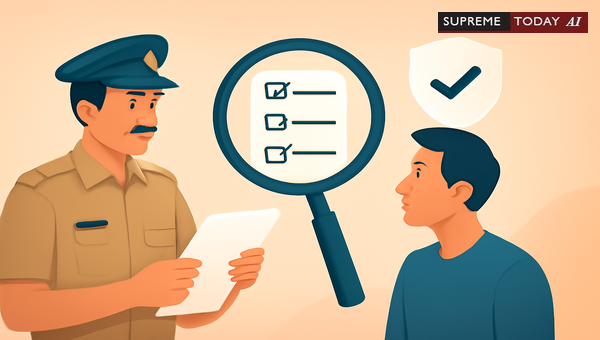
How to Prove a Witness is a Sub-Inspector When Disputed by Defense
In high-stakes court cases, witness credibility can make or break the outcome. Imagine a scenario where a witness testifies, claiming to be a Sub-Inspector of Police, but the defense vehemently disputes it: Witness says he is a Sub-Inspector. Defense disputes it. How to prove it? This common legal challenge demands objective verification rather than assumptions. This blog explores proven methods under Indian law, drawing from judicial precedents and evidentiary principles to guide you through the process.
We'll cover key legal principles, practical steps for verification, and insights from related cases. Note: This is general information based on legal precedents and not specific legal advice. Consult a qualified lawyer for your case.
Understanding the Legal Issue
When a witness asserts they hold the rank of Sub-Inspector (SI)—a —the defense may challenge this to undermine their testimony. Courts do not automatically accept or reject such claims based on status alone. Instead, they emphasize substantive proof.
The core question revolves around under the , particularly (opinions and character) and procedural safeguards in the . Proving the witness's rank shifts the focus from presumption to tangible evidence, ensuring fairness.
Key Legal Principle: No Automatic Presumption on Police Testimony
A foundational ruling clarifies that police officers' testimony isn't inherently suspect. The court states: The testimony of a witness should be judged on its own merits and the court should not draw an for the reason of his being a Government servant or in the employment of police. 1952 0 Supreme(Raj) 187
This means credibility hinges on merits, not employment. No rule presumes police testimony as less reliable, countering defense tactics that exploit status biases. 1952 0 Supreme(Raj) 187 Judges must evaluate evidence objectively, avoiding adverse inferences solely from police affiliation.
Step-by-Step Methods to Verify Sub-Inspector Status
Courts typically rely on documentary and official verification over self-declaration. Here are reliable, court-accepted approaches:
1. Official Identification Documents
- Primary Proof: Demand the witness's official ID card, badge, or appointment letter from the police department. These explicitly list rank, designation, and validity.
- Why it works: IDs are issued by competent authorities and hard to forge without detection.
2. Departmental Records and Databases
- Cross-check with police appointment registers, service books, or digital databases like the Crime Criminal Information System (CCIS).
- Procedure: File an application under for production of records. In cases like raids, courts have noted Sub-Inspectors' roles verified via such records. 2015 0 Supreme(Guj) 435
3. Confirmation from Authorities
- Obtain a certificate or verification letter from the police station SHO, DCP, or .
- This official endorsement carries under ().
4. for Consistency
- Test the witness on rank-specific duties, posting history, and case details. Inconsistencies can discredit, but consistency with documents strengthens claims.
- As seen in bribery cases, witness statements must align with records; mere claims fail without corroboration. 2025 Supreme(Online)(KAR) 10951
5.
- Uniform, badge, or official communications during testimony.
- Other witnesses (e.g., fellow officers) or recovery memos signed by the SI. In NDPS raids, SI involvement is corroborated by FIRs and . 2015 0 Supreme(Guj) 435
These methods ensure proof , aligning with the prosecution's burden in criminal trials.
Insights from Related Case Law
Judicial precedents reinforce verification needs:
Credibility Without Presumption: Echoing 1952 0 Supreme(Raj) 187, courts judge police witnesses on merits. In a appeal, inconsistent evidence led to acquittal due to lack of proof on demand and acceptance—highlighting verification gaps. 2025 Supreme(Online)(KAR) 10951
and Prior Statements: Under , prior inconsistent statements impeach credit. A case noted premature admission of Inspector's evidence on accused statements, stressing proper verification.
in Disputes: When defenses challenge status, the party relying on the witness bears the initial burden. In arbitration disputes, failure to prove claims leads to dismissal. Similarly, unverified SI status weakens testimony. 2006 0 Supreme(Del) 415
Police Roles in Investigations: Multiple judgments detail SIs conducting raids or inquiries, verified via oaths and records. E.g., PW-6 as SI lodging FIR, supported by ASI. 2015 0 Supreme(Guj) 435 Discrepancies, like undated seizures, erode reliability. 2019 0 Supreme(Chh) 232
Alibi and Witness Challenges: Failed defenses rebound, strengthening prosecution if verified. 2010 0 Supreme(MP) 1245 In robberies, vague identifications without fail, underscoring corroboration. 2026 Supreme(Online)(Pat) 311
These cases illustrate that courts demand concrete proof, especially for disputed official claims.
Potential Challenges and Exceptions
- Lack of Documents: If unavailable, seek adjournments or summons under for further evidence.
- Forged Claims: Rare, but forensic checks on IDs mitigate risks.
- Civil vs. Criminal: Standards are stricter in criminal cases ().
Defense may argue bias, but courts reject this without proof, per 1952 0 Supreme(Raj) 187. Always corroborate to preempt challenges.
Recommendations for Litigants and Lawyers
- Prosecution/Complainant: Proactively summon records pre-trial.
- Defense: Demand verification during cross; highlight gaps.
- Best Practice: Use affidavits from superiors alongside IDs.
Conclusion and Key Takeaways
Proving a witness's Sub-Inspector status demands documentary proof and official verification, not presumptions. Key methods—IDs, records, certificates, and —ensure reliability, as affirmed in 1952 0 Supreme(Raj) 187.
Takeaways:- No from police status. 1952 0 Supreme(Raj) 187- Prioritize official IDs and departmental checks.- Corroborate via cross-exam and other evidence.- Learn from cases like inconsistent raid proofs. 2015 0 Supreme(Guj) 435 2025 Supreme(Online)(KAR) 10951
This approach upholds justice. For tailored advice, engage a legal expert. Stay informed on evidentiary trends to strengthen your case.
References:1. 1952 0 Supreme(Raj) 187: Core principle on witness merits.2. 2025 Supreme(Online)(KAR) 10951, 2015 0 Supreme(Guj) 435,
, 2006 0 Supreme(Del) 415, 2026 Supreme(Online)(Pat) 311, 2019 0 Supreme(Chh) 232, 2010 0 Supreme(MP) 1245 #WitnessVerification #PoliceCredibility #IndianLaw















