


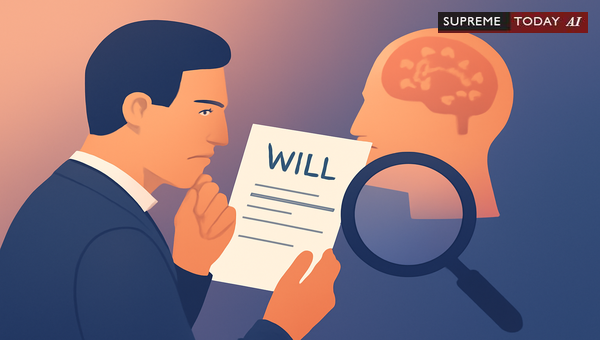
Will Validity: When Must Circumstances Be Understandable to a Prudent Man?
In estate planning, the validity of a will can make or break a family's future. But what exactly does it mean for a will to be executed under circumstances understandable to a prudent man? This principle, rooted in Indian jurisprudence, ensures that wills reflect the true intentions of the testator without doubt or suspicion. If you're drafting a will, contesting one, or simply curious about , understanding this test is crucial.
This article explores the legal requirements for will execution, the role of , and how courts apply the prudent man standard. Note: This is general information based on case law and not specific legal advice. Consult a qualified lawyer for your situation.
The Core Principle: Circumstances Understandable to a Prudent Man
The question at the heart of many will disputes is: Under what circumstances must a will be made understandable to a prudent man? Courts hold that a will must be executed in a manner clear and comprehensible to an ordinary, cautious individual—a prudent man. This means the testator's intentions, mental capacity, and execution context should leave no room for ambiguity about the will's nature, effect, and authenticity. 1958 0 Supreme(SC) 149 2005 1 Supreme 684
The standard of proof hinges on satisfying a prudent mind. As one ruling states, proof of a will should be based on the usual test of the satisfaction of the prudent mind, ensuring an ordinary person would find the circumstances straightforward. 1958 0 Supreme(SC) 149 The testator must be in a , capable of grasping the dispositions made. 1958 0 Supreme(SC) 149 2005 1 Supreme 684 2004 8 Supreme 418
This isn't rigid; it adapts to case specifics. For instance, the standard adopted must be the standard adopted by a prudent man which, of course, may vary from case to case, circumstances to circumstances. 2017 0 Supreme(Megh) 6 2013 0 Supreme(Pat) 419 In criminal contexts, it's echoed: circumstances are assessed with the mind of an ordinary prudent man. 2016 0 Supreme(Ker) 769
: Raising the Bar of Proof
cast shadows on a will's validity, shifting the burden to the (the person seeking probate) to dispel doubts. These include:
- Unnatural or improbable dispositions: Gifts that defy the testator's known wishes. 1958 0 Supreme(SC) 149
- Signs of incapacity or : Feeble mind, coercion, or beneficiary pressure. 1958 0 Supreme(SC) 149 2004 8 Supreme 418
- Active involvement: Beneficiaries dictating or witnessing suspiciously. 1958 0 Supreme(SC) 149 2005 1 Supreme 684
- Signature irregularities or health issues: Doubts about authenticity or understanding. 1958 0 Supreme(SC) 149 2005 1 Supreme 684
- Unfair inconsistencies: Dispositions clashing with prior intentions. 1958 0 Supreme(SC) 149
When present, the must provide satisfactory explanations. Mere isn't enough; the court demands evidence that the will was voluntary and informed. 1958 0 Supreme(SC) 149 2005 1 Supreme 684 As noted, ... raise the standard of proof and require the to remove doubts. 1958 0 Supreme(SC) 149 2005 1 Supreme 684 2004 8 Supreme 418
This aligns with broader judicial wisdom: exaggerated benefit of doubt shouldn't foster fanciful doubts or lingering suspicions. 2017 0 Supreme(Megh) 6 2013 0 Supreme(Pat) 70 In proof matters, a prudent man acts on probability, not absolute certainty.
2023 Supreme(Online)(P&H) 9951
: Sound Mind and Clear Intent
Central to the is the testator's . They must understand:
- The nature of the will.
- The extent of their property.
- Claims of potential beneficiaries.
- The effect of dispositions.
Factors like age, health, and influence are scrutinized. Courts examine if the testator read and comprehended the will. 2005 1 Supreme 684 Evidence might include medical records or witness accounts confirming alertness at signing. 1958 0 Supreme(SC) 149 2005 1 Supreme 684 2004 8 Supreme 418
In related precedents, the prudent man lens evaluates probability: aforesaid evidence... appears to be so probable that a prudent man under that circumstances would act upon the supposition. 2023 Supreme(Online)(P&H) 9951 For wills, this means circumstances must convince a cautious observer of capacity.
Active Participation: A Red Flag Unless Explained
If beneficiaries or propounders play active roles—like drafting or procuring witnesses—it raises suspicion, especially if they gain. Courts require clear and unimpeachable evidence of voluntariness. 1958 0 Supreme(SC) 149 This doesn't automatically invalidate but demands robust rebuttal. 1958 0 Supreme(SC) 149 2005 1 Supreme 684
Standard of Proof in Will Probate
Without suspicion, proving signature, capacity, and understanding suffices. With it, full explanations are needed to ease the court's conscience. 1958 0 Supreme(SC) 149 2005 1 Supreme 684 2004 8 Supreme 418 This mirrors civil proof's , distinct from criminal's . 2011 0 Supreme(Bom) 1411
Delay in registration or minor issues rarely qualify as suspicious alone. 1960 0 Supreme(AP) 292 The focus remains on the signing moment.
Insights from Broader Case Law on Prudent Man Standard
The permeates Indian law. In criminal appeals, it's the lens for reasonable doubt: from the point of view of a prudent man... the fact is not proved.
In negotiable instruments, rebutting presumptions requires probabilities a prudent man would accept. 2024 Supreme(Online)(TEL) 25504
For wills, this reinforces that probate demands circumstances where a prudent observer sees no foul play, much like evaluating or with prudent scrutiny. 2013 0 Supreme(Pat) 419
Exceptions and Practical Limitations
- Duly executed wills withstand minor suspicions unless validity is impaired.
- Registration delays don't inherently suspect. 1960 0 Supreme(AP) 292
- Post-execution events matter less than signing-time state.
Recommendations for Secure Will Execution
To avoid challenges:
- Confirm testator's sound mind via witnesses or video.
- Document execution details thoroughly.
- Minimize beneficiary involvement.
- Use independent attesting witnesses.
- Address potential suspicions proactively with evidence.
Key Takeaways
A will stands valid when its circumstances satisfy a prudent man: clear intent, capacity, and no unresolved suspicions. Propounders must explain doubts thoroughly, guided by precedents emphasizing cautious, probability-based judgment. 1958 0 Supreme(SC) 149 2005 1 Supreme 684 2004 8 Supreme 418
References:1. 1958 0 Supreme(SC) 149: Proof of wills and .2. 2005 1 Supreme 684: Prudent man standard and explanations.3. 2004 8 Supreme 418: Mental capacity requirements.4. 1960 0 Supreme(AP) 292: Non-suspicious irregularities.
In summary, craft wills transparently to meet the —securing legacies without litigation. For personalized guidance, seek professional advice.
#PrudentManTest, #WillValidity, #EstateLaw















