


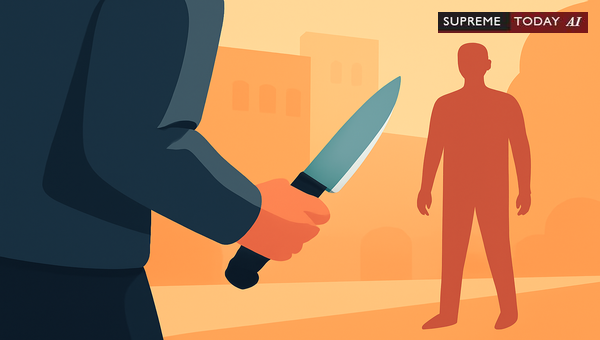
Punishment for Showing Knife in Front of People in India
Introduction
In today's fast-paced urban environments, incidents involving the public display of weapons like knives are increasingly common, often sparking fear and concern among bystanders. But what happens legally if someone shows a knife in front of people? Is it just a momentary act, or does it carry severe criminal consequences? This question—Showing Knife Infront of People what is Punishment for this—is more relevant than ever, especially in India where courts interpret such actions strictly under the ().
This blog post dives deep into the legal framework, judicial precedents, and real-world cases to explain the potential punishments. We'll explore how merely displaying a knife can be treated as 'using' a , even without injury. Note: This is general information based on legal precedents and not specific legal advice. Consult a qualified lawyer for your situation.
Understanding the Legal Issue: When Does Displaying a Knife Become a Crime?
Under Indian law, simply possessing a knife isn't always illegal, but showing or brandishing it in front of people, particularly to threaten or intimidate, can trigger serious charges. Courts have consistently held that such acts fall under provisions dealing with or when a is involved.
The core concern arises in contexts like public altercations, robberies, or attempts to create terror. Eyewitness accounts of the knife being visible and used to instill fear are often enough for conviction, regardless of physical harm.
Key Legal Provisions: Sections 397 and 398
The primary sections governing this are Section 397 and Section 398 of the :
- : Whoever commits armed with a , or causes or attempts to cause death, faces a minimum of 7 years' , which may extend to life.
- : For attempting while armed with a , the punishment is similarly a minimum of 7 years' .
Importantly, 'use' of the weapon doesn't require injury. Judicial interpretations clarify that displaying, brandishing, or threatening with a knife qualifies as 'use' if it creates fear or compels compliance. (merely carrying a like a knife in hand, visible to the victims, is sufficient to constitute use of the weapon for the purpose of Section 397) 1975 0 Supreme(SC) 449
Judicial Precedents: How Courts Interpret 'Use' of a
Indian courts, including the , have broadened the definition of 'use' to include non-injurious acts:
- In a key ruling, the Court emphasized: if the knife was used for the purpose of producing such an impression upon the mind of a person that he would be compelled to part with his property, that would amount to ‘using’ the weapon within the meaning of Section 397. 1975 0 Supreme(SC) 449
- The reiterated: the use of a includes overt acts such as brandishing or displaying the weapon with the intention to terrorize or threaten, even if no injury is caused. 2005 3 Supreme 618
Other precedents reinforce this:- Detention justified for showing dagger: The petitioner and associates showed a dagger to threaten police, creating a 'terror environment' prejudicial to . 1971 0 Supreme(SC) 648- Knives in assault cases: Accused armed with knives used them indiscriminately, but the Court held that threatening or brandishing also qualifies, rejecting arguments limited to stabbing. 2012 0 Supreme(SC) 142
These cases show courts prioritize the psychological impact on victims and public safety.
Insights from Additional Cases: Real-World Applications
Beyond core precedents, various judgments highlight the pattern:
- In a incident, the accused showed a knife and said 'not to make noise' before snatching a golden chain, attracting up to 10 years' imprisonment and fine under provisions.
-
- Another case involved barging into a house, showing the knife, and robbing mobiles and cash, with accomplices waiting on a bike infront of the gate. 2024 Supreme(Online)(KAR) 690
- Public assaults with knives, like stabbing or waving blood-stained knives to people after an incident, underscore severe penalties for public displays. 2003 0 Supreme(Raj) 1580 2023 0 Supreme(Chh) 520
In hurt cases, punishments range from 3 months to 10 years, depending on severity, with courts noting the rise in knife violence.
APPUHAMY v. WIJESINGHE
Courts may even consider whipping for certain offenses.ALDIN v. SANASGALA
A victim noticing the knife feels threatened, regardless of size: A victim who has noticed the knife in the hand of the accused would undoubtedly feel threatened. 2014 0 Supreme(Del) 1882
Exceptions, Defenses, and Limitations
Not every instance leads to conviction:- Mere possession without threat: If no intent to intimidate is proven, liability may not apply.- Context matters: claims or lack of eyewitness evidence can challenge charges.- Non-threatening display: Evidence showing no brandishing or fear induced might mitigate.
Defendants often argue the knife wasn't 'deadly' or used threateningly, but courts examine intent and circumstances closely. Factors like parking disputes leading to knife shows didn't always escalate to weapon charges if no direct threat. 2021 Supreme(Online)(KER) 15033
Potential Punishments and Penalties
- Minimum 7 years RI under 397/398 for /attempt with knife display.
- Up to 10 years + fine for on highways or with hurt.
-
- Aggravated cases (e.g., with injury/death) lead to life imprisonment.
- Fines, whipping, or enhanced sentences for repeat offenses.
Severity depends on eyewitness testimony, medical evidence, and public impact.
Recommendations for Handling Such Situations
- For victims/witnesses: Report immediately with details of display/threat; eyewitness statements are crucial.
- For accused/defense: Gather evidence of non-threatening context; challenge 'use' interpretation.
- Courts interpret 'use' broadly, so arguments must address intent and visibility. 2005 3 Supreme 618
Stay vigilant in public spaces and avoid escalating disputes with weapons.
Conclusion and Key Takeaways
Showing a knife in front of people in India, especially to threaten, is typically considered 'using' a under 397/398, attracting a minimum 7-year —even without injury. Precedents like 1975 0 Supreme(SC) 449 and 2005 3 Supreme 618 emphasize fear induced as key.
Key Takeaways:- Display + intent to terrorize = criminal liability.- Eyewitness evidence suffices for conviction.- Exceptions exist for non-threatening acts.- Public knife violence faces strict penalties to deter crime.
This underscores the need for responsible behavior. This post provides general insights from precedents; seek professional legal counsel for advice.
References:1. 1971 0 Supreme(SC) 6482. 1975 0 Supreme(SC) 4493. 2005 3 Supreme 6184. 2012 0 Supreme(SC) 1425.
-
6. 2024 Supreme(Online)(KAR) 6907. 2014 0 Supreme(Del) 1882 #KnifeLawsIndia, #IPCPunishment, #LegalIndia












