


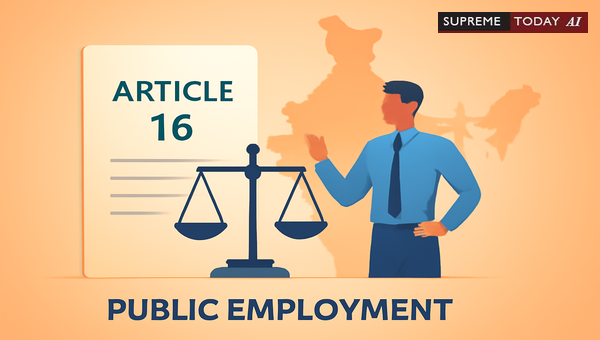
What Is in India? A Comprehensive Guide
In today's competitive job market, many aspire to secure stable careers in government sectors. But what exactly constitutes in India? This question often arises for job seekers, legal professionals, and policymakers alike. isn't just about a paycheck—it's a cornerstone of social mobility, governed by stringent constitutional principles and judicial oversight. In this guide, we'll break down its definition, key characteristics, legal framework, and common challenges, drawing from established legal precedents. Note: This is general information and not specific legal advice. Consult a qualified lawyer for personalized guidance.
Defining in the Indian Context
in India refers to employment in government departments, public sector undertakings (PSUs), and other entities considered part of the . 1990 0 Supreme(SC) 493 1984 0 Supreme(SC) 90 These roles are distinct from private sector jobs due to their public nature, where the employer—the or its instrumentalities—holds a dominant position, dictating terms and conditions of service. 2021 6 Supreme 41
Unlike private employment, public jobs emphasize , transparency, and equality. They serve as a vital source of social welfare and mobility, protected against fraud and manipulation. 2021 0 Supreme(SC) 484 For instance, The employment under the public undertakings is a and a public property. It is not only the undertakings but also the society which has a stake in their proper and efficient working. Both discipline and devotion are necessary for efficiency. 2010 0 Supreme(Kar) 962 2015 0 Supreme(Pat) 1141 2010 0 Supreme(Kar) 1244 2010 0 Supreme(Kar) 1243 2018 0 Supreme(Cal) 233
Constitutional and Statutory Framework
The backbone of lies in the , particularly Articles 14, 16, and 309:
- : Ensures equality before the law.
- : Guarantees in matters of , prohibiting discrimination on grounds like residence or caste (except as permitted). 2010 0 Supreme(SC) 522 2006 5 Supreme 313 2006 3 Supreme 415 2023 0 Supreme(HP) 190
- : Empowers the government to regulate recruitment and conditions of service. 2010 0 Supreme(SC) 522 2006 5 Supreme 313 1984 0 Supreme(SC) 90
Statutory regulations, such as rules under these articles, further govern service conditions. In specific regions like Nagaland, the (amended ) mandates retirement at age 60, regulating tenure for public servants. 2024 0 Supreme(Gau) 1433 2024 0 Supreme(Gau) 1343
underscores that to qualification and residence cannot be pressed into service while offering . 2023 0 Supreme(HP) 190 Registration with employment exchanges, while required for vacancy notifications under the , isn't mandatory for eligibility. 2023 0 Supreme(HP) 361 2023 0 Supreme(MP) 264 2025 0 Supreme(Ker) 2680
Recruitment Process: Transparency and Merit
vacancies are typically filled through transparent, . This includes:
- Public notices for vacancies.
- Use of employment exchanges for notification, though not exclusive. 2006 5 Supreme 313 1987 0 Supreme(SC) 423
- Competitive exams or interviews to ensure fairness.
Courts have repeatedly stressed that decisions must be merit-driven, not influenced by or favoritism. For example, Power to make rules in respect of certain classes of in certain areas. 2023 0 Supreme(HP) 190 This prevents nepotism or corruption, such as fraudulent priority certificates for land acquisition. 2025 0 Supreme(Gau) 1290 2025 0 Supreme(Mad) 4425
Key Characteristics of
Here are the hallmark features:
- Employer Dominance: The controls terms, emphasizing discipline for efficiency. 2021 6 Supreme 41
- Social Welfare Role: Acts as a ladder for social mobility. 2021 0 Supreme(SC) 484
- Protection: Safeguards against manipulation in selection. 2021 0 Supreme(SC) 484
- Public Function Duties: Involves statutory or for collective benefit. Post-retirement contractual roles may not qualify unless linked to public duties. 2023 0 Supreme(Del) 1614
In particular, in a society pledged to uphold the , it would be both unwise and impolitic to leave any aspect of its life to be governed by discretion when it can conveniently and easily be covered by the . 2015 0 Supreme(Pat) 1141
Exceptions and Limitations
While ideally permanent, includes exceptions:
- Contractual Employment: Common but not without proper constitutional appointment. Courts caution against this to prevent bypassing rules. 2006 8 Supreme 29
- Temporary/Casual Employment: Used for flexibility but criticized for enabling corruption and unfairness. 1992 0 Supreme(SC) 122
Additionally, in contracts must not restrain lawful employment or oppose public policy. The onus to prove that a restrictive covenant in an employment contract is not in restraint of lawful employment or is not opposed to public policy, is on the covenantee i.e. the employer. 2025 0 Supreme(SC) 831
Challenges in
Despite robust frameworks, issues persist:
- Irregularities: Nepotism, fake claims, and circumvention of recruitment. 2025 0 Supreme(Gau) 1290 2025 0 Supreme(Mad) 4425
- Residence-Based Discrimination: Prohibited under . 2023 0 Supreme(HP) 361 2023 0 Supreme(MP) 264
- Efficiency vs. Rights Balance: Need for devotion without compromising equality.
Courts play a pivotal role, as seen in cases upholding merit over discretion. 's sanctity as public property demands societal stake in its integrity. 2018 0 Supreme(Cal) 233
Key Findings and Recommendations
is integral to India's legal and social fabric:
- Governed by Constitution and statutes for equality and transparency. 2010 0 Supreme(SC) 522 2006 5 Supreme 313
- Courts ensure fairness, balancing efficiency with rights.
- Maintain merit-based recruitment to foster trust.
To navigate this, aspirants should focus on official notifications and prepare for competitive processes.
Conclusion: Navigating Opportunities
in India embodies opportunity wrapped in responsibility—serving the nation while upholding constitutional ideals. From 's equality mandate to judicial safeguards against abuse, the system prioritizes public good. Whether eyeing a PSU role or government post, understanding these nuances is key. Stay informed, apply transparently, and remember: true efficiency stems from discipline and fairness.
Key Takeaways:- Defined as /PSU jobs with constitutional protections. 1990 0 Supreme(SC) 493 1984 0 Supreme(SC) 90- Merit-based recruitment; no residence discrimination. 2023 0 Supreme(HP) 190- Exceptions like contracts require caution. 2006 8 Supreme 29- Courts protect against fraud for . 2021 0 Supreme(SC) 484
For deeper insights or case-specific advice, reach out to legal experts. Share your thoughts below—what's your take on public sector reforms?
#PublicEmployment #IndiaLaw #GovtJobsIndia















