




Understanding : A Key Concept in Law
In the intricate world of Indian family law, particularly in Kerala, traditional systems like continue to influence property inheritance and kinship structures. If you've ever wondered, what is the nature of ?, you're delving into a matrilineal framework that prioritizes collective rights over individual ownership. This blog post breaks down this concept, drawing from judicial interpretations and customary practices, to provide clarity for those navigating inheritance disputes.
Note: This is general information based on legal precedents and should not be considered specific legal advice. Consult a qualified lawyer for personalized guidance.
What is ?
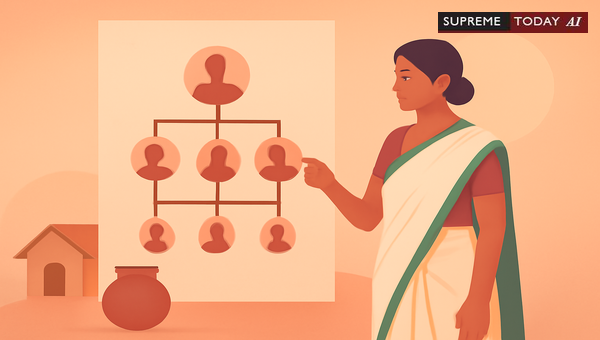
refers to a specific kinship group or community within law, which governs matrilineal societies such as the Ezhava and other communities in Kerala. At its core, it is a collective entity comprising descendants of a common female ancestor, including children and grandchildren through daughters. Property devolves to this group primarily through the rule of , meaning shares are divided by branch rather than equally among individuals.
The term itself denotes this matrilineal unit, functioning as a unit for inheritance and property holding. As courts have clarified, it emphasizes group identity and collective devolution over personal claims. 1969 0 Supreme(Ker) 235
Key Characteristics of
Under law, exhibits several defining features:
- : Includes a woman, her children, and further descendants in the female line, such as grandchildren through daughters. 1963 0 Supreme(Ker) 370
- Collective Property Holding: Property is held and devolved as a unit, often linked to wills or customary law, with the acting as the beneficiary. 1956 0 Supreme(Ker) 84
- Devolution: Partition follows this rule, where each branch from the common ancestor takes a share, as per the . 1969 0 Supreme(Ker) 235
- Joint Rights Emphasis: Members share in estate, often presumed joint unless proven otherwise, mirroring aspects of joint Hindu families but matrilineally. 2007 0 Supreme(Ker) 123
These traits underscore the 's role as more than a mere family—it's a legal entity for property management.
Judicial Interpretations: Core Case Law
Indian courts, particularly in Kerala, have shaped the understanding of through landmark rulings.
In one key case, the court held that a bequest to Puthravakasam devolves on the , with partition governed by as per the . The property given by a marumakkathayee to his wife and children is treated as property, encompassing female-line descendants. 1969 0 Supreme(Ker) 235
Another ruling interpreted to include the female ancestor and her descendants in the female line, devolving with incidents of —extending beyond immediate children. 1963 0 Supreme(Ker) 370
Furthermore, gifts to Puthravakasam are for the entire , including grandchildren through daughters, signifying a collective rather than individual grant. 1956 0 Supreme(Ker) 84
These decisions affirm that property maintains its collective nature unless explicitly separated.
Broader Insights from Related Judgments
Additional precedents reinforce the presumptive joint nature of acquisitions. For instance, courts have held that the very nature of the acquisition shows that the lst defendant's intention is to enjoy the property by her .
This presumption of joint ownership among members prevails unless individual separation is substantiated.
In partition disputes, properties acquired by a (manager) are presumed for the or tarwad unless rebutted. Properties acquired by a are presumed to be Tarwad properties unless proven otherwise, and the does not repeal Law. 2024 Supreme(Online)(KER) 54703 2024 Supreme(Online)(KER) 14710
Blending with items can transform the whole into property, complicating individual claims. 2019 Supreme(Online)(KER) 17893 However, mere references to in documents do not automatically confer that status if intent is absent. 2019 Supreme(Online)(KER) 42022
In contexts for , claims necessitate including all potential sharers to avoid conflicting judgments, especially regarding .
A foundational definition notes: A is constituted by a marumakkathayee woman with her children and further descendants in the female line. A tharwad or comes into existence only by the operation of law. 2007 0 Supreme(Ker) 123
These cases illustrate how 's nature adapts to facts, wills, and customs while upholding matrilineal principles.
Exceptions, Limitations, and Variations
While is typically collective, nuances exist:
- Will or Customary Terms: Scope may expand or limit based on specific bequests, e.g., including or excluding certain descendants. 1956 0 Supreme(Ker) 84
- Self-Acquisition Proof: Presumptions can be rebutted with evidence of individual intent. 2019 Supreme(Online)(KER) 42022
- Post-1976 Births: Shares may depend on birth dates relative to legal changes, like pre- for certain rights. 2024 Supreme(Online)(KER) 54703
- Religious Contexts: concepts may not apply uniformly, e.g., in Muslim or Wakf matters involving sheikship. 2018 0 Supreme(Ker) 954
Relinquishments or release deeds on behalf of can bind members, affecting partition claims. 2010 0 Supreme(Ker) 565
Practical Recommendations for Handling Property
Navigating requires caution:
- Document Intent Clearly: In wills, specify scope and beneficiaries to prevent disputes.
- Establish Female-Line Descent: Verify kinship ties early in inheritance matters.
- Seek Court Clarification: In partitions, implead all members for comprehensive resolution.
- Understand Presumptions: Assume joint holding unless evidence shows otherwise, per customary law.
Courts typically emphasize collective customs in interpretations.
Conclusion: Key Takeaways on
embodies the matrilineal ethos of law—a collective kinship group for property devolution via , prioritizing female-line descendants. Judicial precedents like 1969 0 Supreme(Ker) 235, 1963 0 Supreme(Ker) 370, and 1956 0 Supreme(Ker) 84 solidify its inclusive, group-oriented nature, while broader cases highlight presumptions and rebuttals.
2024 Supreme(Online)(KER) 54703
Key Takeaways:- = Matrilineal collective for inheritance.- Devolution: , not per capita.- Presume joint unless proven separate.- Always tailor documents to intent.
For those in Kerala dealing with ancestral properties, grasping can prevent costly litigation. Stay informed, and consult professionals for your unique situation.
#MarumakkathayamLaw, #ThavazhiInheritance, #KeralaFamilyLaw












