


Section 7 RRC Act 2001: Does Rent Revision Apply from Tenancy Start or Petition Filing Date?
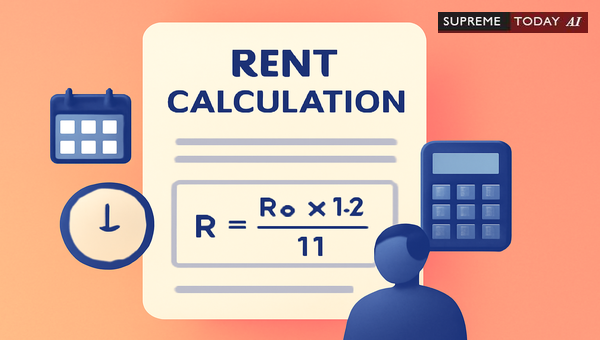
Landlords and tenants in Rajasthan frequently grapple with uncertainties in rent control laws, especially when it comes to revising rent. A common question arises: According to Section 7 Rajasthan Rent Control Act 2001, for Revision of Rent Calculation formula Apply from Starting Date of Tenancy or from Petition Filling Date in ? This issue is critical as it impacts calculations, ongoing payments, and potential eviction proceedings. In this post, we dive into the legal framework, key case laws, and practical implications to clarify this typically.
Note: This article provides general information based on available case laws and statutes. It is not legal advice. Consult a qualified lawyer for your specific situation.
Understanding
(RRC Act 2001) empowers the to determine and revise using a specific calculation formula. This formula generally considers factors like the cost of construction, location, amenities, and market conditions to arrive at a reasonable rate. Unlike the older (1950 Act), the 2001 Act aims for a more structured approach to rent fixation.
The pivotal question is the effective date of the revised rent: Does it relate back to the tenancy's starting date (retrospectively, affecting past ) or commence from the petition filing date in the (prospectively)? Case laws suggest it depends on whether the determination is provisional or final, and the transition from the 1950 Act plays a significant role. 1998 0 Supreme(Raj) 1310 1983 0 Supreme(Raj) 26
Main Legal Finding on Rent Revision Effective Date
Generally, the revised rent under Section 7 of the RRC Act 2001 does not automatically apply from the starting date of tenancy based solely on prior provisional determinations under the 1950 Act. Instead, the calculation formula typically takes effect from the date of filing the petition in the , with assessed accordingly after final adjudication. under the 1950 Act's Section 13(3) serves as a temporary measure and does not confer finality or retrospective application under the new regime without fresh proceedings. 2008 0 Supreme(Raj) 1673 2022 0 Supreme(Raj) 1002
Key Points
- Provisional vs. : fixed under Section 13(3) of the 1950 Act is interim, aimed at ensuring deposits during pendency, not a conclusive basis for revision under Section 7 of the 2001 Act. 2023 0 Supreme(Raj) 632
- Fresh Petition Required: Landlords must file a petition under Section 7 for revision, where the Tribunal applies the formula from the filing date onward, though may be calculated retrospectively based on evidence. 2009 0 Supreme(Raj) 656
- Transitional Provisions: Sections 29 and 32(3) of the 2001 Act govern pending matters, requiring compliance with new procedures rather than automatic carryover. 2008 5 Supreme 59
- Procedural Fairness: The Tribunal must hear both parties, consider last paid rent, and ensure the formula's application aligns with statutory timelines.
Detailed Analysis: under 1950 Act and Its Limitations
Under the 1950 Act, courts often determined under Section 13(3) to address defaults temporarily. For instance, The was determined at Rs. 6050/- for the period from to and an amount of Rs. 1830/- was allowed as interest on the determined amount of rent. 2011 0 Supreme(Raj) 2292 This shows provisional orders can cover past periods, but they remain non-final.
must be determined after hearing both parties and considering the last paid rent, ensuring procedural fairness. This underscores that or hasty orders are quashed, remanded for fresh hearings. In one case, an appeal was allowed because the trial court ignored the last paid rent of Rs. 150/- and proceeded , quashing the order at Rs. 1500/-. 2024 0 Supreme(Raj) 1345
However, such provisional fixes do not survive into the 2001 Act without finality. The order of court determining rent provisionally does not survive after withdrawal of the suit and that the provisions of the 2001 Act do not provide for striking out tenant defenses based on prior orders. 2008 0 Supreme(Raj) 1673
Transition from 1950 Act to 2001 Act: Impact on Rent Revision
The 2001 Act repealed the 1950 Act but included savings clauses for pending proceedings. The law laid down in the case of Kamal Kishore (supra) came to be overruled by Larger Bench in the case of Bhag Chand (supra), wherein, it was held that the proceedings initiated under the Act of 1950 would continue to be governed by the provisions of the said Act and the Act of 2001 would have no application. 2014 0 Supreme(Raj) 1452 Yet, for new revisions under Section 7, a fresh petition is mandatory.
Pending suits under the old law do not automatically convert. Landlords cannot rely on old for Section 7 revisions; the Tribunal applies the formula afresh, typically effective from filing. This judgment discusses the applicability of the 1950 Act proceedings and emphasizes that pending suits under the old law are governed by its provisions unless explicitly overridden by the 2001 Act. 2009 0 Supreme(Raj) 656
In eviction contexts tied to rent default (Section 9), prior doesn't authorize automatic action. A landlord cannot automatically file a suit under Section 9 of the 2001 Act solely based on orders under the 1950 Act; procedural compliance with the new law is necessary. 2022 0 Supreme(Raj) 1002
Case Laws Illustrating Application Dates
- Retrospective Elements in : Courts have fixed for historical periods, e.g., from 1990 onward, but this is interim. Further, sub-section (4) of Section 13 of the Act of 1950 provides for deposition of of rent and further monthly rent at the rate provisionally fixed. 2023 0 Supreme(Raj) 632
- Finality and Fresh Assessment: The court held that the order deciding the relationship of landlord and tenant was not appealable and had attained finality. The trial court's determination of was in line with the Act. 2011 0 Supreme(Raj) 2292
- No Automatic Carryover: In transition cases, delay condonation was allowed where foundational judgments were overruled, highlighting strong cases for fresh merits under new law. Mere change in law by itself is not a sufficient reason for condonation of delay in filing the appeal, however, in the interest of justice, it may be appropriate to condone the delay. 2014 0 Supreme(Raj) 1452
- Procedural Compliance: Court is conscious of fact that power to strike-off defense is considered to be discretionary... default non-compliance on part of petitioner cannot be said to be a bonafide default. 2023 0 Supreme(Raj) 632
Exceptions and Special Considerations
- If proceedings under the 1950 Act resulted in a final eviction or rent order before 2001, it may be enforceable subject to new provisions.
- Bona Fide Defaults: Tenants get leeway for genuine reasons, but repeated non-compliance invites strike-off of defenses. 2014 0 Supreme(Raj) 856
- Mortgage or sub-letting complications don't alter tenant status unless proven. There was no actual mortgage — The status of tenant continued throughout as 'tenant' and not as 'mortgagee'. 2012 0 Supreme(Raj) 923
Ram Chandra VS Beniram
Practical Recommendations for Landlords and Tenants
- Landlords: File a fresh petition under Section 7 in the for revision. Expect the formula to apply from filing date, with past proven via evidence. Avoid relying on 1950 Act provisional orders.
- Tenants: Contest revisions by providing last paid rent proof and ensuring hearings. Provisional deposits don't waive future rights.
- Timeline Awareness: Act promptly, as delays may not be condoned without strong cause. 2014 0 Supreme(Raj) 856
Conclusion and Key Takeaways
Under Section 7 of the RRC Act 2001, the rent revision calculation formula generally applies from the petition filing date in the , not automatically from the tenancy start, especially post-transition from the 1950 Act. Provisional determinations are temporary and necessitate fresh proceedings for finality. This protects both parties but emphasizes procedural adherence.
Key Takeaways:- under 1950 Act ≠ Final revision under 2001 Act.- File fresh Section 7 petitions for formula-based revisions.- Effective date: Typically filing date; retrospective per evidence.- Always prioritize hearings and documentation.
Stay informed on evolving case laws, as rulings continue shaping interpretations. For personalized guidance, reach out to a local legal expert.
References
- 2008 0 Supreme(Raj) 1673 - Clarifies 's non-survival post-suit withdrawal.
- 2009 0 Supreme(Raj) 656 - Applicability of old proceedings under new Act.
- 2022 0 Supreme(Raj) 1002 - Need for procedural compliance in new suits.
- 2011 0 Supreme(Raj) 2292 - for specific past periods.
- 2023 0 Supreme(Raj) 632 - Beneficial nature and deposit requirements.














