


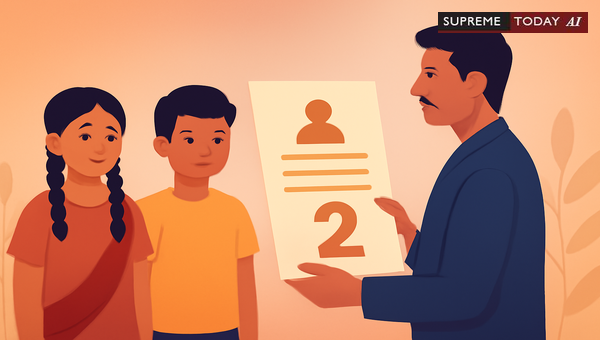
Rajasthan for Government Employees: Key Rules and Exceptions
Are you a job seeker in Rajasthan eyeing a government position, or a current employee concerned about family planning policies? The question on many minds is: Law Relating to Not having more than 2 Child for Government Employees in Rajasthan. This policy, aimed at population control, can significantly impact eligibility for appointments and benefits. In this comprehensive guide, we break down the rules, exceptions, judicial interpretations, and practical implications based on official rules and court precedents. Note: This is general information and not legal advice. Consult a qualified lawyer for your specific situation.
Overview of the in Rajasthan
Rajasthan enforces a for candidates seeking employment in certain government roles, particularly under the . This was amended via on , disqualifying candidates with more than two children born on or after 2020 0 Supreme(Raj) 482.
The policy aligns with national family planning goals, promoting smaller families among public servants to manage resources effectively. Courts have upheld it as a reasonable measure for population control 2005 6 Supreme 58 2019 0 Supreme(MP) 426. However, it's not a blanket ban—specific exceptions apply, making it crucial to understand nuances.
Key Provisions and Under
Core Disqualification
- More than two children post-: Candidates are ineligible for appointment if they exceed this limit. A bare perusal of the statutory Notification dated issued by the Government of Rajasthan, makes it abundantly clear that no candidate who has more than two children on or after shall be eligible for appointment to the Government service. 2022 0 Supreme(Raj) 677
Important Exceptions
The rules provide relief in several scenarios:- Pre-2002 children: Those with more than two children before , remain eligible if no additional children are born after that date 2020 0 Supreme(Raj) 482.- Multiple births: If a candidate has one child from an earlier delivery and more than one child from a single subsequent delivery, those children are counted as one entity. 2020 0 Supreme(Raj) 482- Widows and compassionate appointments: The norm does not apply to widows of deceased employees seeking compassionate roles 2020 0 Supreme(Raj) 482.- Children with disabilities: Such children are excluded from the count 2020 0 Supreme(Raj) 482.- Remarriage: In view of the above, an employee of the State Government, entered into re-marriage, is made entitled for promotions even if one child took birth after even if he/she was having two or more children prior to . A notification on relaxed rules for remarriages 2018 0 Supreme(Raj) 2203 2020 0 Supreme(Raj) 482.
These exceptions ensure the policy isn't overly punitive, balancing family welfare with public policy.
Judicial Interpretations by
The has clarified the norm's application in key cases:
Constitutionality Upheld: The policy is a valid legislative tool for family planning, consistent with national objectives 2005 6 Supreme 58 2019 0 Supreme(MP) 426.
Case of : The court noted that disqualification for a third child post-2002 must align with eligibility conditions. Rigid application beyond rules was deemed improper 2019 0 Supreme(Raj) 614.
Enforcement with Exceptions: Denials solely on child count are invalid if exceptions apply. The court has clarified that the disqualification based on the number of children should be interpreted in light of the exceptions provided in the rules. 2019 0 Supreme(Raj) 614
Courts emphasize fair interpretation, preventing arbitrary .
Impact on Benefits and Other Government Services
Beyond appointments, the norm affects benefits:- Compassionate Appointments and Promotions: Employees with a third child post-2002 may lose eligibility. The underlying object of the relevant GR is to ensure that the employees who are bound thereby, namely the Government employees, do not have more than 2 (two) children. If in case a third child is born to a Government employee, such an employee... 2023 0 Supreme(Bom) 1832.- Maternity and Child Care Leave: Generally not restricted by the . Provisions of the are not applicable to state government employees like the appellant... maternity leave is available to women state government employees. Though some states limit, Rajasthan focuses on appointments 2025 0 Supreme(SC) 917. The , 1961, doesn't impose child limits 2023 0 Supreme(All) 2488.
While the efforts of the Government of India... is to promote family planning and provide incentives to those who adhere to the two child norm, having three or more children is not as yet a penal offence. 2019 0 Supreme(UK) 450
For contractual employees or other services, policies vary, but the norm primarily targets direct recruitment 2023 0 Supreme(HP) 331.
Comparison with Broader Policies and Other States
Rajasthan's approach mirrors some states but differs from central laws. The , 1961, and child care leave policies don't tie benefits to child count 2022 0 Supreme(All) 1270. In contrast, Rajasthan links it to service eligibility for resource management 2022 0 Supreme(Bom) 892.
It speaks of family members of employees having a third child, i.e., more than two children. It is intended to apply to a median situation where the employee and his spouse constitute a small family with no more than two children. 2022 0 Supreme(Bom) 892
This targeted enforcement aids population control without broader penalization.
Practical Recommendations for Applicants and Employees
- Plan Ahead: Time family decisions around the , cutoff.
- Document Exceptions: Maintain records for disabilities, multiple births, or remarriages.
- Seek Legal Review: If disqualified, challenge via exceptions or precedents 2019 0 Supreme(Raj) 614.
- Stay Updated: Government notifications, like the 2015 remarriage relaxation, can change rules 2018 0 Supreme(Raj) 2203.
Conclusion and Key Takeaways
Rajasthan's under the 2012 Rules is a structured policy for population control, disqualifying those with excess children post-2002 from certain jobs and benefits—but with clear exceptions for fairness. Courts reinforce balanced application, upholding constitutionality while protecting rights.
Key Takeaways:- Applies mainly to Safai employees and similar roles; exceptions abound.- Remarriage, disabilities, and pre-2002 children often exempt.- Maternity benefits typically unaffected.- Always verify with latest notifications.
For personalized guidance, consult a legal expert. This policy evolves, so stay informed to navigate Rajasthan government opportunities successfully.
References:2020 0 Supreme(Raj) 482 2005 6 Supreme 58 2019 0 Supreme(MP) 426 2019 0 Supreme(Raj) 614 2022 0 Supreme(Raj) 677 2018 0 Supreme(Raj) 2203 2023 0 Supreme(Bom) 1832 2022 0 Supreme(Bom) 892 2025 0 Supreme(SC) 917 2023 0 Supreme(All) 2488
#TwoChildNorm #RajasthanGovtJobs #FamilyPlanningPolicy












