


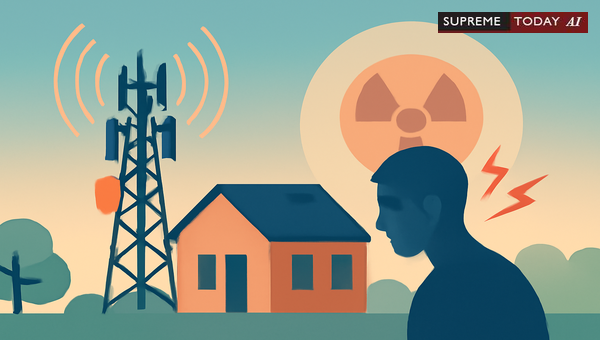
Mobile Towers in Residential Areas: Legal Remedies Explained
In today's connected world, mobile connectivity is essential, but the installation of cell phone towers in residential neighborhoods often sparks controversy. Residents worry about health risks from radiation, property values, and safety, especially near schools or homes with children and the elderly. If a telecom company is installing a tower in your residential area, you might wonder: If Telecom Company is Installing Tower in Residential Area what Remedy is Available?
This blog post breaks down the legal landscape in India, drawing from judicial precedents, government policies, and key cases. While community concerns are valid, courts have generally upheld such installations when proper procedures are followed. Note: This is general information, not specific legal advice. Consult a qualified lawyer for your situation.
Legal Framework Governing Mobile Tower Installations
Permissibility Under Indian Law
The installation of mobile phone towers in residential areas is generally permissible provided telecom companies comply with local regulations and obtain necessary permissions. Courts have emphasized the public interest in maintaining mobile connectivity, balancing it against individual concerns. In Kapil Chaudhary & anr. Vs. & Ors. (W.P. (C) No. 5550/2015), a Division Bench ruled that there is no scientific data to support claims that mobile towers and their emissions are harmful to health, citing studies on . 2022 0 Supreme(Del) 1670
Government policies reinforce this. For instance, the Government of Tamil Nadu issued G.O.Ms.No.2 dated , exempting telecom companies from certain restrictions, allowing installations even in residential zones with approvals. 2022 0 Supreme(Mad) 1791 2022 0 Supreme(Mad) 802
Municipal corporations hold authority to grant permissions, adhering to guidelines on (up to 300 GHz deemed safe). Challenges lacking evidence have been dismissed for want of material particulars. 2017 0 Supreme(P&H) 2368 2013 0 Supreme(UK) 548
Health Concerns and Scientific Evidence
Health fears—radiation impacting children, pregnant women, or the elderly—are common but unsubstantiated by science, per multiple rulings. (PILs) seeking tower removals have failed, with courts noting the necessity of mobile towers for communication services and absence of conclusive health hazards. 2016 0 Supreme(Del) 1791 2017 0 Supreme(Gau) 649
In a case, the judge quipped: To Be Or Not To Be or rather to have mobile phone towers or not to have mobile phone towers, is the question. The court invalidated a Grampanchayat's cancellation of a without a hearing, stressing principles of and lack of scientific evidence on radiation risks. 2025 Supreme(Online)(Bom) 4022
Similarly, cases under (), require permits for towers but affirm licensed telecoms' rights post-approval. One ruling clarified: Petitioner has not produced any permit... if the construction... is carried out as is stated in the counter affidavit... Municipality is entitled to take appropriate action.2022 0 Supreme(Ker) 57
Key Judicial Precedents on Tower Challenges
Residents have filed to halt installations, often citing unauthorized erection or health risks. Outcomes favor telecoms if compliant:
- In KALANDHAR NAINA MOHAMED Vs THE DISTRICT COLLECTOR - Madras_HC_HCMD010516212021, a petition sought to forbear tower installation in Gopalapattinam village without approval. The court noted proceedings but highlighted approval requirements.
KALANDHAR NAINA MOHAMED Vs THE DISTRICT COLLECTOR
- KALANDHAR NAINA MOHAMED Vs THE DISTRICT COLLECTOR - Madras_MAD_WP_MD_12452_2021 similarly challenged a tower in a village, referencing District Collector applications dated .
- (KALANDHAR NAINA MOHAMED Vs THE DISTRICT COLLECTOR - Madras_HC_UKHC010167202022) addressed a tower in residential lands violating norms, urging removal by authorities.
- Uttar Pradesh (KALANDHAR NAINA MOHAMED Vs THE DISTRICT COLLECTOR - Madras_HC_UPHC010736322022) noted towers permissible in residential/commercial areas but installation pending in dense mohalla.
In Kottayam (2019 0 Supreme(Ker) 842), a PIL against a tower near a school was dismissed as respondent obtained permissions: Respondent No.3 has obtained necessary permission from the competent authorities. Prayers... cannot be granted.2019 0 Supreme(Ker) 842
Another Kerala case (2019 0 Supreme(Mad) 3420) directed fresh applications per G.O.s: General permission to any licensed telecom company... subject to terms and conditions. Residents' requests for relocation to remote areas were denied. 2019 0 Supreme(Mad) 3420
These cases show courts scrutinize permissions and procedures, not health fears.
Available Remedies for Affected Residents
If a telecom is installing a tower, remedies focus on procedural lapses, not blanket opposition:
- Verify Permissions: Check if NOC, building permits, or local approvals (e.g., municipal, panchayat) exist. Absence allows challenges via under .
- File Objections Early: Submit to local authorities before approval. Representations like those in Veetampadi Village (2019 0 Supreme(Mad) 3420) request bans but succeed only on non-compliance.
- Challenge Arbitrary Actions: If NOC revoked without hearing, courts intervene per (2025 Supreme(Online)(Bom) 4022).
- Seek Regularization or Removal: Post-installation, prove violations (e.g., no permit under building rules). Kerala courts grant liberty for regularization. 2022 0 Supreme(Ker) 57
- Public Interest Litigation: For dense areas/schools, but health claims rarely prevail without evidence.
Health-based suits typically fail, as affirmed repeatedly.
Recommendations for Telecom Companies and Residents
For Telecoms:- Secure all permissions upfront.- Address concerns with /DOT data on safety.- Monitor policy updates.
For Residents:- Gather evidence of non-compliance.- Engage legally early.- Explore community consensus for NOCs.
Conclusion and Key Takeaways
Mobile tower installations in residential areas are legally supported in India for connectivity needs, with courts dismissing health panic absent proof. Remedies lie in ensuring regulatory adherence—challenge unauthorized setups, but expect hurdles on safety grounds.
Key Takeaways:- Permissible with permissions: Comply with local rules. 2022 0 Supreme(Mad) 1791- No proven health risks: Backed by science and judgments. 2022 0 Supreme(Del) 1670- Procedural remedies strongest: Verify docs, object timely.- Consult experts: Laws vary by state (e.g., Tamil Nadu G.O.s, Kerala Rules).
Stay informed—telecom expansion continues, but rights protect against abuse. For personalized guidance, reach out to a legal professional.
#MobileTowersIndia, #ResidentialTowerRemedies, #TelecomLaw












