


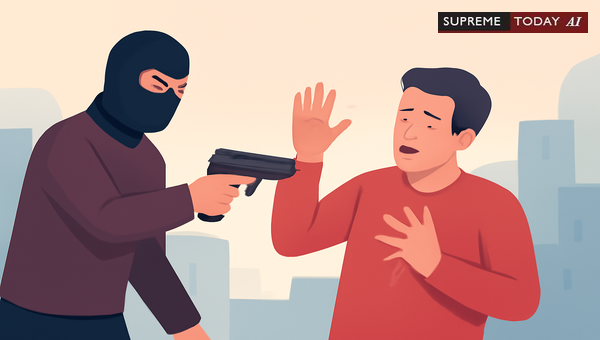
Punishment for in India: A Comprehensive Guide to IPC Provisions
strikes fear into communities, combining with violence or intimidation. If you've ever wondered, What is the punishment for under Indian law?, you're not alone. This serious offense is governed by the , with penalties that escalate based on factors like time, location, weapons, and group involvement. This blog breaks down the key provisions, judicial interpretations, and sentencing nuances to help you understand the legal framework.
Note: This is general information based on legal provisions and case law. It is not legal advice. Consult a qualified lawyer for specific cases.
Defining Under the IPC
Under , is or where the offender voluntarily causes or attempts to cause , hurt, wrongful restraint, or fear thereof during the act. In all there is either or . 2022 3 Supreme 496
Relatedly, defines as committed conjointly by five or more persons. These definitions set the stage for punishments, distinguishing simple from aggravated forms. 2022 3 Supreme 496 2000 0 Supreme(Raj) 1041
Basic Punishment for :
The cornerstone provision is : Whoever commits shall be punished with for a term which may extend to ten years and shall also be liable to fine. 2022 1 Supreme 376 2016 1 Supreme 730
- Maximum: 10 years + fine.
- Highway between sunset and sunrise: Extends to 14 years. This reflects heightened danger at night on public roads. 2022 3 Supreme 496 2000 0 Supreme(Raj) 1041
Courts emphasize proportionality in sentencing, considering violence levels and prior convictions.
Enhanced Penalties: Deadly Weapons and
Punishments intensify with violence. mandates: If the offender uses a , causes , or attempts / during or , . 2022 3 Supreme 496 2000 0 Supreme(Raj) 1041 2007 0 Supreme(Ori) 573
Key judicial clarification: The term 'offender' in Sections 397 and 394 refers to the individual who actually uses a or causes , not necessarily all participants. 2022 3 Supreme 496 2000 0 Supreme(Raj) 1041 2007 0 Supreme(Ori) 573
- : in – or up to 10 years + fine.
- Mere possession of a weapon without active use doesn't trigger the minimum. Cases like Phool Kumar (Supra) and Dilawar Singh (Supra) limit liability to the active user. 2007 0 Supreme(Ori) 573
The purpose of making a or an attempt of where the offender is armed with a punishable with a harsher punishment of not less than 7 years is from the stand point of the victim. 2013 0 Supreme(Del) 275
Attempts to Commit
punishes attempts: Up to 7 years + fine. If armed with a , minimums apply similarly. Punishment for making attempt to commit is prescribed under which says that whoever attempts to commit shall be punished with for a term which may extend to seven years, and shall also be liable to fine. 2015 0 Supreme(Guj) 649
This distinguishes attempts from completions, ensuring tailored penalties. 2022 0 Supreme(Gau) 210 2000 0 Supreme(Raj) 1041
Gang and : Sections 395 and Beyond
For group crimes, (punishment for ) imposes or up to 10 years + fine. In extreme cases like with murder, it can extend to . 2022 3 Supreme 496 2022 0 Supreme(Gau) 210
Comparative insights from similar penal codes highlight gang 's severity: The punishment for gang provided under s 395 PC is imprisonment for maximum term of twenty years. The offender shall also be liable to whipping.
Though Malaysian, it mirrors IPC's escalation for collective violence. Gang involvement often leads to 20-year maximums in aggravated scenarios.
When multiple accused are involved, each may face gang charges if acting conjointly. When a criminal act is done by several persons in furtherance of ... each of such persons is liable. 2016 1 Supreme 730
Key Exceptions, Limitations, and Judicial Principles
- No : Hurt integral to can't be charged separately. prevents splitting offenses.
- Active use required: Merely being armed with a does not automatically attract the minimum sentence unless it is actually used. 2007 0 Supreme(Ori) 573
- Proportionality: Courts weigh weapon use, violence, and history. Attempted may not always qualify as a 'crime of violence' under certain guidelines. 2023 Supreme(US)(ca3) 41
Courts caution against for the same act—e.g., punishing both for and hurt separately is impermissible.
Practical Recommendations for Prosecution and Defense
- Prove active use of weapons for Section 397 minimums.
- In multi-accused cases, identify the specific offender. 2022 3 Supreme 496 2007 0 Supreme(Ori) 573
- For possession-only, frame under basic Section 392.
Sentencing remains discretionary within limits, focusing on public safety.
Conclusion: Key Takeaways on Punishments
punishments under IPC range from 10 years (basic) to life/ (aggravated ). Highlights:
- Section 392: Up to 10/14 years (highway/night).
- Section 397: Minimum 7 years for deadly weapons/ (active user only).
- (395): Up to life.
- No double jeopardy; focus on individual roles.
Understanding these provisions aids in navigating criminal justice. Stay informed, but seek professional advice for legal matters. 2022 3 Supreme 496 2000 0 Supreme(Raj) 1041 2022 0 Supreme(Gau) 210
References
- 2022 3 Supreme 496 – Core definitions and punishments.
- 2000 0 Supreme(Raj) 1041 – Highway extensions and weapons.
– Framework for Section 397.
- 2022 0 Supreme(Gau) 210 – Attempts vs. completions.
- 2007 0 Supreme(Ori) 573 – Judicial interpretations on 'use'.
- Additional:
, 2022 1 Supreme 376, etc.















