
SupremeToday Landscape Ad
AI Thinking

AI Thinking...

Searching Case Laws & Precedent on Legal Query.....!

Scanned Judgements…!

Checking relevance for Court on its own Motion VS Union of India...

Checking relevance for Kajru Mahto @ Kajru Chaudhary @ Kajru Choudhary @ Kajaru Mahto @ Kajaro Chouhdary, son of Ganesh Thandar VS State of Jharkhand...

Checking relevance for Ganga Ram Mukhiya VS State of Bihar...

Checking relevance for Shamed Sk. S/o Saiful Sk. vs State of Jharkhand...

2025 0 Supreme(Jhk) 224 : The ingredients of Section 137(2) and Section 143(5) of the Bhartiya Nyaya Sanhita, 2023, as referenced in the judgment, are: (1) Section 137(2) pertains to kidnapping or abduction of a minor (under 18 years) with the intent to exploit or cause harm, and (2) Section 143(5) relates to trafficking of a minor, including recruitment, transportation, or harboring for exploitative purposes. The court affirmed that the appellant''''s actions satisfied these ingredients based on evidence from parents and confessional statements, establishing the presence of kidnapping and trafficking elements.Checking relevance for Achin Gupta VS State of Haryana...

2024 4 Supreme 347 : Section 86 of the Bharatiya Nyaya Sanhita, 2023, is a direct and verbatim reproduction of Section 498A of the Indian Penal Code, 1860, and pertains to matrimonial cruelty. The section criminalizes acts of cruelty by a husband or his relatives towards a wife, including harassment for dowry or other unlawful demands. The Explanation to Section 498A of the IPC has been elevated to a standalone provision under Section 86 of the Bharatiya Nyaya Sanhita, 2023. The court has recommended that the legislature reconsider and potentially amend Sections 85 and 86 of the Bharatiya Nyaya Sanhita, 2023, to address pragmatic concerns regarding misuse of the provision, particularly in matrimonial disputes.Checking relevance for Mangalore Ganesh Beedi Works VS State Of Mysore...

Checking relevance for Nand Kumar Rai VS State Of Bihar...

Checking relevance for Samir Mukherjee VS Davinder K. Bajaj...

Checking relevance for PARK STREET PROPERTIES (PVT) LTD. VS DIPAK KUMAR SINGH...

Checking relevance for Dhampur Sugar (Kashipur) Ltd. VS State of Uttranchal...

Checking relevance for Mangilal VS Sugan Chaiid Rathi...

Checking relevance for C. Mackertich VS Steuart And Company LTD. ...


AI Overview

AI Overview...

  • Section 74, 75, 137(2), 296, 115(2) of Bhartiya Naya Sanhita, 2023 - These sections pertain to various offences under the new criminal code, including provisions related to specific criminal behaviors and procedures ["2025 Supreme(Online)(Bom) 3696"].

  • Section 8, 10, and 12 of Protection... - These sections likely relate to protective measures or rights under the same legislation, though details are limited in the source ["2025 Supreme(Online)(Bom) 3696"].

  • Section 334(1) and 305 of Bhartiya Nyaya Sanhita, 2023 - These sections involve offences related to bodily harm and culpable homicide, respectively, with cases involving arrests and bail orders ["2025 Supreme(Online)(Bom) 1825"].

  • Section 21-C of Narcotic Act - The seized bottles of substances suggest provisions under narcotics laws, indicating offences related to drug trafficking or possession ["2025 Supreme(Online)(Bom) 1825"].

  • Sections 105, 106 of Bhartiya Nyaya Sanhita, 2023 - These sections are incorporated into the legislation, with Section 106 specifically dealing with powers related to freezing accounts or assets ["2025 0 Supreme(All) 3437"].

  • Sections 103(1), 105, 108, 111(2)(b), 111(4), 115, 121(1), 132, 296, 316, 318, 324, 333, 351 of Bhartiya Nyay Sanhita, 2023 - These sections cover a wide range of offences, including property damage, assault, cheating, and public safety, with specific cases involving arrests and bail applications ["2026 Supreme(Online)(Chh) 1442"], ["2024 Supreme(Online)(Chh) 18492"], ["2024 Supreme(Online)(Chh) 16404"].

  • Section 175(3) and 223 of Bhartiya Nagarik Suraksha Sanhita, 2023 - These sections relate to procedural aspects of investigations or legal notices, with references to cases involving prior court decisions ["2024 Supreme(Online)(Chh) 18492"], ["2024 Supreme(Online)(Chh) 18580"].

  • Section 281 and 106 of Bhartiya Nagrik Suraksha Sanhita, 2023 - The offence under Section 281 corresponds to IPC Section 279 (rash driving), and Section 106 involves criminal liability for actions leading to death or injury ["2025 Supreme(Online)(HP) 8282"].

  • Section 3(5) and 318(4) of Bhartiya Nyay Sanhita, 2023 - These sections involve specific criminal offences, with cases involving arrests and anticipatory bail applications ["2025 Supreme(Online)(CHH) 3713"].

  • Section 108 of Bhartiya Nyay Sanhita, 2023 - Pertains to offences involving public safety or order, with cases requesting anticipatory bail ["2025 Supreme(Online)(Chh) 7638"].

  • Section 47/2024, 105, 106 of Bhartiya Nyay Sanhita, 2023 - These sections involve offences related to specific criminal acts, with petitions to quash FIRs or seek bail ["2024 Supreme(Online)(Chh) 18371"], ["2025 Supreme(Online)(KAR) 12362"].

Analysis and Conclusion:The Bhartiya Naya Sanhita, 2023, introduces a comprehensive legal framework with multiple sections addressing various criminal offences, procedural rights, and investigative powers. Notably, Sections 106 and 105 are frequently referenced, indicating their importance in powers related to asset freezing and criminal liability. Several cases involve bail applications under these sections, highlighting their role in procedural justice. The legislation covers a broad spectrum of offences, including property crimes, bodily harm, drug offences, and public safety, with courts often considering bail and quashment petitions based on the specifics of each case ["2025 Supreme(Online)(Bom) 3696"], ["2025 Supreme(Online)(Bom) 1825"], ["2026 Supreme(Online)(Chh) 1442"].

Liability for Death by Negligence Under Section 106 Bharatiya Nyaya Sanhita 2023

Understanding the Ingredients of Section 106 of Bharatiya Nyaya Sanhita, 2023

In the evolving landscape of Indian criminal law, the Bharatiya Nyaya Sanhita (BNS), 2023 has replaced the Indian Penal Code (IPC), introducing nuanced provisions to address modern offenses. One common query from legal enthusiasts and practitioners alike is: What are the ingredients of u/s 106 Bharatiya Nyaya Sanhita? This section, often invoked in cases involving rash or negligent acts leading to death, is crucial for understanding liability in accidents and similar incidents.

While the official text of BNS provides the statutory framework, judicial interpretations from recent cases offer valuable insights into its application. This post breaks down the essential elements (or 'ingredients') of Section 106 BNS, drawing from bail applications and court rulings. Note that this is general information and not specific legal advice—always consult the statute and a qualified lawyer for case-specific guidance.

What is Section 106 of BNS, 2023?

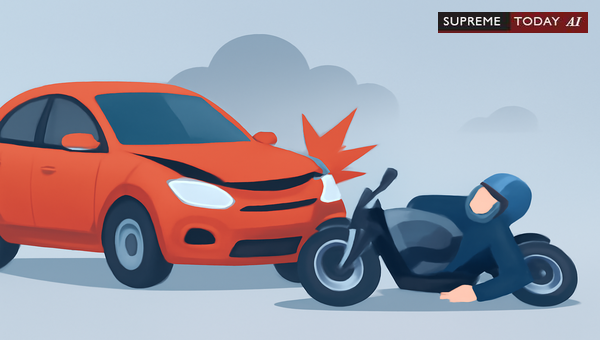
Section 106 of the Bharatiya Nyaya Sanhita, 2023, generally deals with causing death by rash or negligent act not amounting to culpable homicide. It mirrors the erstwhile Section 304A of the IPC but is adapted to the new codal scheme. Unlike more serious offenses like murder (Section 103 BNS), it applies when death results from negligence without intent to cause death or knowledge of its likelihood.

The provided legal documents do not explicitly list the ingredients in a single source, focusing instead on procedural aspects like bail. However, case references reveal its frequent use alongside traffic laws or other negligence scenarios. For instance, in a bail application under Section 483 of Bhartiya Nagrik Suraksha Sanhita (BNSS), 2023, an FIR was registered under Sections 105, 106 of BNS and Sections 184, 146/196 of the Motor Vehicle Act against a tractor driver accused of causing a motorcyclist's death. 2025 Supreme(Online)(Chh) 10431

The court emphasized the presumption of bail favoring liberty over detention, subject to conditions, highlighting how Section 106 fits into rash driving cases. 2025 Supreme(Online)(Chh) 10431

Key Ingredients of the Offense Under Section 106 BNS

To establish an offense under Section 106 BNS, prosecutors typically need to prove the following core ingredients, inferred from statutory language and judicial precedents:

  • Rash or Negligent Act: The act must be performed with rashness (gross negligence) or negligence (failure to exercise reasonable care). In motor vehicle cases, this includes overspeeding, reckless driving, or ignoring traffic rules. For example, F.I.R. was registered under Sec. 105, 106 of the Bhartiya Nyaya Sanhita (B.N.S.) and Sec. 184, 146/196 of Motor Vehicle Act. 2025 Supreme(Online)(Chh) 10431

  • Causation Leading to Death: There must be a direct link between the act and the death. Mere negligence without resulting in death does not suffice.

  • Not Amounting to Culpable Homicide: The act lacks intention to cause death or knowledge that it is likely to cause death (distinguishing from Sections 100-104 BNS).

These elements are assessed on facts, with courts granting bail if evidence is weak. In another case, an anticipatory bail under Section 482 BNSS involved Section 106(1) BNS and Section 135 of the Electricity Act, where the applicant apprehended arrest for alleged negligence in electricity-related death. 2025 Supreme(Online)(Chh) 5476

Related Contexts and Burden of Proof

Section 106 often intersects with evidentiary rules. In a murder bail case under Section 103(1) BNS, courts referenced Section 106 of the Bhartiya Sakshya Adhiniyam (BSA), 2023 (equivalent to Evidence Act Section 106) on burden of proof for facts within special knowledge. The court noted, Burden of proof rests on the prosecution; insufficient evidence can lead to bail, granting bail due to lack of prima facie evidence. 2025 Supreme(Online)(Pat) 3185

This underscores that for Section 106 BNS, the prosecution bears the initial burden, but the accused may need to explain facts peculiarly within their knowledge.

Judicial Interpretations and Case Examples

Recent judgments provide practical illustrations:

  • Motor Vehicle Rashness: In the tractor driver case, the applicant argued no prior record and evidence doubts. The court balanced gravity against bail rights, imposing trial conditions. The court emphasizes the presumption of bail favoring liberty over detention, subject to reasonable conditions during trial. 2025 Supreme(Online)(Chh) 10431

  • Electricity Theft/ Negligence: FIR under Section 106(1) BNS for potential death from unauthorized connections, showing its broad application beyond roads. 2025 Supreme(Online)(Chh) 5476

  • Distinction from Grave Offenses: Unlike Sections 64/66/103(1) BNS (rape/murder), Section 106 is compoundable in some scenarios but triable by Magistrate if punishment is up to 5-10 years. Bail is often granted post-charge-sheet if no flight risk. 2025 0 Supreme(Cal) 170

Note: Some discussions link nearby sections like 85/86 BNS (matrimonial cruelty, akin to IPC 498A) to evidentiary burdens, but Section 106 stands distinct. Documents on Sections 85/86 highlight legislative reviews but no direct tie to 106. 2025 0 Supreme(Jhk) 224 2024 4 Supreme 347

Procedural Aspects: Bail and Trials Under BNS

  • Bail Applications: Frequently filed under BNSS Sections 483 (regular bail) or 482 (anticipatory). Courts deny if contraband/large recoveries, but favor liberty in negligence cases. 2025 Supreme(Online)(Chh) 6456

  • Charge Framing: Post-investigation, charges under 106 BNS require evidence like eyewitnesses or forensics. In one appeal, Central Government competence under BNSS 418 was key for sentence enhancement. 2025 0 Supreme(Cal) 170

  • Compounding Limits: Grave negligence (punishable up to 10 years) resists quashing via compromise. 2024 0 Supreme(MP) 456

Comparison with IPC Section 304A

| Aspect | IPC 304A | BNS 106 ||--------|----------|---------|| Punishment | 2 years RI/fine | Up to 5-10 years (contextual) || Cognizable | Yes | Yes || Bailable | Yes (generally) | Yes, with conditions |

This continuity aids transition, but BNS emphasizes victim rights.

Key Takeaways and Recommendations

  • Ingredients Summary:
  • Rash/negligent act.
  • Resulting death.
  • Absence of culpable intent.

  • Section 106 BNS applies typically to accidents, requiring proof of negligence beyond civil standards.

  • For precise text, refer to the official BNS gazette. Judicial trends favor bail in weak cases, prioritizing liberty. 2025 Supreme(Online)(Chh) 10431 2025 Supreme(Online)(Pat) 3185

In matrimonial or other disputes, related sections like 85/86 may arise, but 106 focuses on negligence-death nexus. Always verify with primary sources, as analyses here are from cited documents. 2025 0 Supreme(Jhk) 224 2024 4 Supreme 347

Disclaimer: This overview is for informational purposes. Legal outcomes vary; seek professional advice.

#BNS106 #BharatiyaNyayaSanhita #CriminalLaw
Chat Download
Chat Print
Chat R ALL
Landmark
Strategy
Argument
Risk
Chat Voice Bottom Icon
Chat Sent Bottom Icon
SupremeToday Portrait Ad
logo-black

An indispensable Tool for Legal Professionals, Endorsed by Various High Court and Judicial Officers

Please visit our Training & Support
Center or Contact Us for assistance

qr

Scan Me!

India’s Legal research and Law Firm App, Download now!

For Daily Legal Updates, Join us on :

whatsapp-icon Back to top







