Searching Case Laws & Precedent on Legal Query.....!
Analysing the retrieved Case Laws
Scanned Judgements…!



Searching Case Laws & Precedent on Legal Query.....!
Analysing the retrieved Case Laws
Scanned Judgements…!
References:["2024 0 Supreme(All) 2019"] ["2024 0 Supreme(All) 2018"] ["2024 0 Supreme(All) 1979"] ["2023 0 Supreme(P&H) 744"] ["2023 0 Supreme(P&H) 257"] ["2023 0 Supreme(P&H) 296"] ["2023 0 Supreme(P&H) 290"] ["2023 0 Supreme(All) 2429"] ["2025 0 Supreme(Del) 320"] ["2023 0 Supreme(All) 693"] ["2024 0 Supreme(Raj) 670"] ["2024 0 Supreme(Raj) 668"] ["2023 0 Supreme(P&H) 1055"]
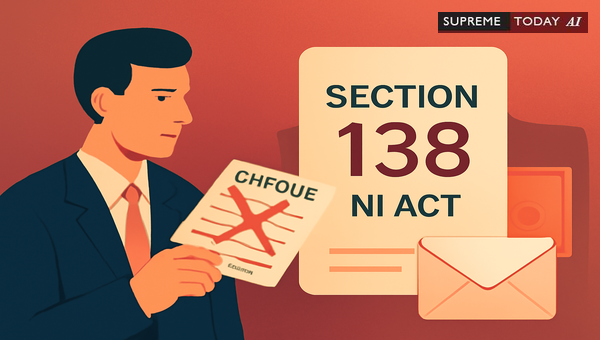
In today's fast-paced commercial world, cheques remain a cornerstone of transactions despite digital alternatives. However, when a cheque bounces due to , it can lead to serious legal consequences under (NI Act). If you're searching for section 138 of negotiations act – likely a reference to the Negotiable Instruments Act – this guide breaks down the essentials, conditions, procedures, and practical tips.
This article provides a comprehensive overview based on judicial interpretations. Note: This is general information and not specific legal advice. Consult a qualified lawyer for your situation.
Section 138 criminalizes the due to insufficiency of funds or exceeding arranged limits, when issued for . It is a penal provision created by legal fiction, requiring strict construction. 2009 0 Supreme(SC) 926
The provision aims to uphold the credibility of negotiable instruments and deter dishonesty in cheque issuance. 2022 0 Supreme(Raj) 1116 As stated: The law was enacted to uphold the credibility of negotiable instruments and prevent dishonesty in issuing cheques. 2022 0 Supreme(Raj) 1116
Proceedings are , blending penal and civil elements, allowing for and settlements. 2022 0 Supreme(Raj) 1512 2010 0 Supreme(Ori) 754 2024 0 Supreme(UK) 488
For prosecution to succeed, all statutory conditions must be met strictly:
Cheque Dishonour: The cheque must be returned unpaid by the bank for insufficiency of funds or similar reasons. 2009 0 Supreme(SC) 926 The exact text: Where any cheque drawn by a person on an account maintained by him with a banker for payment of any amount of money to another person from out of that account for the discharge, in whole or in part, of any debt or other liability, is returned by the bank unpaid... 2014 0 Supreme(Del) 1297
: A proper notice demanding payment within must be sent. It must specify the cheque amount exactly; invalidate it. 2010 0 Supreme(Ori) 754 2000 1 Supreme 405 Notice must be dispatched within of dishonour information, and payment failure within completes the offence. 1998 0 Supreme(Bom) 332
Aditya Ram Sharma @ A. R. Sharma VS Vijay Kumar
No Payment: Drawer fails to pay within of notice receipt. 1998 0 Supreme(Bom) 332
Timely Complaint: Filed within one month of the 15-day period. Delays can bar cognizance.
For instance, where a complaint was filed two months late, proceedings were quashed as it violated .
Complaints are typically filed where the cheque was dishonoured by the drawee bank, not the drawer's or payee's location. 2014 5 Supreme 641 Proceedings elsewhere risk dismissal or transfer.
Not all dishonoured cheques attract Section 138. The cheque must be for a legally enforceable existing debt or liability at presentation.
for Repayment: If issued per a loan agreement for principal and interest (e.g., Section 3.1 of a loan pact), they qualify as for existing dues, not mere security. Courts distinguish this from , rejecting quashing petitions. 2014 0 Supreme(Del) 1297
Security or Contingent Cheques: Cheques as collateral or earnest money, where liability is not crystallized (e.g., forfeitable only on quota failure), do not invoke Section 138. Debt has to be in existence as a crystallized demand akin to a and not a demand which may or may not come into existence.
Section 138 offences are compoundable under , reflecting their civil undertones. Parties can settle amicably, leading to quashing of proceedings. 2022 0 Supreme(Raj) 1512 2010 0 Supreme(Ori) 754 2024 0 Supreme(UK) 488 However, informal settlements do not automatically erase liability; formal is required. 2025 0 Supreme(SC) 588
or statutory proceedings may stay cases but do not extinguish individual criminal liability unless barred. 2023 4 Supreme 711 2025 0 Supreme(SC) 588
Strict Notice Compliance: Notice must be sent within stipulated period of fifteen days. Late notices fail.
Aditya Ram Sharma @ A. R. Sharma VS Vijay Kumar
in Negotiations: Communications during Section 138 negotiations with counsel may be privileged under , but limited for defamatory or illegal matters. 2014 0 Supreme(Mad) 4392
Proof Requirements: Bank memo, notice dispatch proof, and non-payment evidence are crucial.
Courts emphasize: The offence under Section 138 is a penal provision that must be construed strictly. 2009 0 Supreme(SC) 926
To avoid or navigate Section 138 issues:
| Aspect | Key Rule ||--------|----------|| Offence Completion | Dishonour + Valid Notice + 15-Day Non-Payment 1998 0 Supreme(Bom) 332 || Jurisdiction | Drawee Bank Location 2014 5 Supreme 641 || Notice Validity | Exact Amount, No Omnibus Demands 2010 0 Supreme(Ori) 754 || | No Section 138 if No Existing Debt
|| | Allowed, Leads to Quashing 2022 0 Supreme(Raj) 1512 |
Section 138 balances creditor protection with debtor safeguards, promoting cheque integrity while allowing resolutions. Stay compliant to avoid penalties, which include up to 2 years imprisonment or double the cheque amount.
Disclaimer: Laws evolve; rulings like those cited (e.g., 2009 0 Supreme(SC) 926, 2014 0 Supreme(Del) 1297) guide but case-specific advice is essential. Contact a legal expert for personalized guidance.
#Section138, #ChequeBounce, #NIACT


5, 6) ... ... Facts of the case: ... The applicant sought a directive for the trial of a complaint under Section ... The Apex Court in the case of In Re: Expeditious Trial of Cases under Section 138 of the Act, 1881, reported in 2021 SCC Online 325 has already issued following directions for expeditious trial under section 138 of the Act, 1881 as under:- 24. ... Haji Istekar Ali, under section 138 of the Negotiable In....
... ... Issues: The main issue was the delay in the trial of the complaint case under Section 138 of the Negotiable Instruments Act ... 138. ... 138, including day-to-day hearings and timely issuance of summons. ... The Apex Court in the case of In Re: Expeditious Trial of Cases under Section 138 of the Act, 1881, reported in 2021 SCC Online 325 has already issued following directions for expeditious trial under section 138 of the ....

Section 138 of the NI Act - Proceedings under IBC - Sections 14 and 96 of the IBC - [Section 138 of the NI Act, Sections 14 and ... Finding of the Court: The Court found that the nature of proceedings under the IBC and Section 138 of the NI Act are ... The Court relied on a recent Supreme Court judgment to establish that the proceedings under Section 138 of the NI Act are criminal ... Learned counsel further submits that the petitioner has been sum....
Section 138 of the NI Act - Jurisdiction of Criminal Court - Insolvency and Bankruptcy Code, 2016 - Sections 14 and 96 - [Section ... 138 of the NI Act, citing the interim moratorium order of the NCLT under the Insolvency and Bankruptcy Code, 2016. ... 138 of the NI Act, Sections 14 and 96 of the Insolvency and Bankruptcy Code, 2016] Fact of the Case: The petitioner ... Learned counsel further submits that the petitioner has been summoned as an accused under Section 138#HL_E....

Section 138 of the NI Act - Proceedings under IBC - 1881, 2016 - [Section 138 of the NI Act, Section 14 and 96 of the Insolvency ... 138 of the NI Act are of different nature and purpose, and the criminal prosecution under Section 138 of the NI Act would not stand ... 138 of the NI Act are of different nature and purpose, and the criminal prosecution under Section 138 of the NI Act would not stand ... Learned couns....
Section 138 of the NI Act - Proceedings under IBC - [Section 138 of the NI Act, IBC Sections 14 and 96] - The court discussed ... the interplay between the proceedings under the Insolvency and Bankruptcy Code (IBC) and the proceedings under Section 138 of the ... The court highlighted that the proceedings under Section 138 of the NI Act are criminal in nature, while the recovery proceedings ... Learned counsel further submits that the petitioner has ....
(A) Negotiable Instruments Act, 1881 - Section 138 - Criminal Procedure Code, 1973 - Section 482 - Dishonour of cheque - Application ... (Paras 17, 18) ... ... Facts of the case: ... The applicant was summoned under Section 138 ... ... ... Issues: Whether the dishonour falls under Section 138 criteria, the effect of stop payment, and the implications of cheque ... Even under Section 139 of the Act, it is specifically stated that it shall be p....

(A) Negotiable Instruments Act, 1881 - Section 138 - Legal demand notice - Acquittal of respondents in a complaint under Section ... The learned MM found that the notice was vague and did not meet the requirements of Section 138(b). ... 138 of the NI Act was upheld due to the petitioner's failure to issue a valid legal notice and specify the amount due. ... For this reason, the service of demand notice under Section 138(b) of the NI Act#HL_....
(A) Negotiable Instruments Act, 1881 - Section 138 - Indian Partnership Act, 1932 - Section 24 - Quashing of criminal complaint under ... section 138 of the Negotiable Instruments Act challenged - Non-issuance of demand notice to all partners not fatal to the complaint ... ... ... Issues: Whether failure to issue a statutory demand notice to all partners invalidates the complaint under section 138 of ... In these circumstances, it cannot be said that there had been non-compliance of ....

... ... Issues: The main issue was the delay in the trial of the complaint under Section 138 of the N.I. ... 138 of the N.I. ... 138, including proper service of summons and expeditious examination of witnesses. ... The Apex Court in the case of In Re: Expeditious Trial of Cases under Section 138 N.I. Act, 1881, reported in 2021 SCC Online 325 has already issued following directions for expeditious trial under section 138 N.#HL_STA....

Where any cheque drawn by a person on an account maintained by him with a banker for payment of any amount of money to another person from out of that account for the discharge, in whole or in part, of any debt or other liability, is returned by the bank unpaid, either because of the amount of money standing returned by the bank unpaid, either because of the amount of money standing returned by the bank unpaid, either because of the amount of money standing returned by the bank unpaid, either because of the amount of money standing to the credit of that account is insufficient to honour the ....

Learned counsel for petitioner submitted that it is in the course of negotiations relating to the issue under Section 138 of the Negotiable Instruments Act that the respondent/complainant misconducted himself and the recording thereof through the rejoinder caused by the petitioner would fall within the scope of engagement of counsel, particularly when upon complaint of the petitioner, an offence under section 354 IPC stands taken cognizance of by learned Metropolitan Magistrate, Patiala House, Delhi. The difficulty in accepting such submission lies in that any person having....

7. Section 138 of the Negotiable Instrument Act is as under: 138. Dishonour of cheque for insufficiency, etc., of funds in the accounts —Where any cheque drawn by a person on an account maintained by him with a banker for payment of any amount of money to another person from out of that account for the discharge, in whole or in part, of any debt or other liability, is returned by the bank unpaid, either because of the amount of money standing to the credit of that account is insufficient to honour the cheque or that it exceeds the amount arranged to be paid from that accoun....
Dishonour of cheque for in- sufficiency, etc., of funds in the account— 23. Section 138 of the Negotiable Instruments Act 1881 reads as under: “138. Where any cheque drawn by a person on an account maintained by him with a banker for payment of any amount of money to another person from out of that account for the discharge, in whole or in part, of any debt or other liability, is returned by the bank unpaid, either because of the amount of money standing returned by the bank unpaid either because of the amount of money standing to the credit of that account is insufficient ....
On the presentation to the Bank within a period of six months from the date on which it is withdrawn or within the period of its validity, whichever is earlier.” 11. Section 138(a) of the Negotiable Instruments Act reads as follows: “Section 138(a):


An indispensable Tool for Legal Professionals, Endorsed by Various High Court and Judicial Officers
Please visit our Training & Support
Center or Contact Us for assistance

Scan Me!
India’s Legal research and Law Firm App, Download now!


For Daily Legal Updates, Join us on :



 Back to top


