


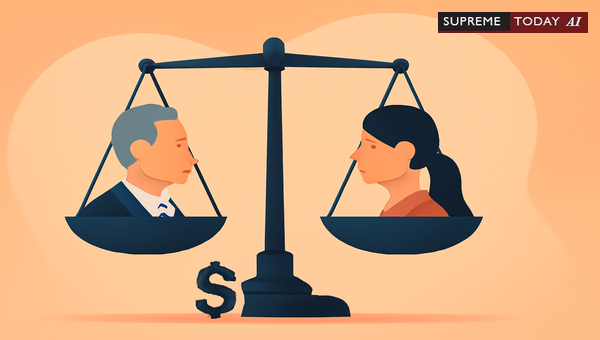
Senior Pay Parity with Junior: Legal Rights Explained
In the realm of employment law, particularly within government and public sector jobs in India, one common grievance arises: Pay Scale of Senior should be at Par with Junior. Imagine a scenario where a senior employee, with years of dedicated service, discovers that a junior colleague in the same is drawing a higher salary. This can feel unjust, but is there legal recourse? This blog post delves into the established principles, key court rulings, conditions, exceptions, and practical steps to address such disparities. While this provides general insights based on judicial precedents, it is not personalized legal advice—consult a qualified lawyer for your specific situation.
Understanding the Core Legal Principle
The has long upheld the doctrine of , enshrined in , which guarantees equality before the law and prohibits discrimination. Courts have consistently ruled that a senior employee cannot be paid less than a junior in the same performing similar duties. This principle is reinforced by , which mandates departments to step up the senior's pay to match the junior's when anomalies occur. As noted in key judgments, the department is obligated to step up the pay of a senior employee to match that of a junior employee to rectify any 2022 0 Supreme(Mad) 988.
Furthermore, Resolutions emphasize that a senior government servant must be compensated at least at the same level as their junior, unless the junior's higher pay stems from personal qualifications or promotions unrelated to the senior's service 2022 0 Supreme(Ori) 6. This ensures fairness and prevents seniority from being undermined by administrative oversights.
When Does Apply?
Stepping up pay is a well-established remedy, permissible when:
- Same : Both senior and junior must be in the same . For instance, courts have clarified that transfer between unions affects seniority but not , allowing equalization 2023 0 Supreme(Mad) 2680.
- Similar Duties: The junior's higher pay arises from -wide reasons like pay scale revisions or promotions applicable to all 2013 0 Supreme(HP) 367 2013 0 Supreme(Megh) 12.
In one case, a petitioner requested to re-fix the scale of pay on par with that of his junior, highlighting the competent authority's role in rectification 2023 0 Supreme(Mad) 2467. Another ruling affirmed, the upgradation ordered will involve only of the senior on par with his junior in the upgraded scale of pay 2020 0 Supreme(Mad) 1433.
Key Conditions:- The anomaly must not result from the junior's personal achievements, such as higher qualifications 2012 0 Supreme(Mad) 570.- Applies to scenarios like , where if after the grant of ACP scale, a senior employee is getting less salary than his junior, the senior will be entitled for the step up of his/her pay at par with the junior 2019 0 Supreme(P&H) 1435.
Exceptions and Limitations to Pay Parity
Not every disparity qualifies for stepping up. Courts recognize exceptions to maintain equity:
- Personal Qualifications or Incentives: If the junior's higher pay comes from increments for acquiring higher qualifications, the senior cannot claim parity unless they meet the same criteria. If the junior is granted incentive increments for acquiring higher qualification and the senior does not acquire such a higher qualification the senior cannot claim parity 2019 0 Supreme(Mad) 841.
- Different Service Conditions: Unique duties, ad-hoc promotions, or non-uniform increments may justify differences 2013 0 Supreme(Megh) 12 2015 0 Supreme(Pat) 279.
- Promotional Anomalies: Disparities from promotions not applicable across the do not trigger stepping up 2022 0 Supreme(Mad) 801.
For example, in cases involving trained graduate teachers, pay scales were equalized without discrimination, but only where no distinct graduate categories existed 2024 0 Supreme(Gau) 892. Similarly, among senior draughtsmen, higher scales based solely on seniority were challenged, but parity was denied if juniors drew more due to lower post tenure 2024 0 Supreme(Mad) 2618.
Judicial Precedents and Implementation
Indian courts and tribunals have directed authorities to rectify anomalies promptly, often with from the date the junior's higher pay was granted, including . Pay Parity via Stepping Up - When a senior employee's pay is less than that of a junior in the same , government rules like mandate stepping up the senior's pay to match the junior's (from consolidated analysis of cases like 2022 0 Supreme(Mad) 988 2025 0 Supreme(Guj) 1193 2023 0 Supreme(Mad) 2486).
In promotion-related upgradations, conditions stipulate: on upgradation, the senior shall not vacate his post and shall continue to perform the duties attached to the existing post till he/she gets his normal promotion... the upgradation ordered will involve only of the senior on par with his/her junior 2015 0 Supreme(Mad) 3137.
The issue of entitlement is clear: The issue is entitlement of a senior to step up of the pay at par with the junior 2022 0 Supreme(Del) 1251, provided it's not due to wrongful fixation of the junior's pay.
Practical Recommendations for Employees
If facing a :1. Gather Evidence: Prove same and similar duties; show junior's higher pay is -wide, not personal.2. Make a Representation: Submit to the competent authority, as in the petitioner made a representation to the respondents requesting to re-fix the scale of pay on par with that of his junior 2023 0 Supreme(Mad) 2467.3. Escalate if Needed: File a if unresolved, citing FR 22-B and relevant precedents.4. Address Counterarguments: Be ready for claims of unique qualifications or promotions.
Departments must comply to uphold equality, as anomalies due to administrative decisions warrant correction 2024 0 Supreme(Mad) 727 2025 0 Supreme(Mad) 2901.
Conclusion and Key Takeaways
The legal framework robustly supports pay parity for seniors over juniors in the same , rooted in constitutional equality and service rules. Courts prioritize rectifying anomalies to foster fairness, but exceptions protect legitimate differences. Key takeaways:- Leverage FR 22-B and Article 14 for claims 2022 0 Supreme(Mad) 988 2022 0 Supreme(Ori) 6.- Prove Same —essential for success 2022 0 Supreme(Mad) 801.- Avoid Personal Qualification Pitfalls2019 0 Supreme(Mad) 841.
This principle ensures seniority is respected, promoting workplace equity. For tailored advice, approach legal experts or unions. Stay informed, assert your rights judiciously.
Word count: 1028. References: 2022 0 Supreme(Mad) 988 2022 0 Supreme(Ori) 6 2022 0 Supreme(Mad) 801 2013 0 Supreme(HP) 367 2013 0 Supreme(Megh) 12 2015 0 Supreme(Pat) 279 2023 0 Supreme(Mad) 2467 2023 0 Supreme(Mad) 2680 2024 0 Supreme(Gau) 892 2024 0 Supreme(Mad) 2618 2022 0 Supreme(Del) 1251 2020 0 Supreme(Mad) 1433 2019 0 Supreme(P&H) 1435 2019 0 Supreme(Mad) 841 2015 0 Supreme(Mad) 3137 2025 0 Supreme(Guj) 1193 2023 0 Supreme(Mad) 2486 2024 0 Supreme(Mad) 727 2025 0 Supreme(Mad) 2901 2024 0 Supreme(Del) 12 2012 0 Supreme(Mad) 570.
#PayParity #SeniorSalary #LaborLawIndia












