Searching Case Laws & Precedent on Legal Query.....!
Analysing the retrieved Case Laws
Scanned Judgements…!



Searching Case Laws & Precedent on Legal Query.....!
Analysing the retrieved Case Laws
Scanned Judgements…!
Single Prosecutor for Multiple Cases and Its Impact - Filing separate FIRs and charge sheets does not automatically vitiate the entire trial, even if a single prosecutor represents multiple cases. The court emphasized that procedural irregularities like multiple FIRs are not sufficient to invalidate proceedings, provided the trial is conducted fairly. ["2025 Supreme(Online)(Kar) 40109"]
Right to Cross-Examine Witnesses - The prosecution's right to cross-examine witnesses, including hostile witnesses, is fundamental to a fair trial. Denial of this opportunity can compromise the integrity of the proceedings. Courts have a duty to ensure prosecutors are not arbitrarily denied this right, and any lapses should be rectified, such as recalling witnesses for cross-examination. ["2023 0 Supreme(Del) 5197"], ["SMT KOMALA M Vs STATE OF KARNATAKA - Karnataka"], ["2025 Supreme(Online)(MAD) 12897"], ["2021 Supreme(Online)(Mad) 71573"]
Cross-Examination and Fair Trial - Courts have consistently held that the opportunity for cross-examination is essential, and its denial can vitiate the trial. When witnesses are not cross-examined due to procedural lapses, courts often allow recall or grant additional opportunities to uphold fairness. Infrastructure issues or procedural delays should not hinder this fundamental right. ["2022 Supreme(Online)(Mad) 61747"], ["SMT KOMALA M Vs STATE OF KARNATAKA - Karnataka"], ["2023 0 Supreme(All) 27"], ["2025 Supreme(Online)(Cal) 1883"]
Case Management and Court Directions - Courts have directed that cross-examinations should be completed within stipulated timeframes, with specific orders to ensure witnesses are examined properly. Failure to do so can result in the loss of the opportunity to cross-examine, affecting the trial's fairness. Courts also emphasize strict adherence to timelines to prevent unnecessary delays. ["2021 Supreme(Online)(Mad) 71573"]
Representation and Infrastructure - Even in cases where legal aid or infrastructure is lacking, adequate cross-examination can still be conducted, often through legal aid counsel. The focus remains on ensuring the accused's right to a fair trial, not on infrastructural deficiencies. ["2025 Supreme(Online)(Cal) 1883"]
The overarching principle across these sources is that the integrity of a trial hinges on the accused's and prosecution's right to a fair opportunity to cross-examine witnesses. The fact that a single prosecutor represents multiple cases or that procedural irregularities occur does not automatically vitiate proceedings, provided the trial remains fair and witnesses are properly examined. Courts have shown a willingness to rectify procedural lapses, such as recalling witnesses or granting additional cross-examination opportunities, to uphold justice. Ensuring these rights is crucial, and procedural or infrastructural shortcomings should not compromise the fairness of the trial.
References:- 2025 Supreme(Online)(Kar) 40109- 2023 0 Supreme(Del) 5197- SMT KOMALA M Vs STATE OF KARNATAKA - Karnataka_HC_HCMD010780392021- SMT KOMALA M Vs STATE OF KARNATAKA - Karnataka_HC_KAHC010007872021- 2022 Supreme(Online)(Mad) 61747- SMT KOMALA M Vs STATE OF KARNATAKA - Karnataka_HC_KAHC010306132021- 2023 0 Supreme(All) 27- 2025 Supreme(Online)(MAD) 12897- 2025 Supreme(Online)(Cal) 1883
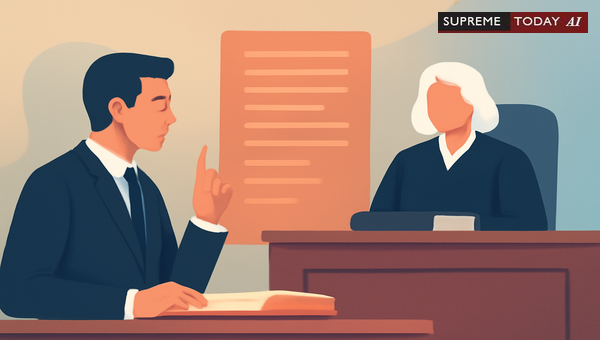
In the complex world of criminal litigation, questions about often arise, especially in interconnected cases like a primary case and its . A common concern is: Case and Cross Case Represented by One Prosecutor did Vitiate Entire Trial? This issue touches on the integrity of trials under Indian criminal law, particularly whether a single Public Prosecutor handling both sides automatically renders the entire proceedings void.
This blog post delves into judicial precedents, the curative provisions of the (CrPC), and practical implications. While courts generally lean towards upholding trials absent proven prejudice, understanding the nuances is crucial for accused persons, lawyers, and legal enthusiasts. Note: This is general information based on precedents and not specific legal advice. Consult a qualified lawyer for your case.
The legal position, supported by multiple judicial precedents, is clear: trial proceedings involving a case and its do not automatically vitiate simply because they are conducted by a single Public Prosecutor. This holds true provided no prejudice is caused to the accused and the trial adheres to procedural safeguards. Irregularities, such as one prosecutor managing both, are typically under Section 465 of the CrPC unless they lead to a or demonstrable prejudice. 2020 0 Supreme(Ker) 429
emphasizes that procedural lapses do not invalidate findings or sentences unless they occasion a . Courts consistently apply this to prosecutor-related issues, prioritizing substance over technicalities.
Indian courts have addressed this repeatedly, balancing efficiency with fairness. Let's examine landmark views:
In 2020 0 Supreme(Ker) 429 (Crl.R.P.No.2702 of 2008), the court referenced the ideal that the same Public Prosecutor should not conduct both case and its counter-case to maintain fairness. However, it clarified: there is no illegality since no procedure prescribed in this regard exists. No explicit bar in CrPC or prohibits it, so the trial stands unless unfairness or is shown. 2020 0 Supreme(Ker) 429
Similarly, 2022 0 Supreme(AP) 110 notes that while investigations might involve the same officer, prosecutions ideally need separate prosecutors. Yet, the entire trial gets vitiated if the fails to appoint separate prosecutors... especially when is established. Without prejudice, it's . 2022 0 Supreme(AP) 110
2011 0 Supreme(Kar) 723 explains that cross-cases represent different or conflicting versions of one incident, and Indian courts try them simultaneously by the same Judge. Evidence from one shouldn't taint the other without formal introduction. Procedural hitches in joint trials don't vitiate unless prejudice is proven. 2011 0 Supreme(Kar) 723
1985 0 Supreme(Del) 225 reinforces: Not trying cases together is irregular, but proceedings in the later case are not vitiated unless is shown. under . 1985 0 Supreme(Del) 225
Other judgments highlight prosecutors' roles in maintaining trial integrity, often involving cross-examinations and witness handling, which indirectly support the prejudice threshold.
For instance, in 2017 0 Supreme(Del) 464, the prosecutor's cross-examination of defense witnesses on financial transactions underscored rigorous prosecution without noted prejudice, aligning with irregularities. 2017 0 Supreme(Del) 464
In cases with , like 2015 0 Supreme(Ker) 1696, recall under allowed re-examination after cross by prosecutor, emphasizing reliability based on circumstances rather than procedural purity alone. The court held: when a witness due to external compulsions became hostile and thereafter... deposing the truth, such a version... can be accepted. 2015 0 Supreme(Ker) 1696
Similarly, 2015 0 Supreme(P&H) 601 dealt with witnesses changing stands post-settlement, re-crossed by the Additional Public Prosecutor, yet initial testimonies and medical evidence prevailed. This shows courts focus on core evidence over procedural slips. 2015 0 Supreme(P&H) 601
In
, the State Public Prosecutor represented the state in a case involving family disputes, with no vitiation noted despite interconnected allegations.
These examples illustrate that even in messy witness dynamics or overlapping roles, trials endure unless prejudice is evident.
While not automatic, exceptions exist:- Proven Prejudice: If the single prosecutor suppresses evidence, shows bias, or influences judgments unfairly, the trial may fall. Each case must rest on its own evidence. 2022 0 Supreme(AP) 110- Fair Trial Rights: mandates fairness; appearance of bias could trigger scrutiny.- No Statutory Bar, But Best Practice: Courts recommend separate prosecutors for optics, though not mandatory. 2020 0 Supreme(Ker) 429
In 2016 0 Supreme(Del) 1883, a hostile witness's cross-examination by the Public Prosecutor led to partial reliance on her evidence, reinforcing that prosecution conduct is judged holistically. 2016 0 Supreme(Del) 1883
In summary, a single Public Prosecutor handling a case and its cross-case does not inherently vitiate the trial. Judicial wisdom, from 2020 0 Supreme(Ker) 429 to 1985 0 Supreme(Del) 225, prioritizes proven harm over technicalities under CrPC Section 465. Fairness remains paramount, but efficiency in cross-case trials is valued.
Key Takeaways:- No automatic invalidation; prejudice is key.- Cross-cases often tried together by one judge.- irregularities unless .- Best: Separate prosecutors for transparency.
Stay informed on evolving precedents. For personalized guidance, reach out to a criminal law expert.
References:1. 2020 0 Supreme(Ker) 429: Single prosecutor not illegal absent prejudice.2. 2022 0 Supreme(AP) 110: Prejudice threshold for vitiation.3. 2011 0 Supreme(Kar) 723: Simultaneous trials standard.4. 1985 0 Supreme(Del) 225: under CrPC 465.5. Additional: 2017 0 Supreme(Del) 464, 2015 0 Supreme(Ker) 1696, 2015 0 Supreme(P&H) 601,
#CriminalLawIndia, #CrPC465, #FairTrial


Hence, the decisions relied on by the learned counsel for petitioners are not applicable to the facts of the present case. Filing different FIRs and different charge sheets, therefore, will not vitiate the entire proceedings. ... STATE OF KARNATAKA BY MALLESHWARAM POLICE STATION REPRESENTED BY STATE PUBLIC PROSECUTOR HIGH COURT OF KARNATAKA, BENGALURU - 560 001. 2. SRI. SATHYAPRAKASH S/O SARANGAPANI AGED....

The accused is represented through a defence counsel, and the State and complainant through public prosecutor. 24. ... In the cases as the present one where the witnesses had supported the prosecution case in the examination-in- chief but had turned hostile partially, the importance to cross-examine or re-examine the said witness was critical since it cannot be denied that the public prosecutor#....

( Criminal Jurisdiction ) PRAYER IN CRL A(MD) No.417 OF 2021: Vs aside the same and consequently acquit the appellant honorably from all the charges referred to in the above said case ... 4 THE ADDITIONAL PUBLIC PROSECUTOR, span style=

AKASH V.T., ADVOCATES] AND: STATE OF KARNATAKA BY HAL POLICE STATION, REPRESENTED BY STATE PUBLIC PROSECUTOR, HIGH COURT ... AKASH V.T., ADVOCATES] AND: STATE OF KARNATAKA BY HAL POLICE STATION, REPRESENTED BY STATE PUBLIC PROSECUTOR, HIGH COURT ... The first informant is one Shravani, wife of accused No.1. ... As such, without expressing any opinion on the merits....

In the absence of examining the neighbour and not collecting the call details of the above said persons would vitiate the case ... of the prosecution for one or other reason, the prosecution should have proved the case of the prosecution by examining the said ... State represented by entire evidence and gives its findings independently. ... The Public Prosecutor#HL_END....
The petitioner is accused no.1 and he is facing trail for the offences punishable under Section 498A, 506 of IPC and Section 4 of Dowry Prohibition Act. ... State Public Prosecutor, High Court Complex, Bengaluru) 2 2. ... State by East Zone Women Police Station, (Previously called as Ulsoor Gate Women Police Station) Bengaluru-560064 (Represented by ... …Respondents (By Sri R.D.Renukaradhy....

On that, particularly at that point of time, counsel for the applicant was busy in another court, therefore, one application was filed on his behalf to adjourn the case as his counsel was not able to cross-examine PW-11 Uma Shankar Tripathi. ... Judge, court no. 05 Pratapgarh in aforesaid case and direct Leaned Court below to recall the witness and allow the applicant to cross examine him in the interest ....
the petitioner purposely failed to cross- examined the witness P.W.11 and filed this petition and the case is also pending for more than 7 years without disposal. ... Though the said reason is not a valid ground for the non cross examination of witness, but, in order to give a fair chance and to ensure a fair trial, it is appropriate to give one more chance to the petitioner for cross-examination of witn....

Kallol Ghosh, the victim girl was cross-examined extensively for more than one hours. ... However, the lack of proper insfrustrure has not disrupted the cross-examination of the victim. Moreover, the accused was properly represented through LADC and no undue advance or disadvantage was given to any of the parties to the case. ... In this particular case, though a private advocate has not....

5.The entire direction must be completed within a period of four months from the date of recipt of copy of this order. In case, the concerned Judicial Magistrate wants further time than sent a letter to the Registry of this Court to extend the time. ... (iii)On the date fixed, the petitioner must cross examine the witness without fail. If any failure is noticed, then the right of the cross examination of the witnesses wi....

Though PW-21 does not disclose who gave the information of this financial transaction in Ex.PW21/A, however, it is obvious it was from Tikla (PW-9) and his men. 63. This prosecution case was also put to the defence witnesses by the prosecutor while cross-examining them. This witness denied the suggestion that Sushil Arora had taken a loan of Rs. 10,00,000/- from Mahender Tikla. I find the summation thereof in the prosecutor’s cross-examination of Sh. Pushkar Raj (DW-6) (pg 62....

Since she did not support the case of prosecution, she was cross examined by learned Public Prosecutor. In cross examination, she admitted her thumb impression on Ex.PW1/A at point A. Some uncle took the child to hospital where she was declared dead.

In the cross-examination, he denied if any ‘girl’ was recovered by the police in his presence. Public Prosecutor cross-examined him as he did not support the prosecution case. PW-3 (Satnam) deposed that on 09.04.1994, ‘P’ had come to her as she was not feeling well.

Then again he was cross-examined by the learned counsel for the appellant. Thereafter he was cross-examined by the Prosecutor. It was thereafter that a petition under Section 311 of Cr.P.C. was filed and he was recalled and reexamined.

Apparently, some sort of settlement had been arrived at between the defence on the one hand and the complainant i.e. Jagtar Singh and Gurmit Kaur on the other. They were re-cross-examined by the Additional Public Prosecutor but did not support the prosecution case. Pursuant to the same, both Jagtar Singh and Gurmit Kaur were further cross-examined by the defence wherein they changed their stand. So much so that both Jagtar Singh and Gurmit Kaur executed their respective affid....


An indispensable Tool for Legal Professionals, Endorsed by Various High Court and Judicial Officers
Please visit our Training & Support
Center or Contact Us for assistance

Scan Me!
India’s Legal research and Law Firm App, Download now!


For Daily Legal Updates, Join us on :



 Back to top


