Searching Case Laws & Precedent on Legal Query!
Scanned Judgements…!



Searching Case Laws & Precedent on Legal Query!
Scanned Judgements…!
In some cases, the courts have highlighted that the nuisance must be likely to affect the public or tending to affect the public, aligning with the scope of Section 91 CPC ["2023 Supreme(Online)(Bom) 2458"], ["2023 Supreme(Online)(Bom) 2459"].
Analysis and Conclusion:
References:- ["2004 0 Supreme(Ker) 153"]- ["2025 Supreme(Online)(Tel) 36359"]- ["2025 Supreme(Online)(Tel) 62904"]- ["2014 0 Supreme(MP) 203"]- ["1998 0 Supreme(J&K) 79"]- ["2024 0 Supreme(Raj) 1505"]- ["2013 0 Supreme(Gau) 533"]- ["SURINDER SINGH vs PRITAM SINGH AND ORS. - Punjab and Haryana"]- ["2018 0 Supreme(Mad) 1661"]- ["SURINDER SINGH vs PRITAM SINGH AND ORS. - Punjab and Haryana"]- ["2023 Supreme(Online)(Bom) 2458"]- ["2023 Supreme(Online)(Bom) 2459"]- ["2004 7 Supreme 72"]- ["2004 7 Supreme 72"]
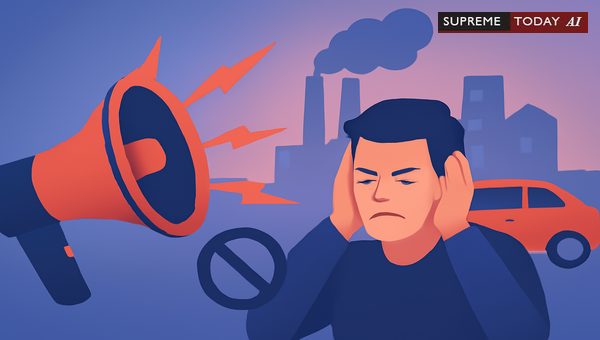
In today's urban India, the relentless hum of traffic, blaring loudspeakers, and industrial clamor often disrupts daily life. Many residents wonder: Does sound pollution qualify as a under (CPC)? If so, how can affected individuals seek legal redress? This blog post delves into judicial decisions, statutory provisions, and procedural nuances, providing citations where courts have explicitly linked sound pollution to under CPC Section 91.
We'll examine the legal framework, landmark cases, and practical steps for filing suits, drawing from established precedents. Note: This is general information and not specific legal advice. Consult a qualified lawyer for your situation.
Section 91 of the CPC empowers the or, with court leave, two or more persons to sue for public nuisances or other wrongful acts affecting the public, without proving individual . 2018 0 Supreme(Mad) 1661
is defined under (IPC) as an act or illegal omission causing , danger, or annoyance to the public or to those occupying property in the vicinity. 2018 0 Supreme(Mad) 1661 The General Clauses Act reinforces this by equating with IPC Section 268. 2018 0 Supreme(Mad) 1661
Courts have broadly interpreted this to include environmental harms like sound pollution, which affects public health, safety, comfort, and convenience. 2012 0 Supreme(Raj) 877 As one source notes: Noise pollution can be dealt under , as a . Under Section 268 of this Code, it is mentioned that 'A person is guilty of a who does any act or is guilty of an illegal omission which causes any , danger or annoyance to the public...' 2018 0 Supreme(Mad) 851 2005 5 Supreme 77
Indian courts have consistently classified excessive noise— from loudspeakers, firecrackers, vehicular horns, or industrial activities—as a actionable under CPC Section 91.
: Affirmed the wide scope of Section 91 CPC for acts impacting public health, including pollution and noise. 2018 0 Supreme(Mad) 1661
: Highlighted that widespread harm from sound pollution falls under , redressable via civil suits. 2018 0 Supreme(Mad) 1661
In noise pollution cases, courts emphasize that acts causing or annoyance suffice, even without individual damage. 2012 0 Supreme(Raj) 877 For instance, excessive noise at night in residential areas disturbs public peace and qualifies as nuisance under IPC Section 268, enabling suits under CPC Section 91 if procedures are followed. 2012 0 Supreme(Raj) 877
High Courts echo this:- Calcutta Municipal Corporation v. Union of India: Ruled that noise disturbing public peace is actionable under CPC and municipal laws. 1917 0 Supreme(Cal) 381
In a cemetery pollution case, the court noted that apprehended nuisances affecting public health could invoke Section 91, but actual damage or is key. 2015 0 Supreme(Ker) 1656 Similarly, for sound pollution:
Courts recognize loud honking, music, or industrial noise as interfering with public safety and comfort. 2012 0 Supreme(Raj) 877 2018 0 Supreme(Mad) 1661
The in noise pollution matters has issued guidelines under , banning sound-emitting firecrackers from and restricting loudspeakers. It held: No one shall beat a drum or tom-tom or blow a trumpet or beat or sound any instrument or use any sound amplifier at night (between 10 p.m. and 6 a.m.) except in public emergencies. 2005 5 Supreme 77
These guidelines underscore noise as a pollutant under , featuring in the . 2005 5 Supreme 77
While sound pollution fits as , strict procedures apply:
can file without leave. 2018 0 Supreme(Mad) 1661
Private persons (two or more) need court leave unless suffering . Lack of leave makes the suit not maintainable for claims. 2015 0 Supreme(Ker) 1656 2018 0 Supreme(Mad) 1661
Courts permit to cure procedural defects in cases. 2000 0 Supreme(P&H) 180
Independently, locals can sue without Section 91 if it's not mandatory per .
One decision clarifies: A can be remedied at the instance of the inhabitants of the locality which have their own right of suit independently of provision in terms of Section 91 CPC.
Additionally, criminal remedies exist under CrPC Section 133 for urgent removal of noise nuisances, or IPC Sections 290-291 for punishment.
2015 0 Supreme(MP) 14
Beyond CPC, the set ambient standards, restrict loudspeakers (permission needed, banned 10 p.m.-6 a.m.), and declare silence zones around hospitals and schools. Violations attract penalties. 2005 5 Supreme 77
guidelines further ban horns at night in residential areas and mandate awareness campaigns. Noise is deemed a health hazard: Noise is more than just a nuisance: It constitutes a real and present danger to people's health. 2005 5 Supreme 77
State laws like , align but must conform to central rules. 2015 0 Supreme(MP) 14
Judicial precedents firmly establish sound pollution as a under IPC Section 268, actionable via CPC Section 91 when causing common annoyance or injury. Key citations include 2015 0 Supreme(Ker) 1656, 2012 0 Supreme(Raj) 877, 2018 0 Supreme(Mad) 1661, and others affirming this link. 2000 0 Supreme(P&H) 180
However, success hinges on procedural compliance—obtain court leave unless is proven. For communities battling noise, these tools offer civil recourse alongside criminal and regulatory options.
Takeaways:- Sound pollution disrupts rights to peaceful living.- File under Section 91 with leave for public suits.- Use CrPC 133 for immediate relief.- Support with Noise Rules evidence.
Addressing noise pollution protects public health and underscores environmental justice in India. Stay informed, act collectively, and consult professionals for tailored guidance.
References: 2015 0 Supreme(Ker) 1656 2012 0 Supreme(Raj) 877 2018 0 Supreme(Mad) 1661 2000 0 Supreme(P&H) 180 1917 0 Supreme(Cal) 381 2018 0 Supreme(Mad) 851 2005 5 Supreme 77 2015 0 Supreme(MP) 14
Disclaimer: This post provides general insights based on cited cases. Laws evolve; seek expert legal counsel.
#SoundPollutionLaw, #PublicNuisance, #CPCSection91


It also noticed that the commissioner has mentioned possibility of nuisance, sound and air pollution. ... 91 (1) of the Code of Civil Procedure. ... In this revision, the main contention raised by the petitioner is that the suit is not maintainable as it is hit by Section 250 of the Kerala Panchayat Raj Act and barred under section 91 of the Code of Civil Procedure. ... Therefore, the argument that no permission is sought for under ....

91 (1) (B) read with 151 of the Code of Civil Procedure, 1908 (for short, C.P.C) seeking to grant leave to respondent No.1 herein to sue the revision petitioner for causing public nuisance by representing the public at large and to protect the public property for use of the same by one and all, was ... Before proceeding further, for better appreciation, it is necessary to extract Section 91 (1) of C.P.C, which rea....

91 (1) (B) read with 151 of the Code of Civil Procedure, 1908 (for short, C.P.C) seeking to grant leave to respondent No.1 herein to sue the revision petitioner for causing public nuisance by representing the public at large and to protect the public property for use of the same by one and all, was ... Before proceeding further, for better appreciation, it is necessary to extract Section 91 (1) of C.P.C, which rea....

Class II, Guna in Civil Suit No.10A of 2010 whereby, the suit filed by the respondents/plaintiffs in representative capacity under section 91 of the Code of Civil Procedure against the appellants/defendants for restraining them from causing nuisance by playing music system DJ near the colony where the ... It is obvious that the sound produce by DJ usually creates a great noise causing sound pollution. It is also true that as per the recorded evidence, a lot of people ....

As no special loss or damage Is pleaded or proved so this was not a case of private nuisance but purely of public nuisance and may proceedings to be initiated were to be regulated firstly by the procedure laid down in section 91 of the Code of Civil Procedure. ... Undoubtedly, if it was a case of public nuisance only then section 91 CPC was attracted. From the perusal of the plaint as a whole, it ....

One is under Section 91 of the Code of Civil Procedure, 1908 (in short “CPC”). Under it a suit lies and the plaintiffs need not prove that they have sustained any special damage. The second remedy is a suit by a private individual for a special damage suffered by him. ... Sections 133 to 143 come under the category of "public nuisance". Section 144 comes under the category of "urgent cases of nuisance or apprehended danger" and the ....

91 CPC. ... Even the application in terms of applicability of Section 91 CPC is not mandatory in nature in terms of Section 91 (2) CPC. ... A public nuisance can be remedied at the instance of the inhabitants of the locality which have their own right of suit independently of provision in terms of Section 91 CPC. ... Learned counsel also relied upon ....

One is under Section 91 of section of the public was affected injuriously. ... “Public nuisance” or “common nuisance” as defined in Section 268 of the Penal Code, 1860 (in short “IPC”) is an nuisance is an offence against public either by doing a thing which tends to Section 133 is to prevent public nuisance that if the Magistrate fails to take p s....

Indian Penal Code, 1860 - Section 268 - General Clauses Act, 1897 - Section 3(48) – Civil Procedure Code, 1908 - Section ... 91 CPC - Since there is a pre-requisite of getting leave of Court in order to institute a suit of this nature, plaintiffs filed ... 91 - Order 1 - Rule 8 – Public nuisance - Misleading advertisement - Wrongful act - Permanent injunction - Suit for relief of declaration ... public nuisance, which becomes a subject matter of a suit under Section 91#HL_END....

If no case of public nuisance is made out by him, he is not without legal remedy for removal of private nuisance: he can always take recourse to a civil remedy under Specific Reliefs Act, 1963 read with Order 39, Rule 1 and 2 of the Code of Civil Procedure or under Section 91 Code of Civil Procedure. ... One is under Section 91 of the Code of Civil Procedure, 1908 (in short "CPC"). Under it a suit....
Noise pollution can be dealt under Sections 268, 290 and 291 of the Indian Penal Code, as a public nuisance. Under Section 268 of this Code, it is mentioned that 'A person is guilty of a public nuisance who does any act or is guilty of an illegal omission which causes any common injury, danger or annoyance to the public or the people in general who dwell or occupy property in the vicinity, or which must necessarily cause injury, obstruction, danger or annoyance to persons who may have occasion to use any public right.

(1) Can the successful party in the outcome in a suit, appeal against an adverse finding in the suit? (2) Can the acts complained of in this suit, come under public nuisance for complying with the mandatory procedure under Section 91 CPC? Matters being so, this is a case wherein the appellants have instituted the suit for the benefit of others. In such case, if it comes within the purview of ‘nuisance’, the plaintiffs ought to have instituted the suit under Section 91 CPC.
Section 133 of the Criminal Procedure Code empowers the Magistrate to make conditional order requiring the person causing nuisance including that of noise to remove such nuisance. Section 268 of IPC makes noise pollution an actionable cause as ‘public nuisance’. Section 290 of IPC provides for punishment for such public nuisance. 4. Reference is also made to the provisions of Indian Penal Code.

Noise pollution can be dealt under Sections 268, 290 and 291 of the Indian Penal Code, as a public nuisance. Under Section 268 of this Code, it is mentioned that ‘A person is guilty of a public nuisance who does any act or is guilty of an illegal omission which causes any common injury, danger or annoyance to the public or the people in general who dwell or occupy property in the vicinity, or which must necessarily cause injury, obstruction, danger or annoyance to persons who may have occasion to use any public right.


An indispensable Tool for Legal Professionals, Endorsed by Various High Court and Judicial Officers
Please visit our Training & Support
Center or Contact Us for assistance

Scan Me!
India’s Legal research and Law Firm App, Download now!


For Daily Legal Updates, Join us on :



 Back to top


