


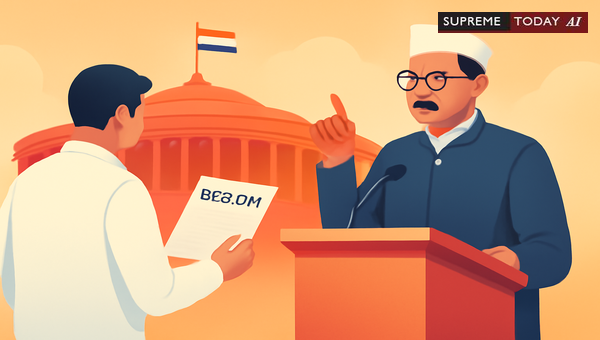
Does the Speaker Must Accept Resignation in India?
In the dynamic world of Indian politics, resignations from legislative positions often make headlines. But a critical question arises: Does the Speaker have to accept a resignation for it to take effect? This query, often phrased as Speaker to Accept Resignation, touches on , , and procedural nuances in India's parliamentary system. Understanding this is vital for legislators, political analysts, and the public alike.
This article delves into the legal framework governing resignation acceptance by the Speaker (or ) in Indian legislatures. We'll examine key judgments, requirements for validity, and exceptions, drawing from authoritative sources. Note: This is general information based on legal precedents and not specific legal advice. Consult a qualified lawyer for personalized guidance.
The Core Legal Principle: Acceptance is Prerequisite
Under Indian law, a resignation from a legislative seat or similar constitutional office is not effective until accepted by the , such as the Speaker. Mere submission of a resignation letter does not vacate the seat. This principle is firmly established in multiple and judgments.
For instance, in 1994 0 Supreme(MP) 388, the court held: The seat shall become vacant only upon acceptance of the resignation by the Speaker. Similarly, confirms that acceptance is a for the resignation to become operative 2024 0 Supreme(HP) 25 1978 0 Supreme(SC) 59.
Key points include:- Resignation must be tendered voluntarily and genuinely1994 0 Supreme(MP) 388 1978 0 Supreme(SC) 59 2024 0 Supreme(HP) 25.- Acceptance must be communicated to the resigning member; informal acknowledgment is insufficient 1994 0 Supreme(MP) 388 2024 0 Supreme(HP) 25 2007 3 Supreme 660.- Once accepted, it typically takes effect from the date of acceptance, and withdrawal is generally not allowed 1978 0 Supreme(SC) 59 2006 7 Supreme 771 1968 0 Supreme(SC) 119.
Voluntariness and Genuineness: The Speaker's Role
The Speaker's primary duty is to ensure the resignation is voluntary and genuine. This satisfaction must be based on objective information, not extraneous motives or political pressures 1994 0 Supreme(MP) 388 2019 0 Supreme(SC) 1254 2003 1 Supreme 61.
From additional sources, if a member hands over the resignation letter personally and affirms its voluntary nature, the Speaker may accept it immediately provided there's no contrary information 2016 0 Supreme(Ker) 242 2016 0 Supreme(Gau) 6. One judgment states: If a member hands over the letter of resignation to the Speaker personally, and informs him that the resignation is voluntary and genuine and the Speaker has no information or knowledge to the contrary, the Speaker may accept the resignation immediately. 2016 0 Supreme(Gau) 6
Further, the Speaker has no option but to accept the resignation if it's voluntary and genuine
- Manipur
. Courts emphasize: On those two considerations, if the Speaker is satisfied, he has to accept the resignation of the Member.1993 0 Supreme(AP) 101However, if there's doubt, the Speaker can conduct a summary inquiry 2016 0 Supreme(Gau) 6. is limited—it checks and voluntariness, not underlying motives 1994 0 Supreme(MP) 388
03700000934
2019 0 Supreme(SC) 1254.Communication of Acceptance: A Must
Acceptance isn't complete without communication. In 2007 3 Supreme 660, the clarified: The order has to be communicated to the person who would be affected by that order before the State, and that person can be bound by that order.
Without formal communication, the resignation remains incomplete 2024 0 Supreme(HP) 25 2007 3 Supreme 660. This protects members from unilateral assumptions of vacancy.
Timing, Effectiveness, and Withdrawal
- Effectiveness: Generally from the date of acceptance 1968 0 Supreme(SC) 119 2006 7 Supreme 771. In Gopal Chandra Misra (1978)1968 0 Supreme(SC) 121, the Court noted: The resignation becomes effective from the date which he, of his own volition, chooses to quit office if the resignation is .
- Withdrawal: Possible before acceptance, but post-acceptance, it's typically barred unless rules allow or acceptance was invalid 1978 0 Supreme(SC) 59 2006 7 Supreme 771 1968 0 Supreme(SC) 119. Sources affirm: Once accepted, withdrawal or retraction is generally not permissible 2024 0 Supreme(Gau) 1336 2025 Supreme(SRI)(SC) 9771.
Exceptions and Special Circumstances
While acceptance is mandatory for voluntary resignations, exceptions exist:- Coercion or Invalidity: Speaker may inquire and refuse if not genuine 1994 0 Supreme(MP) 388
03700000934
2024 0 Supreme(HP) 25.- Formal vs. Informal: Written letters are standard, but conduct (e.g., abandoning duties) may imply resignation 2023 0 Supreme(Jhk) 1154 2024 0 Supreme(Gau) 1336.- Disqualification Link: Distinct from resignation; Speaker decides both, but resignation vacates upon acceptance 2025 0 Supreme(SC) 1134.- Political Party Aspects: Resignation from party doesn't automatically affect seat unless accepted- Malaya Kuala Lumpur
.Courts limit intervention: The acceptance of the resignation of a member... can be deferred only if the Speaker has information or knowledge to the contrary 2016 0 Supreme(Ker) 242. Speaker's discretion on information is exclusive 1987 0 Supreme(All) 551.
Judicial Oversight and Limitations
ensures the Speaker acts reasonably but doesn't substitute decisions. Probes are confined to voluntariness, not motives 1994 0 Supreme(MP) 388
03700000934
2025 0 Supreme(HP) 748. This upholds .Practical Recommendations
- For Resigning Members: Tender voluntarily, in writing, and affirm genuineness. Withdraw only before acceptance.
- For Authorities: Conduct prompt inquiry if doubts arise; communicate acceptance formally.
- In Disputes: Approach courts for procedural review, not motive-based challenges.
Key Takeaways
| Aspect | Legal Position ||--------|---------------|| Acceptance Required? | Yes, by Speaker/ 1994 0 Supreme(MP) 388 2024 0 Supreme(HP) 25 || Voluntariness Check | Essential; immediate if affirmed 2016 0 Supreme(Gau) 6 || Communication | Mandatory for effectiveness 2007 3 Supreme 660 || Withdrawal Post-Acceptance | Generally no 2006 7 Supreme 771 || Judicial Role | Limited to procedure 2019 0 Supreme(SC) 1254 |
Conclusion
The law is clear: The Speaker must accept a voluntary and genuine resignation for it to be effective, with acceptance and communication being pivotal 1994 0 Supreme(MP) 388 1978 0 Supreme(SC) 59 2024 0 Supreme(HP) 25. This balances member autonomy with institutional integrity. As politics evolves, these principles remain foundational.
References (select key documents):1. 1994 0 Supreme(MP) 388 - Acceptance .2. 1978 0 Supreme(SC) 59 - No withdrawal post-acceptance.3. 2024 0 Supreme(HP) 25 - Communication essential.4. 2016 0 Supreme(Gau) 6 - Immediate acceptance if voluntary.5.
- Manipur
- No option but to accept.Stay informed on Indian constitutional law—share your thoughts below!
#SpeakerResignation #IndianLaw #LegislativeResignation















