


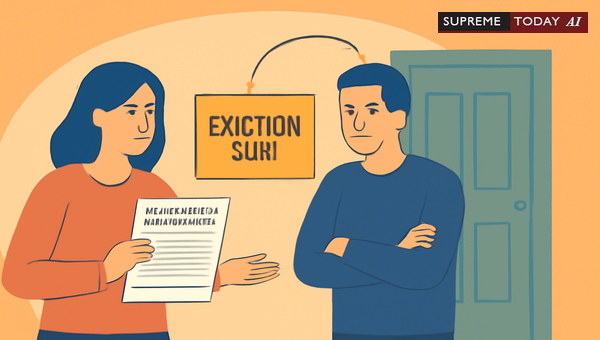
Can a Sub-Tenant File for When the Tenant Has Not Filed?
In the complex world of tenancy disputes, questions about rights and procedural remedies often arise. One common query is: Can a sub-tenant file when tenant has not filed for reinstatement of a dismissed eviction suit? This issue typically emerges in scenarios where an eviction case proceeds due to the original tenant's non-appearance, leaving sub-tenants in limbo. Understanding the legal boundaries is crucial for anyone involved in subletting arrangements.
This blog post explores the legal principles governing applications under tenancy laws, primarily drawing from relevant case precedents. Please note: This is general information and not specific legal advice. Consult a qualified lawyer for your situation.
Understanding Applications in Tenancy Disputes
applications serve as a procedural safeguard, allowing a party to reinstate a case dismissed for non-appearance or procedural lapses. Typically, these are filed when a suit is decreed —meaning in the absence of one party—due to their failure to appear or respond.
In tenancy matters, such as eviction suits, the main legal finding is clear: A if the original tenant has not filed or pursued such an application. is generally reserved for the party directly affected, here the original tenant (often the defendant). This principle underscores the importance of proper notification and adherence to procedural rules. 2003 0 Supreme(All) 2988
The referenced case illustrates a tenant petitioner filing for after an eviction decree due to non-appearance. The court emphasized procedural irregularities like inadequate notification and set aside the judgment in the interest of justice, deciding the matter on merits. 2003 0 Supreme(All) 2988
Key Characteristics of Filings
- Filed by directly involved party: Usually the defendant or tenant absent during proceedings. 2003 0 Supreme(All) 2988
- Grounds: Non-appearance, improper service of notice, or other procedural defects.
- Purpose: To prevent injustice from technical dismissals and ensure cases are heard substantively.
Who Has the Standing to File for ?
Legal standing is pivotal. The right to seek is limited to the party directly affected, not third parties like sub-tenants. Courts prioritize the original litigants in the suit. 2003 0 Supreme(All) 2988
In the cited precedent, the was pursued by the tenant themselves, highlighting that this remedy is tied to the original party's procedural rights. No provision extends this independently to sub-tenants, who are not formal parties to the primary suit unless joined explicitly.
Impact of Tenant's Non-Response
A tenant's failure to engage actively exacerbates issues for sub-tenants. For instance, The tenant neither filed a counter in the main case nor led any evidence to contest the proceedings. This lack of response indicates a passive stance in the legal process.2001 0 Supreme(AP) 183
Such silence often leads courts to proceed on the landlord's evidence alone, resulting in eviction orders. Implication of silence: Courts may interpret non-response as , weakening defenses and paving the way for decrees. 2001 0 Supreme(AP) 183
- Legal consequences: Without a counter or evidence, tenants risk adverse judgments, limiting downstream remedies.
- Sub-tenant ripple effect: Sub-tenants inherit these vulnerabilities but lack independent .
Sub-Tenants' Rights and Limitations
Sub-tenants occupy a under the original tenancy agreement. While they may have possessory interests, they do not inherit the original tenant's procedural rights to file independently. The provided legal documents do not support or imply such standing for sub-tenants. 2003 0 Supreme(All) 2988
Why Sub-Tenants Are Barred
- Not parties to the original suit: is a .
- No direct procedural rights: Emphasis remains on original parties' notification and compliance. 2003 0 Supreme(All) 2988
- Procedural basis lacking: Independent filings by sub-tenants would fail for want of standing.
In related contexts, arbitrary state actions without hearings have been struck down as violative of , but tenancy hinges on party-specific rights, not broad third-party interventions. 2015 0 Supreme(Bom) 1254
Exceptions and Potential Workarounds
While the general rule holds, nuances exist:- If sub-tenant is joined as a party: They might participate, but this requires court permission and original tenant involvement.- Coordinated action: Sub-tenants should align with the tenant for joint filings.- Separate remedies: Sub-tenants may pursue independent suits for their interests, like injunctions, but not of the parent's case.
The documents do not address third-party standing explicitly, focusing instead on original parties. 2003 0 Supreme(All) 2988
No binding precedents from the sources extend rights to sub-tenants without tenant initiation. For example, regulatory bindings in other domains (e.g., excise circulars) do not analogize here. 2025 0 Supreme(Guj) 916
Practical Recommendations for Sub-Tenants
Facing eviction fallout? Consider these steps:1. Coordinate with original tenant: Urge them to file promptly.2. Seek legal counsel: Establish if you can intervene as a co-party.3. Document sub-tenancy: Prove your interest via agreements to bolster any application.4. Explore alternatives: File for protection under rent control laws or seek time to vacate.
Timely action is key—delays can forfeit rights. Tenants' passivity, as in Tenant's failure to file a counter or evidence... can significantly weaken their position, underscores proactive defense. 2001 0 Supreme(AP) 183
Broader Implications in Tenancy Law
This principle promotes orderly litigation, preventing a flood of third-party claims. It aligns with procedural codes emphasizing direct party involvement. In eviction scenarios, landlords benefit from uncontested proceedings, but justice demands fair hearings for affected defendants. 2003 0 Supreme(All) 2988
Related cases highlight notification's role: Courts quash actions sans proper process, akin to drug bans lifted post-hearing. 2017 0 Supreme(Gau) 709
Key Takeaways and Conclusion
- Sub-tenants generally cannot file independently if the tenant hasn't—standing is tenant-specific. 2003 0 Supreme(All) 2988
- Tenant non-engagement risks losses, impacting derivatives. 2001 0 Supreme(AP) 183
- Coordinate or seek intervention for best outcomes.
- Always prioritize procedural compliance to avoid dismissals.
In summary, while sub-tenants have occupancy rights, remains the original tenant's domain. This protects litigation integrity but challenges sub-lessees. For personalized guidance, consult a tenancy law expert. Stay informed, act swiftly, and safeguard your rental rights.
References
- 2003 0 Supreme(All) 2988: Core case on tenant-filed restorations and procedural remedies.
- 2001 0 Supreme(AP) 183: Insights on tenant non-response implications.
- Other cited docs for contextual procedural fairness.












