


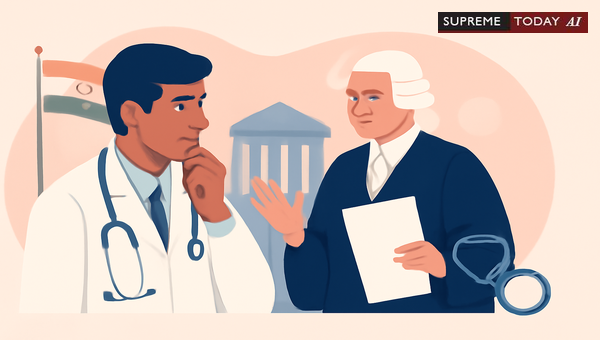
Supreme Court Shields Doctors from Frivolous Negligence Cases
In the high-stakes world of healthcare, doctors often face the dual challenge of saving lives and defending against legal battles. A common concern arises: what does the say about Supreme Court Ruling on Causing Inconvenience to Doctors? Particularly in cases, the apex court has laid down clear guidelines to protect medical professionals from unwarranted harassment while ensuring patient rights are upheld. This post explores these landmark rulings, offering insights into protections against , standards for , and the delicate balance between doctor safeguards and healthcare access.
Whether you're a healthcare provider, patient, or legal enthusiast, understanding these principles can clarify when complaints against doctors may proceed and when they should be dismissed. Note: This is general information based on judicial precedents and not specific legal advice. Consult a qualified lawyer for personalized guidance.
Protection from
The Supreme Court has repeatedly stressed the need to shield doctors from baseless complaints, recognizing their essential role in society. Courts typically require strong initial evidence before any action is taken. 2005 5 Supreme 297 2017 0 Supreme(Kar) 356 2017 0 Supreme(SC) 1303
Key safeguards include:- Evidence Requirement: A private complaint against a doctor for negligence generally won't proceed without credible evidence, such as an opinion from another competent doctor. This prevents fishing expeditions and unnecessary stress on medical professionals. 2005 5 Supreme 297 2017 0 Supreme(Kar) 356- Independent Medical Opinion: Investigating officers must obtain an independent opinion from a qualified government doctor in the relevant field before advancing against the accused doctor. 2005 5 Supreme 297 2017 0 Supreme(Kar) 356- Restraint on Arrests: Routine arrests are discouraged. They should only happen if essential for investigation, evidence collection, or if there's credible fear the doctor won't cooperate. 2005 5 Supreme 297 2017 0 Supreme(Kar) 356
These measures minimize the inconvenience and trauma caused to doctors, allowing them to focus on patient care without the shadow of immediate legal jeopardy.
In a related consumer protection context, the Supreme Court has directed that refer complaints to a competent doctor or committee before issuing notices. We, therefore, direct that whenever a complaint is received against a doctor or hospital by the (whether , or ) or by the then before issuing notice to the doctor or hospital against whom the complaint was made the Consumer Forum or the should first refer the matter... 2011 0 Supreme(Mad) 738
High Standard for
Not every medical mishap leads to criminal charges. The Court has set a stringent threshold for holding doctors criminally liable, distinguishing it from . 2005 5 Supreme 297 2013 0 Supreme(Kar) 727 2004 0 Supreme(SC) 1724 2008 0 Supreme(SC) 1857 2008 0 Supreme(SC) 1869
- Only: Criminal conviction demands proof of recklessness or deliberate wrongdoing—a high degree of morally blameworthy conduct. Simple errors don't suffice. 2013 0 Supreme(Kar) 727 2004 0 Supreme(SC) 1724
- Civil vs. Criminal Distinction: What might warrant civil compensation often falls short of criminal offense standards. 2005 5 Supreme 297 2017 0 Supreme(SC) 1303
- Immunity: Doctors aren't criminally liable for patient death due to mere errors in judgment or accidents. 2004 0 Supreme(SC) 1724
This framework echoes earlier observations on the . As noted in , doctors owe a duty to exercise reasonable skill and care. The Hon’ble Supreme Court in Dr. Laxman Balkrishna Joshi vs. Dr. Trimbak Bapu Godbole, 1969 AIR 128 had observed on , that...
However, failure to meet this duty doesn't automatically trigger criminality. For instance, in cases involving subarachnoid hemorrhage, negligence was found where doctors failed to rule out aneurysm causes or conduct crucial tests like CT angiogram. Failure of - It was the duty of treating doctors to rule out the cause of Subarachnoid hemorrhage due to aneurysm... Thus, negligence is attributed to the treating doctors...
Balancing Patient Rights and Doctor Protections
The judiciary treads a fine line: protecting doctors while vindicating patient grievances. Unnecessary litigation can deter doctors from practicing, harming healthcare access. 2017 0 Supreme(SC) 1303
- Impact on Healthcare: Frivolous cases reduce doctors' willingness to treat high-risk patients, affecting public health. 2017 0 Supreme(SC) 1303
- Guidelines: These bodies should only proceed post determination by experts. 2017 0 Supreme(SC) 1303
Compensation in negligence suits considers facts like . The quantum of compensation in cases payable based on strict liability will of course depend upon the peculiar facts of each case... The doctrine of applies... In one appeal, compensation was set at Rs. 25 lakhs, adjusted for patient non-compliance.
This balanced approach ensures accountability for true negligence—such as careless acts leading to —without overburdening professionals. The Court has held doctors liable where carelessness results in harm, but always with evidence.
Insights from Broader Judicial Trends
While focused on Supreme Court directives, high court rulings reinforce these protections. For example, registered Indian medicine practitioners can practice modern medicine per their training, free from vigilante actions by associations like IMA without . Registered Indian medicine practitioners are entitled to practice modern scientific medicine based on their training and education... 2011 0 Supreme(Mad) 738
These precedents underscore a pro-doctor tilt in procedural safeguards, aiming to curb inconvenience like prolonged investigations or arrests without merit.
Key Takeaways for Doctors and Patients
- For Doctors: Insist on independent opinions in complaints; arrests are rare without compelling reasons. Focus on documentation to defend against claims.
- For Patients: Valid negligence cases require expert-backed evidence; civil remedies like compensation are more accessible than criminal routes.
- Overall: These rulings foster a healthier medico-legal environment, promoting quality care without fear.
The 's framework generally protects doctors from frivolous actions while holding them accountable for gross lapses. By requiring proof and expert input, it minimizes inconvenience and upholds justice. Stay informed on evolving case law, as healthcare litigation continues to shape policy.
This article draws from reported judgments and is for informational purposes only. Legal outcomes depend on specific facts.
#MedicalNegligence #DoctorProtection #SupremeCourtIndia















