


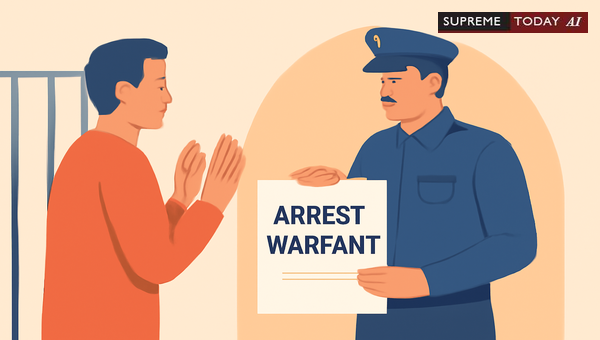
Arrest of Surrendered Accused: Key Legal Principles
In the complex world of criminal law, the act of surrendering to authorities often raises critical questions for the accused, their families, and legal professionals. A common query arises: Arrest of Surrendered Accused – does voluntarily turning oneself in before the police or a magistrate shield someone from arrest? This blog post delves into the nuances of this issue under Indian law, drawing from established legal principles and case precedents. We'll explore when surrender leads to custody, the role of , and the implications of .
Note: This article provides general information based on legal precedents and is not a substitute for professional legal advice. Consult a qualified lawyer for case-specific guidance.
Understanding Surrender in Criminal Proceedings
Surrender is a voluntary act where an accused submits themselves to the court's authority, typically before a magistrate or police. However, this does not automatically grant immunity from arrest. Courts assess the circumstances, including the accused's history of compliance.
For instance, in the case of Nawab Ali, after surrendering in court, he was subsequently arrested 1974 0 Supreme(SC) 119. This highlights that surrender can lead to arrest if warranted by the situation.
Surrender signifies submission to judicial authority but is distinct from formal arrest. As noted in legal discussions, Surrendering is distinct from arrest; it signifies the accused’s voluntary submission, which may occur without police custody. The act of surrender can be considered a form of custody but does not automatically equate to arrest unless formal procedures are followed 2023 0 Supreme(Ker) 311
.
Legal Principles Governing Arrest After Surrender
Surrender and Immediate Custody
When an accused surrenders, they are generally placed in , subject to the court's directions. This was affirmed in precedents where An accused is considered to be in upon surrendering to the court. This means they are subject to the court’s directions and can be arrested if necessary
.
However, does not preclude arrest. Courts distinguish between voluntary surrender and formal arrest:- Arrest involves deprivation of liberty through legal procedures under the .- Custody can arise from surrender without a formal arrest memo 2023 0 Supreme(Ker) 311
.
Role of
A magistrate may issue a if the accused has absconded or violated court orders post-surrender. A magistrate is justified in issuing a against an accused who has absconded or failed to comply with court orders after surrendering. The court held that ceases to be effective once the accused surrenders, thus allowing the magistrate to issue a warrant based on the accused's conduct, including absconding 2002 0 Supreme(Cal) 534.
In one case, petitioners who absconded for 11 years after initial surrender faced warrants upon reappearance 2002 0 Supreme(Cal) 534. Similarly, The petitioner has been able to evade his arrest in the criminal case as a result of which the were initiated under and he was issued notice for . Apprehending arrest, the petitioner surrendered before the Court on 2011 0 Supreme(P&H) 2110.
Impact of
loses effect upon surrender. is rendered ineffective upon surrender. Once an accused surrenders, they are treated as any other accused under the Criminal Procedure Code, and the magistrate has the authority to issue a if warranted by the circumstances 2002 0 Supreme(Cal) 534.
This aligns with scenarios where accused surrender to avoid evasion but still face custody: He avoided police arrest. Later, he surrendered to a Magistrate before whom neither report under , nor copies of entries in the police diary were filed, who remanded him to 2024 0 Supreme(Del) 722.
Key Findings from Case Law
- No Immunity from Arrest: The act of surrendering does not guarantee immunity from arrest. If the accused has a history of absconding or has violated court orders, the court may issue a warrant for their arrest 2002 0 Supreme(Cal) 534.
- Justification Based on Conduct: Arrest is often justified by past behavior, such as prolonged absconding 2002 0 Supreme(Cal) 534.
- Procedural Distinctions: Both sources emphasize that arrest is a formal act involving the deprivation of liberty following legal procedures, whereas custody can occur without an arrest, such as voluntary surrender 2023 0 Supreme(Ker) 311
.
- Court's Discretion in Appeals and Sentencing: Surrender proof is crucial for appeals. For convicted persons, proof of surrender is necessary for certain legal remedies, such as filing appeals or seeking bail 2023 0 Supreme(SC) 1259.
Additional cases reinforce this: Accused who surrendered after evasion were remanded, with investigations proceeding 2024 0 Supreme(Kar) 594. In another, The other accused Anil subsequently surrendered in the Court and was placed under formal arrest 2018 0 Supreme(Del) 1288.
Practical Implications and Examples
Consider a scenario where an accused on surrenders but has a history of non-compliance. Courts may direct custody or issue warrants 2002 0 Supreme(Cal) 534.
Failure to surrender as directed can escalate issues: Hence, in view of the undertaking given before the learned Single Judge, the accused ought to have surrendered but it has been pointed out that the accused has not surrendered till now 2023 0 Supreme(Cal) 1417.
In sentencing contexts, is specific that where the accused is absent, the Court shall issue a warrant of his arrest to forward him to the jail, and the sentence shall commence on the date of his arrest... However, after the passing of the Judgment... neither petitioner No.2 was taken into custody... nor he surrendered
.
Courts also verify surrender: Courts may call for reports or clarification from trial judges regarding whether accused persons have surrendered, especially when there are communication gaps 2023 0 Supreme(SC) 1259.
Recommendations for Accused and Legal Counsel
For Legal Counsel
- Advise clients on surrender risks, particularly with absconding history.
- Prepare for potential arrest following surrender by ensuring that all legal obligations are met and that the client understands the risks involved 2018 0 Supreme(AP) 577.
- Ensure proper documentation, like surrender orders 2023 0 Supreme(SC) 1259.
For Accused Individuals
- Recognize that surrendering to the police or court does not guarantee protection from arrest, especially if there are prior instances of absconding or violations of court orders 2002 0 Supreme(Cal) 534.
- Surrender voluntarily to demonstrate cooperation, but anticipate custody 2022 0 Supreme(Ker) 907.
Conclusion and Key Takeaways
The arrest of a surrendered accused is permissible under specific conditions, such as non-compliance or absconding history. Surrender leads to , but formal arrest may follow via warrants, especially post- 2002 0 Supreme(Cal) 534 1974 0 Supreme(SC) 119
2018 0 Supreme(AP) 577.
Key Takeaways:1. Surrender ≠ Immunity; expect .2. ends upon surrender.3. Courts prioritize conduct and compliance.4. Document everything for appeals or bail.
By understanding these principles, accused parties and lawyers can navigate proceedings more effectively. Stay informed, but always seek tailored legal counsel.
References:1974 0 Supreme(SC) 119 2018 0 Supreme(AP) 577
2002 0 Supreme(Cal) 534 2023 0 Supreme(Cal) 1417 2024 0 Supreme(Del) 722 2022 0 Supreme(Ker) 907 2023 0 Supreme(Ker) 311 2011 0 Supreme(P&H) 2110
2023 0 Supreme(SC) 1259 #SurrenderedAccused #CriminalLawIndia #ArrestWarrant















