


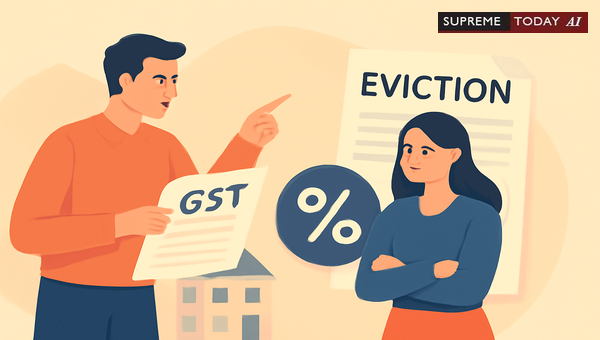
Tenant Liable for GST in Eviction Suit? Key Ruling Explained
In the complex world of landlord-tenant disputes, questions about tax liabilities often arise, especially during . A common query is: Tenant is not liable to pay the GST in the eviction suit. But is this always true? This blog dives deep into the legal nuances, drawing from key judgments and principles under Indian GST and tenancy laws. We'll explore why tenants are generally not automatically responsible for GST, exceptions to watch for, and broader context from related eviction cases.
Note: This is general information based on legal precedents and not specific legal advice. Consult a qualified lawyer for your situation.
Main Legal Finding: Tenant's GST Liability Not Automatic
Based on analyzed legal documents, the liability to pay GST () does not automatically extend to the tenant in an eviction suit. The primary obligation lies with the owner or landlord, and the tenant's liability is not established as absolute or automatic under the law. 2023 0 Supreme(Gau) 1348
This position stems from GST laws, which treat as a . Liability arises at the time of supply—typically when an invoice is issued or payment is received—not tied to tenancy status or . 2023 0 Supreme(Gau) 1348
Key Points from Rulings
- Timing of Liability: GST liability triggers on invoice issuance or payment receipt, independent of eviction suits. 2023 0 Supreme(Gau) 1348
- Lease Agreement Governs: Without specific clauses assigning GST to tenants, the landlord bears the burden.
- Owner's Primary Role: Courts emphasize the registered owner or landlord handles GST remittance to authorities, even if tenants claim input credit. 2023 0 Supreme(Gau) 1348
Detailed Analysis: GST Framework in Tenancy
Understanding GST on Rent
GST applies to renting immovable properties as a service supply, effective from invoice dates or payments. Importantly, the liability to pay GST arises at the time of supply based on invoice issuance or receipt of payment, not necessarily on tenancy or . 2023 0 Supreme(Gau) 1348
In eviction contexts, landlords cannot shift this statutory duty to tenants merely because a suit is filed. The court in one key case dismissed claims holding tenants liable, noting occupancy alone doesn't create GST obligations. 2023 0 Supreme(Gau) 1348
Tenant's Role Clarified
Documents highlight: The primary liability for GST on rent is on the owner or landlord, especially if the lease agreement specifies that the landlord is responsible for paying taxes.
The tenant's duty is typically limited to occupancy unless the contract explicitly states otherwise, like requiring reimbursement.
Even if a tenant pays GST or takes , the ultimate obligation to remit GST to the tax authorities rests with the registered owner or landlord. 2023 0 Supreme(Gau) 1348 This separation protects tenants from being dragged into tax disputes during evictions.
Court's Stance in
Eviction suits focus on like , sub-letting, or —not tax payments unless contractually linked. The court dismissed the petitioner's claim that the tenant was liable for GST, emphasizing that the law does not impose such liability on the tenant automatically. 2023 0 Supreme(Gau) 1348
The question of tenant's GST credit is immaterial when determining liability for eviction, as the statutory obligation remains with the landlord. 2023 0 Supreme(Gau) 1348
Broader Context: Tenant Liabilities in Eviction Suits
While GST isn't a default ground, eviction laws impose other obligations. Integrating insights from related cases provides a fuller picture:
- Rent Payment Post-Termination: Tenants remain liable for rent even after lease expiry until eviction. In one ruling, the tenant remains liable to pay rent until eviction order is passed, upholding '' principles under . 2024 0 Supreme(P&H) 1342
- Notice and Tenancy Determination: Proper notice under terminates , making tenants liable for eviction without forfeiture issues. Tenancy stood determined upon expiry of statutory period and tenant became liable for eviction.
Subhash Chandra Huf Thru Karta VS Ajay Gupta
2019 0 Supreme(All) 41 - Status Challenges: Defendants disputing tenant status get opportunities to contest, but admitted tenancies proceed. A defendant in an eviction suit, disputing the legal relationship with the plaintiff, should be given an opportunity to contest. 2017 0 Supreme(Cal) 556
- : Post-lease expiry, tenants become month-to-month, but old terms may not bind. After the expiration of the original lease, the tenant becomes a month-to-month tenant, and the old terms of tenancy cease to be operative. 2012 0 Supreme(All) 577
- Ownership Claims: Purchasing property shares doesn't end landlord-tenant ties. A tenant's purchase of an undivided share does not extinguish the landlord-tenant relationship, allowing to continue. 2026 Supreme(Online)(Pat) 314
These cases show eviction focuses on core tenancy breaches, not ancillary taxes like GST unless specified.
Exceptions and Limitations
Tenants aren't entirely off the hook in all scenarios:- Contractual Clauses: If the lease explicitly makes the tenant responsible for GST, liability shifts. Always review agreements.- Supply Timing: Tied to invoices/payments, not eviction status. 2023 0 Supreme(Gau) 1348- No Automatic Transfer: Law doesn't deem tenants primarily liable without provisions.
Landlords holding tenants liable must prove contractual basis; courts won't assume it.
Practical Recommendations for Landlords and Tenants
- Landlords: Clearly stipulate GST responsibilities in leases to avoid disputes. Focus evictions on valid grounds like arrears or notice expiry.
- Tenants: Scrutinize lease terms for tax clauses. Pay rent promptly to leverage '' protections. 2024 0 Supreme(P&H) 1342
- During Suits: GST claims rarely derail proceedings unless central to default. Seek adjudication on relationships if disputed. 2017 0 Supreme(Cal) 556
Conclusion and Key Takeaways
In summary, tenants are typically not liable to pay GST in eviction suits—that's the landlord's domain unless contracts say otherwise. Key rulings affirm: GST is a supply-time obligation for owners, separate from eviction grounds. 2023 0 Supreme(Gau) 1348
Takeaways:- Review leases for tax clauses.- Evictions hinge on rent defaults, notices, not GST.- Post-termination rent liability persists.- Dispute status early if needed.
Stay informed on tenancy laws to navigate disputes smoothly. For personalized guidance, reach out to legal experts.
References
- 2023 0 Supreme(Gau) 1348: GST liability at supply time; owner's responsibility.
: Contract-dependent; no automatic tenant liability.
- Additional cases: 2024 0 Supreme(P&H) 1342,
Subhash Chandra Huf Thru Karta VS Ajay Gupta
, 2026 Supreme(Online)(Pat) 314, etc., for eviction context.















