


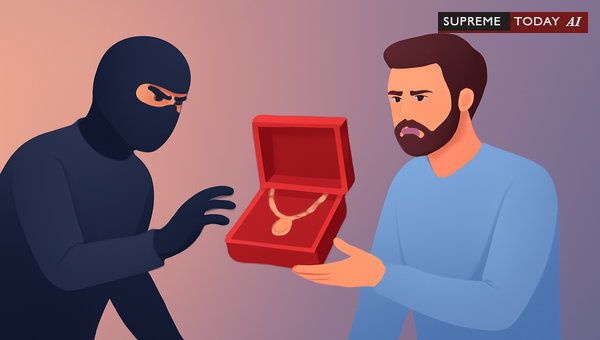
Can a Thief Claim Ownership of Stolen Jewelry?
Imagine discovering that a thief caught with your family's heirloom necklace is now trying to claim it as their personal property. Shocking, right? This scenario raises a critical legal question: The Person who Stole the Jewelry can Claim it as his own? The short answer, based on established Indian jurisprudence, is no. does not confer to the offender. In this post, we'll dive deep into the legal principles, court interpretations, and real-world cases to clarify why a thief remains just that—a wrongdoer with no proprietary claim.
This article draws from key legal documents and precedents to provide general insights. Note: This is not legal advice; consult a qualified attorney for specific cases.
Understanding Under Indian Law
The foundation of this issue lies in the (IPC), particularly , which defines as the of from the possession of another person without their consent, intending or loss. Key ingredients include:
- Dishonest intention: The act must be done with intent to deprive the owner permanently.
- Movement of property: Simply taking possession isn't enough; there must be some displacement.
- Lack of consent: The owner's permission is absent. 1957 0 Supreme(SC) 17
The legal documents emphasize: involves dishonest intention and wrongful movement of property, but does not confer ownership on the offender. 1957 0 Supreme(SC) 17 Courts consistently hold that this criminal act does not transfer title or ownership. The thief gains only temporary, , which is inferior to the true owner's rights.
Why Does Not Transfer
Ownership in property law is not acquired through crime. Indian law distinguishes between possession and ownership:
- Possession: Can be lawful or unlawful. A thief has unlawful possession.
- Ownership: Requires lawful transfer via sale, gift, inheritance, or other valid modes. is none of these. 2003 4 Supreme 27
As clarified in judicial rulings: The law distinguishes from lawful possession and ownership; a thief remains a wrongdoer without legal . 1957 0 Supreme(SC) 17 The offender's possession is protected only against third parties with inferior claims, but never against the true owner.
In one pivotal analysis, the court stated: The act of does not result in the transfer of to the offender. The property remains in the ownership of the original owner. 1957 0 Supreme(SC) 17 This principle ensures that criminals cannot benefit from their wrongdoing—a cornerstone of justice.
The Role of Intention and Consent
Without consent and with dishonest intent, the act is , not acquisition. Even long possession by a thief doesn't ripen into ownership; doctrines apply only to lawful claimants after statutory periods, not thieves. 1957 0 Supreme(SC) 17
Court Precedents: Thieves Cannot Claim Stolen Goods
Indian courts have repeatedly affirmed this in diverse cases, including jewelry thefts.
In a case involving stolen aircraft (analogous to jewelry as ), the court ruled: The defendant's act of stealing the aircraft did not give him any ; instead, it established him as a wrongdoer who unlawfully deprived the owner of its possession. 1957 0 Supreme(SC) 17 This logic extends seamlessly to jewelry.
Real-world examples abound:
- In a bail opposition matter, applicants from Punjab were accused of stealing gold jewelry from Shanti Nagar houses, with items seized from their possession sans explanation. The court noted no ownership claim by thieves, focusing on their resident status and crime. 2024 Supreme(Online)(Chh) 16947
- Another incident near Bhatapara Station involved of a purse with gold jewelry worth ₹2,00,000. The claim dispute highlighted the victim's ownership, not the thief's. 2025 Supreme(Online)(SCDRC) 2516
- A house break-in led to stolen gold and silver jewelry; prosecution treated it as clear without ownership transfer.
These cases underscore that seized stolen jewelry remains the victim's property. Recovery memos, like one for a gold 'hasli' from an accused's house under , prove identification and return to owners, not thief ownership. 2015 0 Supreme(Raj) 409 2015 0 Supreme(Raj) 42
Even in insurance contexts, such as a jeweler's block policy where briefcases of jewelry were stolen, surveyors assessed losses based on the insured's ownership, not thieves'. The insurer paid claims recognizing original title.
Guptasons Jewellers & Gems Pvt. Ltd. VS Oriental Insurance Company Ltd. Through its Sr. Div. Manager
Broader Legal Implications and Related Doctrines
vs. Proprietary Rights
A thief's rights are limited to the , which the law protects against all except the true owner or a person with a better legal right. 1957 0 Supreme(SC) 17 This prevents vigilante recovery but upholds owner supremacy.
Seizure and Recovery Contexts
In tax raids, jewelry stock discrepancies led to seizures under , but courts required proof of legitimacy. Failure to explain—like mismatched weights—doesn't grant thieves ownership; it justifies retention pending assessment. 2024 0 Supreme(Raj) 1434
under allow owners to affirm rights against adverse claimants, including thieves asserting possession. However, limitation bars apply strictly.
No one benefits from their default: No person can be allowed to claim benefit of his own default. 2009 0 Supreme(Raj) 1250
Key Takeaways for Victims and Awareness
- Ownership stays with the original owner: never transfers title. 1957 0 Supreme(SC) 17
- Seek police recovery: Use FIRs, Section 27 for seizures and returns.
- Insurance and civil remedies: Claims recognize victim ownership; pursue declaratory relief if needed.
- Prevention tips: Document valuables, use safe deposits, report promptly.
Conclusion
The myth that time or possession legitimizes is debunked by law. The person who stole the jewelry cannot claim it as his own. As affirmed: are not conferred by criminal acts like ; ownership remains with the original owner unless lawfully transferred. 1957 0 Supreme(SC) 17 2003 4 Supreme 27
Victims can reclaim property through legal channels, bolstered by precedents. Stay informed, protect your assets, and remember: justice favors the rightful owner.
References:1. 1957 0 Supreme(SC) 17: Core discussion on elements and wrongdoer status.2. 2003 4 Supreme 27: Parallels on non-transfer via unlawful acts.3. Additional cases: 2024 Supreme(Online)(Chh) 16947, 2025 Supreme(Online)(SCDRC) 2516,
, 2015 0 Supreme(Raj) 409, 2015 0 Supreme(Raj) 42,
Guptasons Jewellers & Gems Pvt. Ltd. VS Oriental Insurance Company Ltd. Through its Sr. Div. Manager
, 2024 0 Supreme(Raj) 1434,, 2009 0 Supreme(Raj) 1250.
Word count: ~1050. General information only—seek professional advice.
#TheftLawIndia, #StolenProperty, #IPCTheft















