


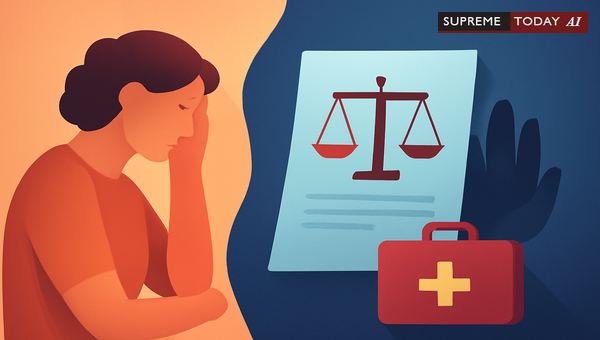
: Where There Is a Wrong, There Must Be a Remedy
In the realm of law, one timeless maxim stands as a beacon of justice: Where there is a Wrong there Must be a Remedy. Known in Latin as , this principle asserts that whenever a legal right is violated or a wrong is committed, the legal system must provide an effective remedy. This foundational concept ensures that no one suffers injustice without recourse, particularly in cases involving constitutional rights or negligence. But how does this principle play out in modern courts? This post delves into its origins, judicial interpretations, real-world applications, and practical implications, drawing from key precedents primarily in the Indian context.
Whether you're a legal professional, a victim of wrongdoing, or simply curious about your rights, understanding empowers you to seek justice. Note: This is general information and not specific legal advice; consult a qualified attorney for your situation.
Overview of the Principle
The maxim translates to where there is a right, there is a remedy. It underscores that every legal wrong demands a corresponding remedy, preventing a system where violations go unaddressed. This is especially vital when constitutional rights are infringed, as courts are duty-bound to intervene. ISMAIL SUID & SATU LAGI LWN. WAN NADZIM WAN MOHD NORI & SATU LAGI - Mahkamah Tinggi Malaya Muar
As affirmed in case law, - there is no wrong without a remedy. 1981 1 MLJ 29; 1984 1 CLJ (Rep) 98. The principle mandates remedies for wrongs, ensuring justice isn't just theoretical but actionable.
Legal Foundations and Key Requirements
Existence of a Remedy
For every wrong, the law typically provides a remedy. This is elementary: It is elementary that for every wrong there has to be a remedy.2017 0 Supreme(Cal) 792 In constitutional matters, courts reinforce this by granting relief unless impossible. For instance, As the maxim goes, where there is a wrong, there is a remedy. Once a litigant establishes their case, relief must follow, such as appointment to a supernumerary post after qualifying exams. 2014 0 Supreme(Manipur) 51
Injury Requirement
To claim a statutory remedy, claimants generally must show a legal injury. This invokes —injury without measurable damage—where even nominal harm warrants redress if a right is violated. 2020 0 Supreme(Guj) 891
Judicial Interpretations and Precedents
Courts across jurisdictions uphold this maxim through precedents. In India, the case of emphasized that mere findings of negligence aren't enough; meaningful action must address rights infringements.2022 0 Supreme(Mad) 817 2022 0 Supreme(Mad) 813
It is the trite that there cannot be a wrong without a remedy. This extends to enforcing interim relief under , rejecting absurdities where statutes create rights but lack enforcement.
-
Inherent Powers of Courts
Judges possess inherent authority to rectify their errors when no other remedy exists, safeguarding aggrieved parties. 1979 0 Supreme(MP) 198 Similarly, Needless to say that whenever there is a wrong, there is a remedy. Courts may direct investigations to in clear injustice cases. 2012 0 Supreme(Ori) 356
The principle of is well-established: There is no right without a remedy or there is no wrong without a remedy. Duties may arise contractually or independently. 2004 0 Supreme(Jhk) 591
Applications in Specific Cases
Medical Negligence
In medical errors, like wrongful blood transfusions causing death, courts award compensation as a clear remedy for negligence. 2009 0 Supreme(SC) 1153
Writ Petitions and Alternative Remedies
Under , writs remain available even with statutory options if the latter are inadequate or delayed. 2008 0 Supreme(SC) 792 1979 0 Supreme(SC) 327
Broader Contexts:
Remedies often aim for —restoring parties to their original position. For wrongful entries in decrees due to mistakes, courts grant relief unless minor or unintentional.
In procedural errors violating natural justice, like failing to notify heirs, revision or restitution corrects injustices rooted in Roman-Dutch law. 2024 Supreme(SRI)(CA) 575
For fraud or palpably wrong orders, remedies include setting aside decisions rather than mere appeals. 2024 Supreme(SRI)(CA) 228
Equitable remedies like restitution have limits, such as damage caps, applied judiciously to avoid overreach. 2024 Supreme(US)(scotus) 15052 2025 Supreme(US)(ca9) 151 2025 Supreme(US)(ca9) 37
Severe remedies, e.g., ship arrest, are invasive and invoked sparingly due to economic disruption.
- High Court Malaya Kuala Lumpur
Procedural lapses, like missed appeal deadlines, may warrant flexible fixes like re-sentencing. 2023 Supreme(US)(ca4) 2
When statutes prescribe remedies, parties must follow them to avoid diverting legal processes.
- Session Court Shah Alam
Analysis: Proportionate and Appropriate Remedies
The principle demands remedies that are proportionate. Courts prioritize restoring fairness—setting aside orders for fraud, re-determining qualifications, or enforcing constitutional writs. However, remedies must align with statutes; misuse, like weak claims for drastic measures, is discouraged.
In Malaysia and Sri Lanka, similar emphases on correction via highlight global resonance, though Indian courts lead in constitutional applications.
Conclusion and Key Takeaways
remains a cornerstone of justice, ensuring no wrong goes remediless, especially in rights violations. Indian courts diligently apply it across negligence, writs, and errors, integrating global insights for holistic redress.
Recommendations for Legal Practitioners and Individuals
- Advocate Strongly: Use the maxim to argue for remedies in rights cases.
- Explore Avenues: Pursue statutory, constitutional, or equitable paths if standard ones falter.
- Monitor Precedents: Stay updated on evolving interpretations.
- Seek Proportionate Relief: Ensure claims justify remedies to uphold judicial discretion.
By embracing this principle, the legal system fosters accountability. References: ISMAIL SUID & SATU LAGI LWN. WAN NADZIM WAN MOHD NORI & SATU LAGI - Mahkamah Tinggi Malaya Muar2020 0 Supreme(Guj) 891 2022 0 Supreme(Mad) 817 2022 0 Supreme(Mad) 813 1979 0 Supreme(MP) 198 2009 0 Supreme(SC) 1153 2008 0 Supreme(SC) 792 1979 0 Supreme(SC) 327 2017 0 Supreme(Cal) 792 2014 0 Supreme(Manipur) 51
-
2012 0 Supreme(Ori) 356 2004 0 Supreme(Jhk) 5912024 Supreme(SRI)(CA) 575
2024 Supreme(SRI)(CA) 228 2024 Supreme(US)(scotus) 15052 2025 Supreme(US)(ca9) 151 2025 Supreme(US)(ca9) 37
- High Court Malaya Kuala Lumpur
2023 Supreme(US)(ca4) 2- Session Court Shah Alam
. #UbiJusIbiRemedium, #LegalRemedy, #JusticeIndia















