




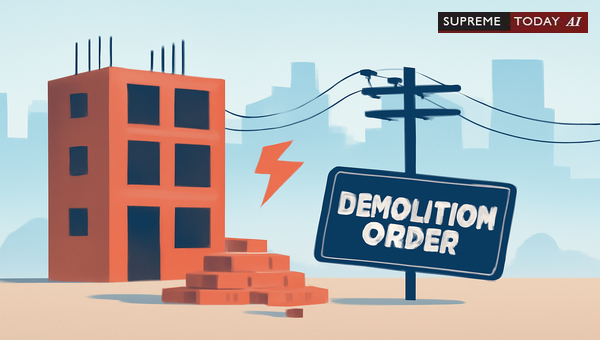
and Electricity: What Property Owners Need to Know
Building without proper approvals is a common issue in rapidly urbanizing areas, but it comes with severe legal consequences—especially when it involves electricity. Many wonder: Can unauthorized constructions receive electricity connections, or does using power in such buildings lead to penalties and disconnections? This question touches on , planning regulations, and electricity statutes, where courts have taken a firm stance to protect public safety and .
In this post, we break down the legal landscape, drawing from key court judgments and statutory provisions. Note that this is general information based on precedents and should not be taken as specific legal advice—consult a qualified lawyer for your situation.
Why Unauthorized Constructions Are Strictly Regulated
refers to buildings erected without sanctions from competent authorities, violating , master plans, and zoning rules. Such structures are deemed illegal from inception and are prime candidates for demolition. Courts emphasize that these violations distort urban planning, strain infrastructure, and endanger lives. For instance, the has held that illegal constructions not only violate the and the concept of but also affect fundamental rights of others 2012 7 Supreme 289.
Key violations include:- Breaches of and height restrictions 2012 7 Supreme 289.- Encroachments on public land or setbacks 2025 4 Supreme 490.- Constructions threatening environmental integrity or public safety 2012 7 Supreme 289.
Authorities have a statutory duty to issue notices, seal properties, and demolish without delay. In one case under the , the court upheld locking and sealing a deviated building, stressing strict enforcement of building regulations and the removal of illegal constructions for .
The Electricity Connection Conundrum
Electricity supply to unauthorized constructions is heavily restricted. Under the , , licensees must provide connections to 'occupiers' in ',' but this does not extend to illegal structures without scrutiny. Courts have clarified that entitlement is based on '' rather than ',' yet illegal buildings often face denial or disconnection 2022 0 Supreme(Cal) 995.
is defined broadly as usage by a means not authorised by the person or authority or licensee concerned 2011 0 Supreme(SC) 1027 2020 0 Supreme(MP) 1012 2019 0 Supreme(Jhk) 291 2017 0 Supreme(P&H) 2163 2017 0 Supreme(P&H) 2801. This includes:- Tampering with meters or illegal connections 2019 0 Supreme(SC) 906.- Supply to unsanctioned buildings without approval 2011 0 Supreme(SC) 1027.- Commercial use under residential sanctions 2023 0 Supreme(Mad) 2626.
Upon detection, assessing officers—designated quasi-judicial authorities—can impose penalties, assess (often at twice the rate for 12 months), and disconnect supply immediately 2019 0 Supreme(Jhk) 291. The process is appealable under , barring jurisdiction in valid cases () 2020 0 Supreme(MP) 1012.
In practice, electricity boards refuse connections to unauthorized buildings, as seen in cases where promoters paid fees but were denied due to lacking or valid plans 2025 Supreme(Online)(Tel) 74956. Even paid connections for construction can be scrutinized if the building is illegal
THE NEGOMBO MUNICIPAL COUNCIL v. FERNANDO.K.J.M
.Courts' Stance: No for Willful Violations
is not a free pass. Courts disfavor it for deliberate illegalities, warning that it would defeat the very purpose of introducing rules of 2012 7 Supreme 289. The in ruled that has to be demolished, limiting judicial discretion 2025 4 Supreme 490.
Exceptions are narrow:- Bona fide minor deviations: Technical issues not affecting safety or master plans may qualify 2025 4 Supreme 490 2012 7 Supreme 289.- Rectifiable errors: Some cases allow corrections post-notice, but not for major violations.
The mandates stern action: cases of such unauthorized constructions must be dealt with sternly 2012 7 Supreme 289. Civil courts are cautioned against that delay demolition 2012 7 Supreme 289.
Related rulings reinforce this:- No business licenses in unauthorized buildings, regardless of residential use 2025 Supreme(Online)(Tel) 74956.- Power disconnections valid even during theft probes if unauthorized use is evident 2019 0 Supreme(Jhk) 291.- Assessments for power theft or misuse proceed independently of criminal cases, with civil remedies available if procedures falter 2017 0 Supreme(P&H) 2163.
Enforcement Mechanisms and Penalties
Municipal corporations and electricity licensees act decisively:1. upon detection—no waiting for full completion 2023 0 Supreme(Mad) 2626.2. Locking/sealing under planning acts for violations - Town and Country Planning Act.3. Demolition orders executed promptly.4. Electricity assessments: challengeable via appeals; final ones quasi-judicial 2011 0 Supreme(SC) 1027 2020 0 Supreme(MP) 1012.
Penalties include fines, back billing, and disconnection. In theft-like cases (), civil courts retain jurisdiction if assessments are unauthorized amid criminal probes 2017 0 Supreme(P&H) 2163. Consumers must file objections before final orders—a key safeguard often overlooked 2017 0 Supreme(P&H) 2801.
Practical Implications for Property Owners
If you're facing notices:- Verify sanctions early: Ensure compliance with master plans.- Seek judiciously: Only for minor issues; willful cases rarely succeed.- Electricity applications: Provide ; expect scrutiny for illegal builds 2022 0 Supreme(Cal) 995.- Challenge improperly: Appeal assessments under the Electricity Act, not civil suits unless barred remedies apply.
Authorities must enforce uniformly, as laxity encourages violations. Courts impose costs on petitioners defending illegalities, as in the Madurai case where the writ was dismissed for significant deviations.
Key Takeaways and Recommendations
- Unauthorized constructions are illegal and demolition-prone; electricity use therein risks penalties and cuts 2012 7 Supreme 289 2025 4 Supreme 490.
- Stick to approved plans to avoid unauthorised use of electricity 2011 0 Supreme(SC) 1027.
- is exceptional—prioritize compliance for safety and legality.
- Authorities: Enforce promptly; courts: Limit interim reliefs.
benefits all. If in doubt, professional advice is crucial. Stay informed, build legally.
This post references judgments like 2012 7 Supreme 289, 2025 4 Supreme 490, 2011 0 Supreme(SC) 1027, 2019 0 Supreme(SC) 906, and others for educational purposes.
#UnauthorizedConstruction















