


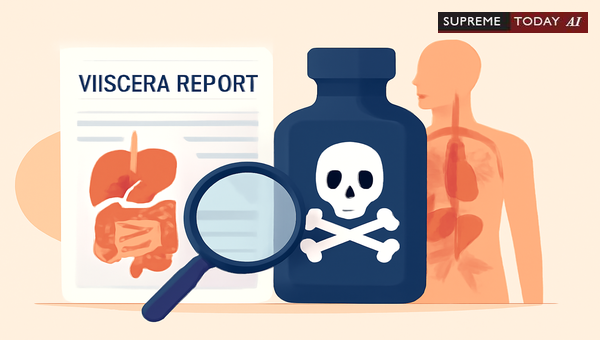
Importance of in Criminal Cases
In the intricate world of criminal investigations, especially those involving suspicious deaths or alleged poisonings, forensic evidence often holds the key to justice. One such critical piece of evidence is the , which examines internal organs (viscera) preserved during autopsies. But what makes this test so pivotal? The question on every lawyer's and investigator's mind is: What is the importance of the ?
This blog post delves into the legal significance of the , drawing from judicial precedents and medico-legal practices in India. We'll explore its role in establishing causes of death, corroborating evidence, and even swaying bail decisions. While this information is for educational purposes and not specific legal advice, understanding the can provide valuable insights into forensic science's intersection with law.
What is the ?
The involves the of —such as the stomach, liver, kidneys, and intestines—collected during a . These samples are typically sent to a to detect poisons, toxins, drugs, or other substances that might have caused or contributed to death.
As noted in various cases, viscera preservation is routine when the is unclear. For instance, From perusal of the case diary, it appears that the prosecution witnesses have supported the case of the prosecution and postmortem report also reveals that the is not ascertained and visera is preserved
. Similarly, although no definite opinion has been given by the doctor conducting the autopsy and it is awaiting the report of the visera
. This underscores its procedural importance in inconclusive autopsies.
Legal Significance of the
The visera report is a cornerstone in criminal cases, particularly those suspecting poisoning, homicide, or suicide. Courts across India recognize its for several reasons.
1. Establishing or Negating
One of the primary roles of the is to scientifically confirm or rule out poisoning as the . In poisoning-related investigations, the presence or absence of toxic substances in the viscera can be decisive.
For example, The Visera report provides scientific evidence regarding the presence or absence of poisonous materials in the deceased's body. For instance, in cases where poisoning is suspected, the absence of poison in the viscera can be pivotal 2018 0 Supreme(Mad) 3550. In one case, the post-mortem showed no poison, helping differentiate poisoning from other causes like blood injury or septicaemia 2018 0 Supreme(Mad) 3550.
Additional sources highlight its forensic utility: Critical forensic evidence: The visera (internal organs) collected during autopsy is crucial for determining the , especially when other evidence is inconclusive. It is sent for forensic analysis at the FSL to identify toxic substances or injuries 2024 Supreme(Online)(Kar) 41551 2022 0 Supreme(Chh) 463. Detection of poisons like organochloro insecticides (e.g., endosulfan) has supported homicide or suicidal findings 2022 0 Supreme(Chh) 463.
2. Corroborating or Contradicting Other Evidence
Visera findings don't exist in isolation; they validate or challenge witness testimonies, complainant statements, and other forensic reports. The Visera report can support or challenge statements made by witnesses or complainants, especially when allegations involve poisoning or ingestion of toxic substances 2002 0 Supreme(Guj) 451.
In a notable instance, the absence of poison led courts to conclude that poisoning allegations were not established, influencing the assessment of overall evidence 2002 0 Supreme(Guj) 451. Quotes from cases reinforce this: The doctor has preserved the Visera and femur bone of the deceased for diatom test. In the FSL report Ex.P-10, nothing was found adverse to postmortem report 2018 0 Supreme(MP) 156, showing how negative results align with or refute theories like drowning or prior death.
3. Impact on Legal Proceedings and Bail Decisions
The visera report can dramatically alter case trajectories, including . The report's findings can affect and the overall trajectory of the case. For example, the withdrawal of a bail application after the Visera report showed no poison indicates its influence on judicial decisions 2002 0 Supreme(Guj) 451.
Judicial precedents emphasize its weight: Reserved pending report of chemical analysis of visera. Death would have to occurred about 20-26 hours prior to PM 2013 0 Supreme(Mad) 2485, illustrating how pending reports delay conclusions.
Procedural Importance and Best Practices
Proper handling of viscera is paramount to its reliability. Courts stress meticulous collection, sealing, and timely dispatch to the FSL. Procedural importance: Proper collection, sealing, and sending of viscera are emphasized to ensure the integrity of forensic evidence. Lack of evidence regarding the handling process can cast doubt on the findings 2024 Supreme(Online)(Kar) 41551.
Recommendations include:- Ensuring viscera preservation in all suspected poisoning or unclear death cases.- Coordinating timely FSL analysis to avoid degradation.- Documenting the rigorously.
In one case, features so as to render his opinion regarding and for that as advised the visera
, highlighting advisory roles in autopsies.
Limitations and Considerations
Despite its importance, the isn't infallible. The Visera report alone may not be conclusive; it must be considered alongside other evidence such as witness statements, other medico-legal reports, and forensic findings 2002 0 Supreme(Guj) 451 2018 0 Supreme(Mad) 3550. Factors like preservation timing, decomposition, or procedural lapses can affect results.
Challenges include: - Absence of procedural witnesses: Undermining 2024 Supreme(Online)(Kar) 41551.- Inconclusive autopsies: Making viscera critical yet potentially limited if not comprehensive
.- Multiple contributing factors: As in is said to be multi-faceted i.e. intra-abdominal haemorrhage with injury of visera, intra-cerebral haemorrhage with brain injury and asphyxia 2022 0 Supreme(Chh) 395.
Limitations and challenges: The absence of witnesses or detailed procedures in handling viscera can undermine the reliability of forensic results 2024 Supreme(Online)(Kar) 41551.
Conclusion and Key Takeaways
The remains a vital scientific tool in Indian criminal law, providing objective evidence on poisoning and that can tip the scales of justice. From refuting baseless allegations to confirming homicidal intent, its findings permeate legal proceedings 2002 0 Supreme(Guj) 451 2018 0 Supreme(Mad) 3550.
Key Takeaways:- Prioritize preservation in suspicious death cases for reliable forensics.- Integrate with holistic evidence for robust arguments.- Understand limitations to avoid over-reliance.
While generally influential, interpretations depend on case specifics—consult a qualified legal professional for advice tailored to your situation. By leveraging precedents like those cited, investigators and advocates can harness the 's full potential.
Word count: 1028. References drawn exclusively from provided sources.
#ViseraTest, #ForensicLaw, #CriminalCases












