


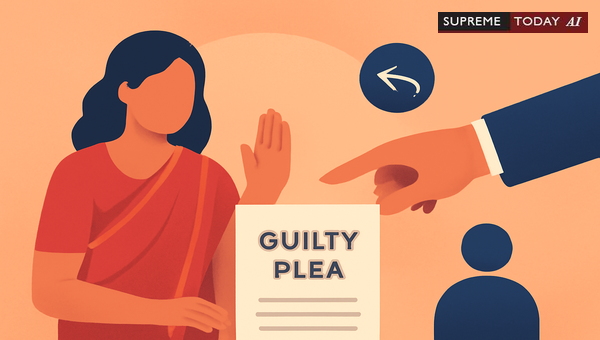
Can an Accused Withdraw a After Entering It in Indian Court?
In the high-stakes environment of a criminal courtroom, decisions can have lifelong consequences. A common question that arises, especially among those navigating the Indian judicial system, is: Kya Accused Court Mai Plead Guilty Kernai Kai Bad Ussai Vapas Bhi Lai Sakta Hai Kya? Translated, this means: Can an accused withdraw a after pleading guilty in court?
This query touches on fundamental principles of fairness, voluntariness, and under the . While a can expedite proceedings and lead to leniency, it's not always irrevocable. However, courts impose strict conditions to prevent abuse. This blog post breaks down the legal framework, key safeguards, exceptions for recall, and insights from landmark cases. Note: This is general information based on judicial precedents and not specific legal advice. Consult a qualified lawyer for your situation.
Legal Principles Governing Plea of Guilty
Under Indian law, a plea of guilty is a powerful admission that can form the basis for without a full trial. However, it must be handled with utmost caution to ensure it's .
Mandatory Procedural Safeguards
Before accepting a , courts must follow rigorous protocols. As established in 2024 0 Supreme(J&K) 138, (applicable analogously in other contexts) mandates that the court:- Ensures the accused understands the nature and meaning of the charge.- Informs him of the general effect and procedural consequences of the plea.- Advises withdrawal if it appears he ought to plead not guilty.
Strict adherence to these safeguards is essential to prevent uninformed confessions and ensure fairness. 2024 0 Supreme(J&K) 138
Failure to comply can render the plea invalid, opening doors for recall.
Recording and Verification of the Plea
The and emphasize precise recording. In Ghamandi v. State (25() Delhi Law Times 170) and Mahant Kaushalya Das v. State (AIR SC 22), rulings state the plea must be:- Recorded in the words of the accused.- Verified as voluntary, clear, and unambiguous.
A mere yes or informal nod won't suffice. The plea cannot be accepted based solely on a monosyllabic response or informal statements. These principles align with , where pleas are explained and questioned.
Can a Be Recalled or Changed?
The General Rule
Once properly recorded, a is typically binding and conclusive. Courts view it as a . As per 2024 0 Supreme(J&K) 138 and Ghamandi v. State, is not permitted without proof of:- Coercion.- Misunderstanding.- .
Such pleas, if properly recorded, cannot be unilaterally withdrawn or recalled unless there is evidence of coercion, misunderstanding, or . 2024 0 Supreme(J&K) 138
Exceptions Allowing Recall
Courts have flexibility in exceptional cases:1. Involuntariness or Duress: If proven, the plea is set aside. In Ghamandi v. State and Mahant Kaushalya Das, pleas obtained improperly were invalidated.2. Violation of Safeguards: Non-compliance with explanation requirements deems it invalid 2024 0 Supreme(J&K) 138 2015 0 Supreme(Ker) 373.3. Lack of Understanding: If not in accused's words or implications unexplained, challengeable 2015 0 Supreme(Ker) 1019.
In confessional contexts under , similar scrutiny applies. Courts reject statements if supervising officers taint voluntariness, as noted in TADA cases where recorded after following all safeguards u/s 15 - No infirmity. This underscores the broader principle that admissions must be pure 2013 3 Supreme 195.
Changing Plea During Different Trial Stages
During the Trial
Flexibility exists pre-. In Santhosh v. State of Kerala (), an accused may switch pleas (guilty to not guilty or vice versa) if voluntary and properly recorded. However, post-acceptance and , options narrow.
After
Post- recall is rare. It requires demonstrating impropriety like coercion or misrepresentation 2024 0 Supreme(J&K) 138. Appellate courts examine trial records for safeguard compliance.
Relatedly, in cases involving serious offenses like those under or , courts prioritize victim protection and evidence reliability. For instance, prosecutrix testimony must be creditworthy and consistent, with medical evidence crucial 2019 0 Supreme(Del) 546. While not directly on pleas, this highlights how courts probe voluntariness in sensitive matters, potentially aiding plea challenges if inconsistencies arise.
In bail denials for sexual offenses, gravity and trauma considerations prevail 2024 Supreme(Online)(Bom) 7257, reinforcing that procedural lapses in pleas could vitiate proceedings.
Practical Recommendations
- Examine Court Records: Verify if safeguards were followed before filing recall applications.
- Seek Early Legal Aid: Act swiftly; delays weaken claims.
- Grounds for Challenge:
- No charge explanation.
- Coercion evidence.
- Plea not in own words.
Judgments like those in bomb blast appeals emphasize , where hostile witnesses or recoveries are weighed carefully 2013 3 Supreme 195. Similarly, for pleas, the record is king.
Key Takeaways
- A properly recorded is generally final and binding.
- Recall is possible only if not voluntary, procedural safeguards violated, or not in accused's words2015 0 Supreme(Ker) 373 2024 0 Supreme(J&K) 138.
- Courts prioritize fairness, drawing from confession laws and trial safeguards.
References: 2024 0 Supreme(J&K) 138 2015 0 Supreme(Ker) 373 2015 0 Supreme(Ker) 1019 2025 0 Supreme(Gau) 893 2023 0 Supreme(SC) 831 1982 0 Supreme(SC) 218 1999 8 Supreme 723 2024 0 Supreme(Ker) 407
Understanding these nuances can empower you in court. For personalized guidance, reach out to a legal expert. Stay informed, stay protected.
#GuiltyPleaIndia #CriminalLaw #WithdrawPlea












